Your digging level
Description
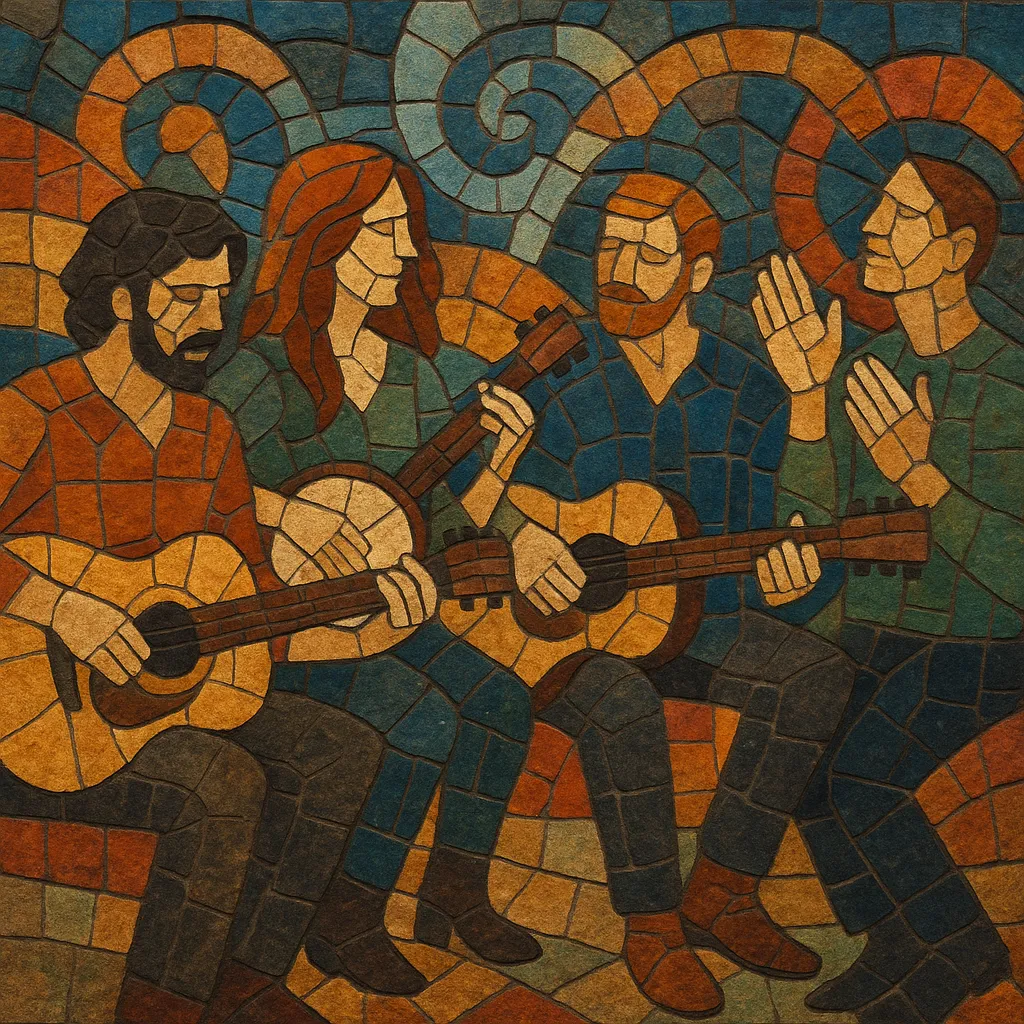
Modern folk rock blends the acoustic intimacy and storytelling of folk with the drive, dynamics, and hooks of contemporary rock and indie pop. It centers on strummed acoustic guitars, banjo or mandolin flourishes, rich group harmonies, and propulsive stomp‑and‑clap rhythms that build toward anthemic choruses.
Production tends to be warm and organic—emphasizing wood, strings, and voices—while borrowing modern rock structure and studio polish. Lyrically it leans toward personal reflection, nature imagery, community, and resilience, often framed in sing‑along refrains designed for festival crowds. The result feels rooted and rustic yet radio‑friendly and panoramic.
History
Modern folk rock grows from the 1960s folk rock foundation (Dylan, The Byrds) and the 1990s alt‑country/roots resurgence, but its immediate launchpad was the 2000s indie‑folk movement (e.g., Iron & Wine, Sufjan Stevens) and an acoustic‑leaning wing of indie rock. These scenes normalized close vocal harmonies, acoustic textures, and literate songwriting within contemporary rock formats.
By the late 2000s, bands began fusing festival‑ready dynamics with rustic instrumentation. Fleet Foxes’ choral harmonies and pastoral aesthetics (2008) and The Decemberists’ narrative folk rock helped reframe folk as widescreen and modern. Mumford & Sons’ Sigh No More (2009) codified a propulsive stomp‑and‑strum template—banjo arpeggios over rising anthemic builds—that quickly became a signature of the style.
The early 2010s brought chart success: The Lumineers’ “Ho Hey,” Of Monsters and Men’s “Little Talks,” and The Avett Brothers’ increasingly polished records pulled the sound into pop consciousness. Hallmarks included gang vocals, handclaps, kick‑on‑the‑one grooves, and choruses built for communal sing‑alongs. Sync placements (film, TV, ads) amplified reach, and major festivals adopted the style as a main‑stage staple.
As the decade progressed, artists broadened the palette—mixing cinematic reverb (Lord Huron), country and Americana hues (The Head and the Heart), and Nordic/UK inflections (First Aid Kit, Mumford’s later work). The “stomp‑and‑holler” formula drew criticism for overuse, prompting subtler productions, electric textures, and alt‑pop influences.
The 2020s see modern folk rock merging with ambient‑indie, soft rock, and alt‑pop, while retaining storytelling and organic timbres. Banjos and mandolins appear alongside synth pads and spacious drums; arrangements favor dynamic arcs over sheer volume. The genre remains a live draw—its communal choruses and acoustic foundations translating well to both intimate rooms and festival fields.
Start with acoustic guitar (often capo’d for bright voicings) as the rhythmic bed. Add banjo or mandolin for arpeggiated motion and rustic color; sprinkle in piano, organ, fiddle, or harmonica for warmth. Use upright or electric bass to anchor the low end, and a drum kit that can pivot from brushed textures to stomping kick/snare. Layer 2–4‑part harmonies or gang vocals to lift choruses.
Aim for 80–120 BPM in 4/4. A common feel is kick on 1 and 3 with snare/clap on 2 and 4, reinforced by foot‑stomps and handclaps. Verses stay restrained (light percussion, fingerpicking or gentle strums), then add floor toms, tambourine, and claps to escalate pre‑choruses and choruses.
Leverage diatonic, singable progressions (I–V–vi–IV, I–vi–IV–V, or I–IV–V). Mix in modal colors (Mixolydian for open, rootsy brightness; Dorian for moody minor with lift). Melodies should be stepwise and memorable, expanding leap intervals in the chorus. Use call‑and‑response or unison hooks to encourage audience sing‑alongs.
Shape the song as a journey: intimate intro → layered pre‑chorus → big chorus → breakdown → final, highest chorus. Introduce new timbres (banjo rolls, fiddle lines) with each section. Double acoustics for width, add octave vocals in the last chorus, and employ strategic drop‑outs (e.g., drums cut before the final hook) for dramatic impact.
Write in clear, vivid images—roads, rivers, seasons, small towns, and relationships as metaphors for change. Balance introspection with communal uplift: verses tell the story, choruses universalize the feeling. Favor direct, conversational language; save your most memorable line for the chorus title.
Prioritize natural tones: large‑diaphragm condensers on acoustics and vocals, room mics for claps and gang vocals, and gentle compression to preserve dynamics. Use plate/room reverbs for a sense of space, subtle tape saturation for warmth, and leave headroom so the final chorus feels genuinely bigger, not just louder.

Top albums