Your digging level

For this genre
0/8
🏆
Sign in, then listen to this genre to level up

Description

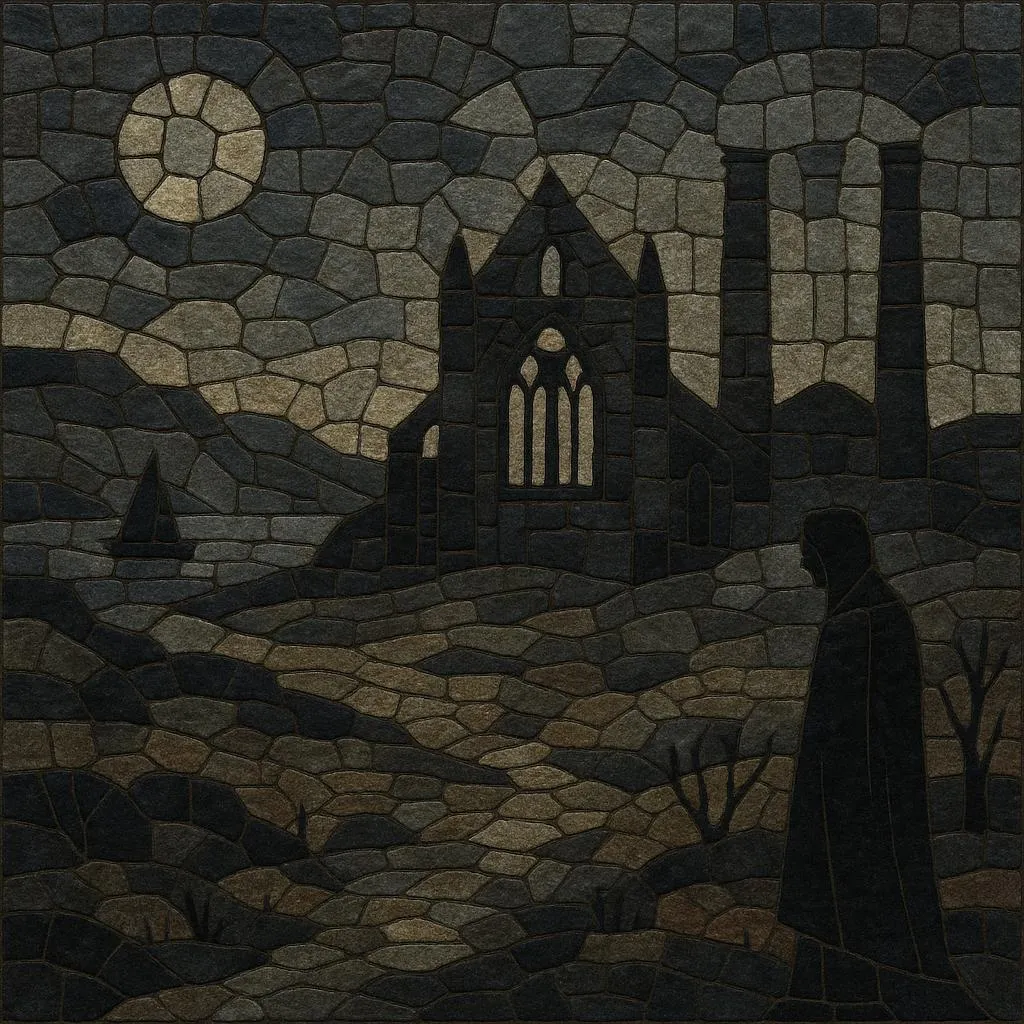
Northern gothic is a modern recontextualization of gothic sensibility rooted in the post‑industrial landscapes, politics, and culture of 21st‑century Northern England.

It blends post‑punk austerity, industrial and dark ambient textures, hauntological memory work, and stark folk storytelling. The sound often evokes mills, moorland, sea ports, terraces, and cooling towers—spaces marked by deindustrialization—through tape patina, reverberant spaces, modular drones, and vernacular narratives.

Compared with classic goth, it is less theatrical and more documentary or folkloric in tone, prioritizing regional specificity, minimalism, and social realism.


Sources: Spotify, Wikipedia, Discogs, RYM, MB, user feedback and other online sources

History

Origins (2000s–early 2010s)

The aesthetic seeds of northern gothic lay in Northern England’s post‑industrial condition—shipyards, mills, and pits closed long before the streaming era, leaving a material and psychic residue. Musicians in Manchester, Leeds, Newcastle, and across Yorkshire drew on post‑punk’s starkness, industrial’s machine patina, and hauntology’s memory studies to translate landscape and social change into sound.

Modern Love (Manchester) provided an early institutional home for this sensibility, issuing works steeped in cold warehouses and empty mills. Parallel to this, a dark revival within regional folk and a rise in field recording culture supplied narrative and environmental detail.

Consolidation (mid–late 2010s)

By the mid‑2010s the term northern gothic began to be used to describe artists combining:

•   post‑punk economy and minor‑key urgency, •   industrial/dark ambient room tones and drones, •   vernacular North‑East and North‑West folk storytelling, •   hauntological treatments of class memory and place.

Releases from Manchester, Leeds, and Tyneside articulated a distinct sound world—less club‑centric than industrial techno, less theatrical than classic goth, and more site‑specific than broader UK hauntology.

Aesthetics and themes
•   Geography as instrument: moor winds, gulls, shipyards, mills, and rain appear via field recordings and long reverbs. •   Social realism: lyrics and sleeve notes engage with austerity, labor histories, post‑industrial precarity, and municipal architectures. •   Minimalism over melodrama: baritone voices, modal folk turns, and restrained arrangements replace baroque gothic tropes.
2020s and wider diffusion

The sound’s vocabulary—dour modular pads, tape noise, stark spoken or chanted delivery, and documentary fieldwork—has permeated UK experimental folk, post‑punk revivalism, and ambient/IDM hybrids. While still regionally coded, its methods now inform broader British experimental practice.

How to make a track in this genre

Sound palette
•   Combine post‑punk guitar minimalism (baritone or clean, chorus/delay) with modular/analogue drones and granular textures. •   Layer environmental recordings from Northern settings (moor wind, rain on brick, rail yards, shipyard ambience) as beds or transitions. •   Use tape hiss, wow/flutter, spring/plate reverbs, and long room responses to evoke mills, churches, and warehouses.
Harmony and melody
•   Favor Aeolian and Dorian modes, pedal points, and static or slowly cycling two‑ to four‑chord progressions. •   Interweave folk‑derived melodic cells (Northumbrian/Geordie contours) with constrained, chant‑like vocal lines.
Rhythm and tempo
•   Tempos typically 60–110 BPM. Employ motorik pulses, sparse toms, or deadened kick patterns; embrace negative space. •   Consider polyrhythmic machinery motifs (subtle clanks, looped mechanical samples) instead of busy drum kits.
Lyrics and themes
•   Focus on place, labor histories, municipal life, rivers and moors, post‑industrial aftermath, and intimate social detail. •   Use regional diction/place‑names; mix reportage with folklore and oral history fragments.
Production and arrangement
•   Build arrangements around drone + voice or riff + environment, then add minimal harmonic counters. •   Parallel chains: dirty/tape‑saturated bus versus clean/close vocal bus for documentary immediacy. •   Master for dynamic headroom; let noise floors and long tails breathe.
Instruments and tools
•   Guitars (baritone/standard), harmonium, fiddle, concertina; modular synths, reel‑to‑reel, samplers, contact mics. •   Field recorders (mid/side), convolution reverbs using IRs captured in local spaces, and restrained compression.

Top tracks

Locked
Share your favorite track to unlock other users’ top tracks

Upcoming concerts

in this genre
Influenced by
Has influenced

Download our mobile app

Get the Melodigging app and start digging for new genres on the go
© 2026 Melodigging
Melodding was created as a tribute to Every Noise at Once, which inspired us to help curious minds keep digging into music's ever-evolving genres.
Buy me a coffee for Melodigging