Your digging level
Description
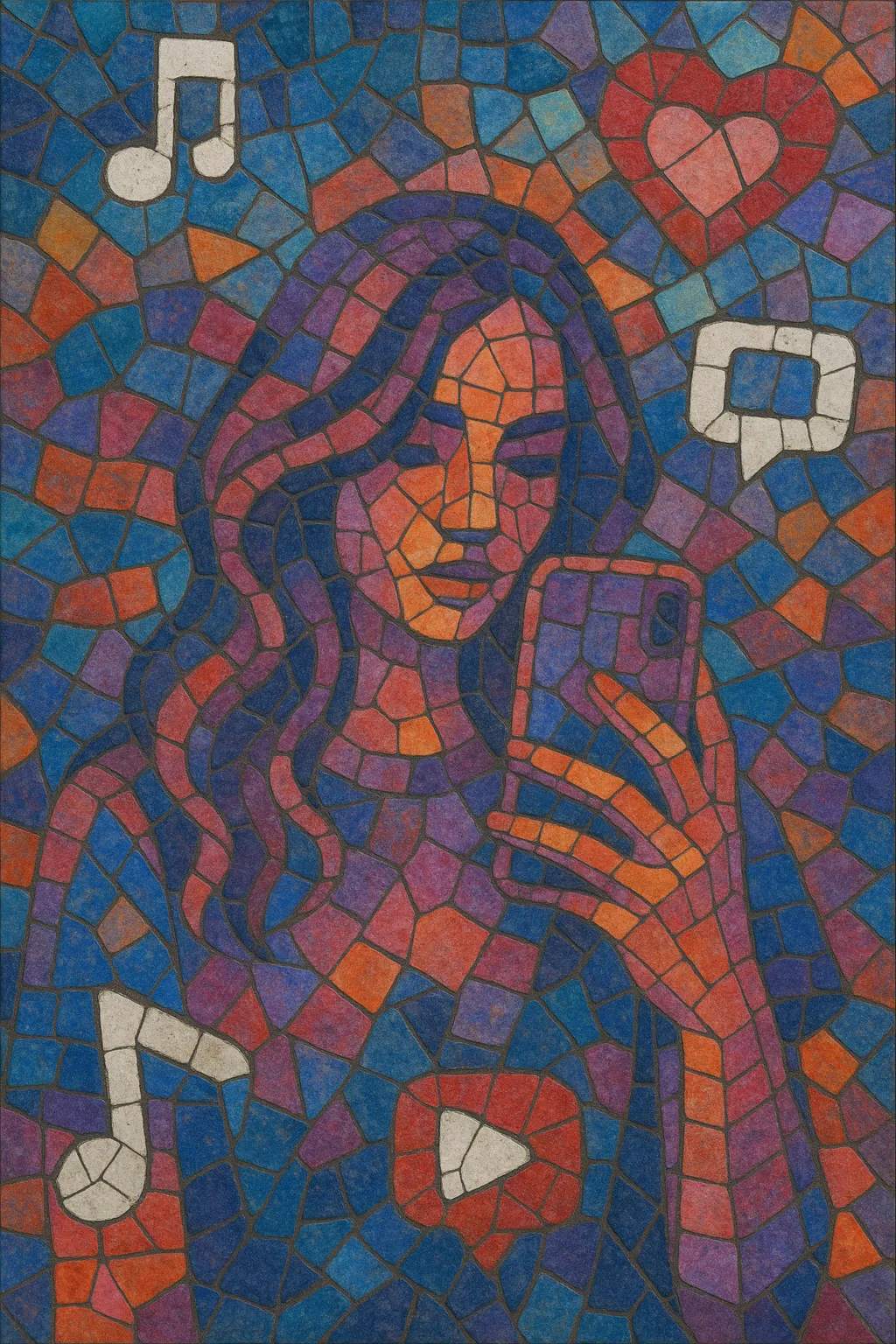
Social media pop is contemporary pop music engineered for discovery, consumption, and participation on social platforms such as YouTube, Vine, Musical.ly/TikTok, Instagram Reels, and Shorts. It prioritizes instantly memorable hooks, trend‑friendly beats, and highly quotable one‑liners that can be clipped into 10–30 second moments.
Sonically, it blends glossy dance‑pop and electropop with bedroom‑pop intimacy, trap‑leaning drums, and hyperpop‑adjacent vocal processing (pitch shifts, formant play, layered doubles). Tracks are short (often 2–3 minutes), introduce the chorus or a micro‑hook within the first 5–15 seconds, and often arrive in multiple versions (sped‑up, slowed + reverb, acoustic, “performance” edits) tailored to platform algorithms.
Lyrically it favors diaristic, first‑person writing and parasocial immediacy—relatable snapshots of romance, self‑doubt, glow‑ups, and nostalgia—crafted to soundtrack dances, memes, POV skits, and other user‑generated trends.


History
Social media pop grew from the first generation of platform‑native artists who built careers on YouTube and Vine. Early success stories (e.g., cover artists and Vine singers) showed that short, hook‑centric clips could translate into mainstream hits. This period established key traits: direct audience engagement, DIY/bedroom workflows, and songs designed around instantly shareable moments.
The merger of Musical.ly into TikTok standardized vertical, sound‑driven discovery. Producers and writers began front‑loading hooks, trimming intros, and crafting crisp, danceable rhythms to maximize 15‑second retention. “Challenge culture,” lyric captioning, and micro‑hooks (catchy pre‑chorus lines or post‑chorus chants) became structural norms.
Lockdowns supercharged TikTok’s role in A&R. Breakouts proved that a song’s life could begin as a snippet or demo. Labels adapted by scouting trend charts, commissioning creator partnerships, and releasing multiple edits (sped‑up/slow) to match user behaviors. The success of platform‑launched artists cemented social media pop as a primary route into the charts.
Writers optimized for the first 5–15 seconds, chorus‑first formats, and tight runtimes. Stem‑friendly arrangements encouraged remixes, transitions, and mashups. Visual framing (vertical assets, performance clips) became part of composition strategy. “Sound” identity—distinctive ad‑libs, count‑ins, or textable catchphrases—helped tracks proliferate.
The format enabled cross‑pollination: bedroom pop textures, hyperpop vocal play, trap percussion, and electropop sheen. It also incubated platform‑born micro‑aesthetics (e.g., alt z, POV‑driven indie, solo‑studio “solo wave”) and revived older ideas like nightcore/“sped‑up” edits for new audiences.