Your digging level
Description
Brazilian jazz is the meeting point of Brazilian popular music and North American jazz, blending samba and bossa nova rhythms with jazz harmony, improvisation, and ensemble interaction.
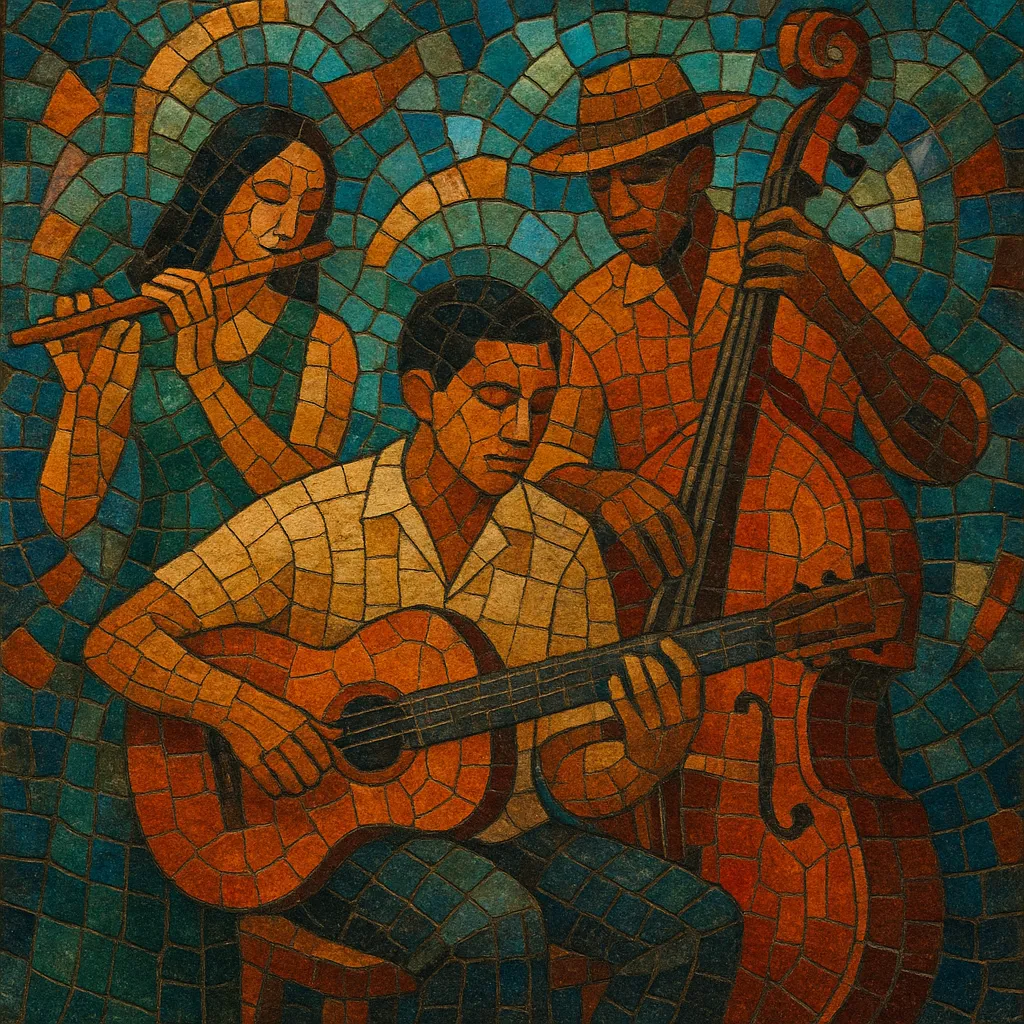
The style typically features syncopated Brazilian grooves (samba, bossa, partido‑alto) under extended jazz chord voicings and lyrical melodies. Acoustic guitar or piano often supplies a gently propulsive, off‑beat rhythmic bed, while bass and drums translate samba’s surdo and pandeiro patterns to the jazz rhythm section.
Timbres range from intimate (nylon‑string guitar, brushed drum kit, flute) to expansive (full percussion batteries, horns, and electric keys). The overall feel can be both laid‑back and danceable—romantic yet harmonically sophisticated.
History
Brazilian jazz grew from Brazil’s rich popular traditions—samba, choro, and samba‑canção—and their long dialogue with American jazz. By the 1950s, Brazilian arrangers and instrumentalists (e.g., Radamés Gnattali, Garoto) were already weaving jazz harmony and phrasing into Brazilian song forms.
Bossa nova crystallized the understated, syncopated feel that would define much of Brazilian jazz. Antônio Carlos Jobim and João Gilberto set the template in the late 1950s. The 1962 Bossa Nova concert in New York and the Getz/Gilberto collaborations brought the sound to a global audience, establishing a lasting bridge between Brazilian rhythm and jazz improvisation.
Parallel to bossa’s rise, the “samba‑jazz” combo scene (e.g., Zimbo Trio, Tamba Trio) translated samba’s percussion language into piano‑trio and small‑group jazz, emphasizing interactive improvisation, brisk tempos, and modern harmony.
A new wave of innovators—Hermeto Pascoal, Egberto Gismonti, Airto Moreira, Flora Purim, and Azymuth—folded folk colors, advanced harmony, electric instruments, and polyrhythms into Brazilian jazz. Their work linked Brazilian idioms with jazz fusion and world‑jazz aesthetics, influencing musicians across the Americas and Europe.
Brazilian jazz became a core reference for smooth jazz, lounge, nu jazz, and jazz‑house producers, while remaining vital in Brazil through festivals, instrumental scenes, and MPB crossovers. Contemporary artists continue to mix regional rhythms (northeastern baião, maracatu) with jazz vocabulary, keeping the style fresh and globally resonant.