Your digging level
Description
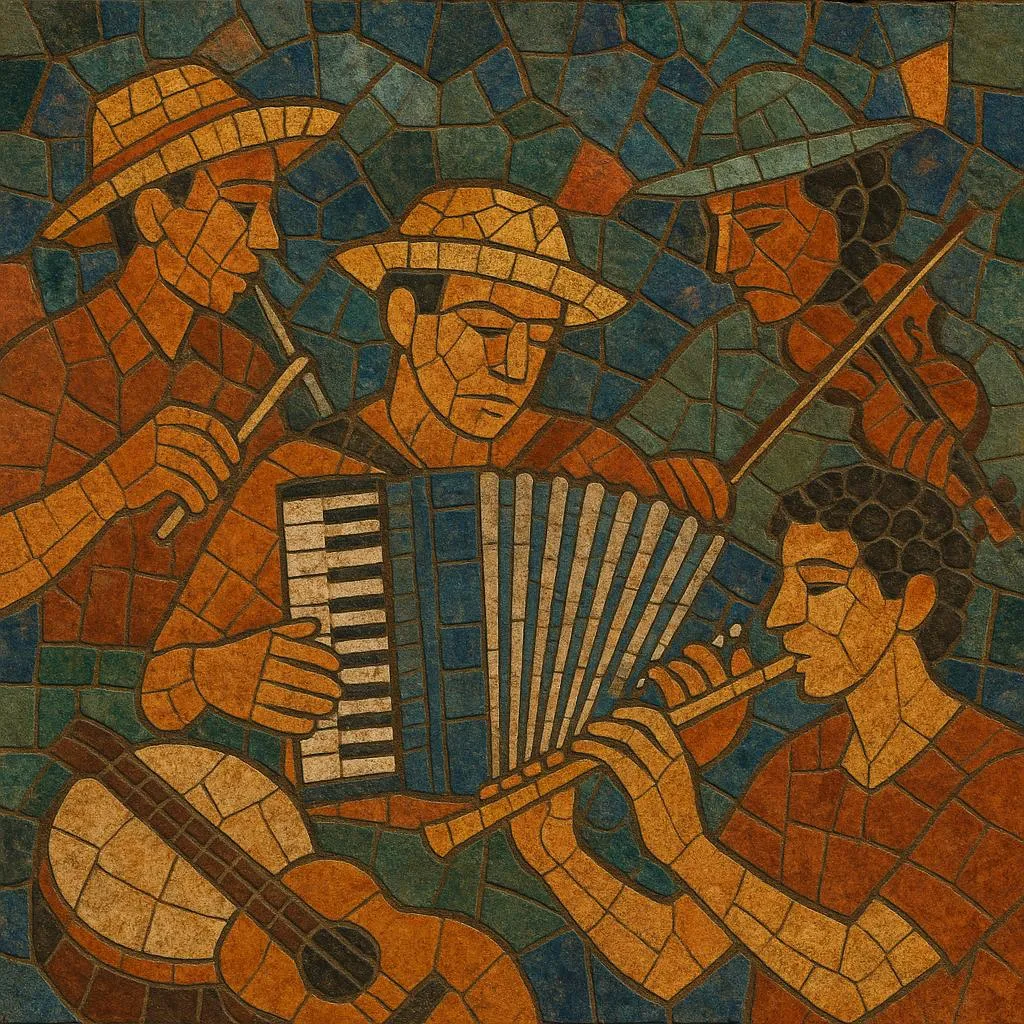
Forró instrumental is the instrumental branch of Brazil’s Northeastern forró tradition, presenting dance forms such as baião, xote, and arrasta-pé without vocals. The melodies are carried by lead instruments—most commonly the accordion (sanfona), but also rabeca (folk fiddle), bandolim, and flute—over the signature triangle and zabumba groove that propels dancers.
Its timbre is earthy yet agile: the accordion’s right-hand lines spin lyrical themes, while the left hand and the zabumba’s low head mark the pulse. The triangle provides a bright, steady shimmer, and guitar, cavaquinho, and bass round out harmony and drive. Stylistically it sits between popular dance music and rootsy chamber music—concise themes, clear forms (AB/ABA), and frequent call‑and‑response passages that allow short improvised breaks akin to choro.
History
Forró formed in Brazil’s semi‑arid Northeast from rural dances and songs such as baião, xote, coco, and xaxado. As the accordion became a symbol of the region, dance tunes were often performed without voice for parties and radio interludes. The early nationwide forró boom brought instrumental baiões and xotes to 78‑rpm discs and radio orchestras, establishing the accordion–triangle–zabumba trio as a portable "rhythm section."
With growing recording infrastructure in Rio and São Paulo, sanfoneiros began issuing instrumental singles and LPs that highlighted technique: fast melodic runs, syncopated bass patterns, and idiomatic ornaments. Parallel contact with choro circles encouraged more elaborate counterpoint and short solos. In this period, the 8‑bass accordion (oito baixos) and rabeca schools further colored the instrumental palette, while touring dance bands spread the style across Brazil.
From the 1990s onward, instrumental forró interacted with MPB, Brazilian jazz, and international "world music" circuits. Conservatories and festivals (including regional sanfona gatherings) fostered new generations of instrumentalists who frame forró rhythms in chamber ensembles, trios, and jazz combos. Today, one finds traditional trios playing dancefloors, concert‑hall projects with strings and woodwinds, and urban groups hybridizing forró grooves with choro, frevo, and modern improvisation—while keeping the triangle–zabumba heartbeat intact.