Your digging level
Description
Jazz house is a strand of house music that blends the genre’s four-on-the-floor pulse with the harmony, instrumentation, and improvisational ethos of jazz. Typical tracks feature swung hi‑hats, syncopated percussion, and a steady 4/4 kick at moderate club tempos, while layering lush extended chords (7ths, 9ths, 11ths, 13ths), walking or syncopated bass lines, and motifs inspired by bebop, soul jazz, and jazz‑funk.
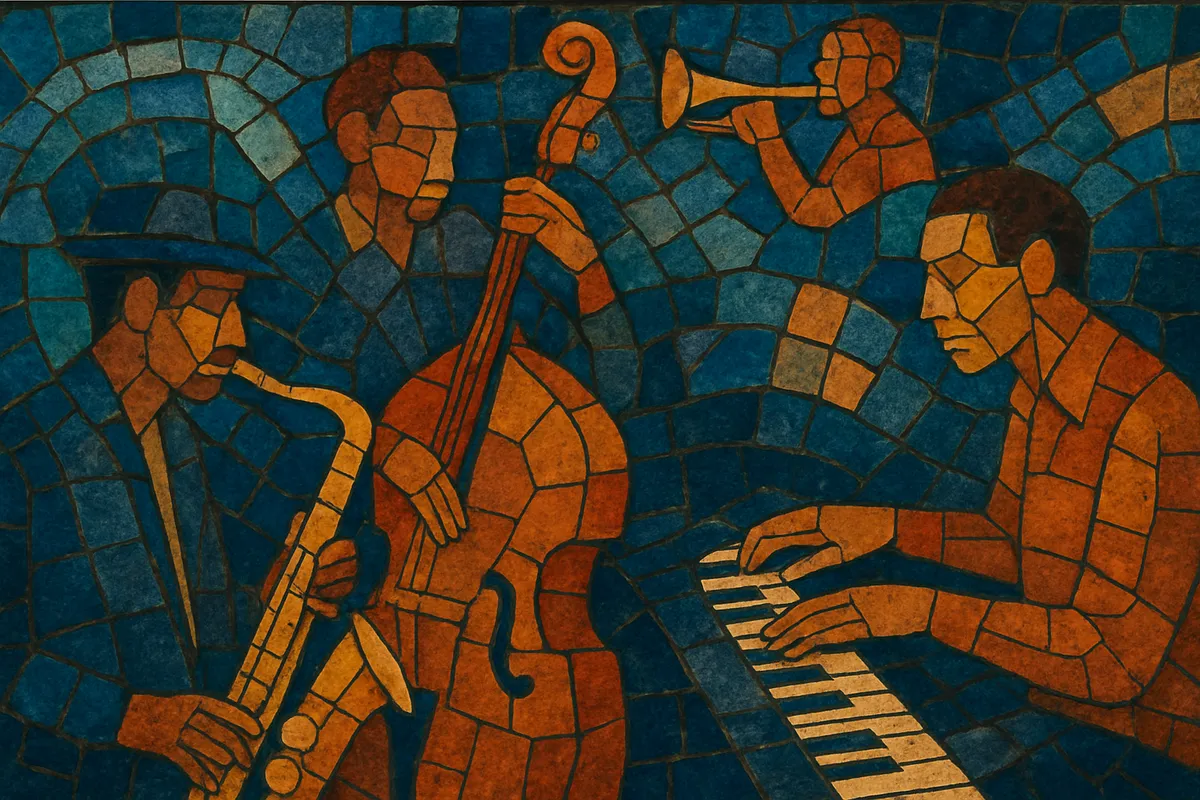
Producers often sample classic jazz recordings or record live parts—Rhodes and acoustic piano, upright or electric bass, saxophone, trumpet, guitar, vibraphone, and Hammond organ—then arrange them in house song forms with breakdowns, solos, and call‑and‑response figures. The result is music that can be both dancer‑friendly and musically rich, sitting at the intersection of deep house, acid jazz, and soulful club music.

History
Jazz house took shape as house producers in Chicago, New York, and Detroit began folding jazz harmony and instrumentation into deep and garage house blueprints. Early deep house and acid jazz provided a fertile environment: sampled Rhodes chords, upright bass loops, and horn stabs were set over 4/4 club beats, hinting at bebop and soul‑jazz while preserving dancefloor momentum.
Through the 1990s, the sound matured on both sides of the Atlantic. In the U.S., figures connected to deep and soulful house experimented with jazzier palettes, while in Europe, French and German scenes embraced live instrumentation and high‑fidelity production. Artists and projects such as St Germain, Masters at Work/Nuyorican Soul, Kerri Chandler, Glenn Underground, Larry Heard, and Ron Trent helped codify the style on labels and compilations that foregrounded musicality as much as groove.
The 2000s saw jazz house overlap with nu jazz, lounge‑leaning deep house, and soulful house. Producers like Atjazz, Blaze, and Moodymann furthered the blend of live session players with sampling aesthetics, while European collectives (e.g., Jazzanova) showcased sophisticated arrangement and harmony. Club nights and festivals began booking hybrid live/DJ sets, normalizing solos and improvisation within house frameworks.
In the 2010s and 2020s, a new wave of house artists revived classic jazz signifiers—swing, extended voicings, and warm analog timbres—within contemporary production. Jazz house remains a connoisseur’s corner of the dancefloor: refined yet accessible, rooted in Black American musical traditions, and influential on nu jazz, lounge‑oriented house, and organic/live house permutations.