Your digging level
Description
Choro contemporâneo (contemporary choro) is the modern evolution of Brazil’s foundational instrumental popular genre, choro. It preserves the genre’s rigorous counterpoint, virtuosic melodic lines, and buoyant dance-derived grooves, while expanding harmony, form, and instrumentation with ideas from jazz, MPB, and contemporary classical music.
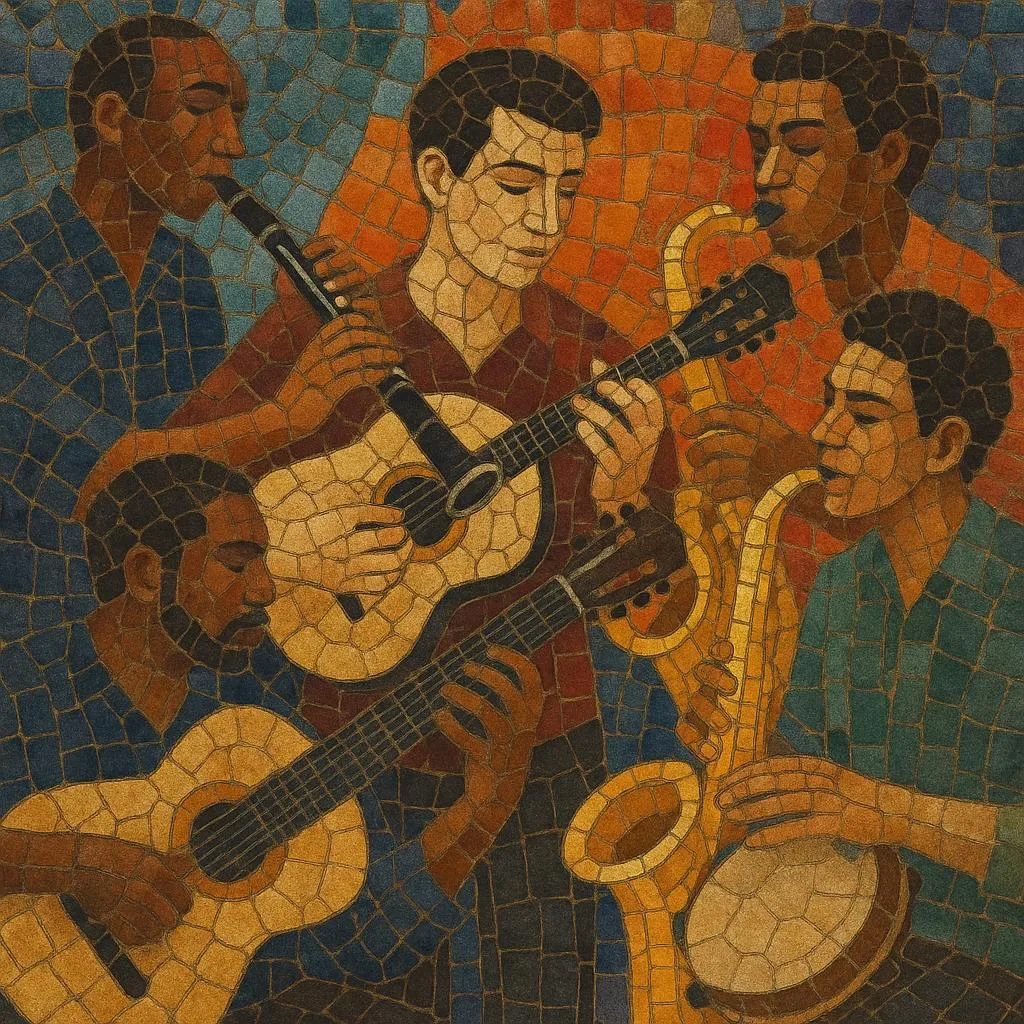
Typical ensembles still feature bandolim (mandolin), flute or clarinet, cavaquinho, 6- and 7‑string guitars, and pandeiro; but modern groups frequently add saxophones, piano, percussion set, and even chamber instruments. The result is a conversational, highly rhythmic music that balances tradition with exploratory reharmonization, metric play, and extended improvisation.

History
Choro itself arose in late-19th‑century Rio de Janeiro as musicians blended European social dances (polka, waltz, schottische) with Afro‑Brazilian rhythmic sensibilities (lundu, maxixe). By the early 20th century, figures like Pixinguinha and Ernesto Nazareth codified a style prized for melodic virtuosity, contrapuntal interplay, and subtle swing.
After mid‑century shifts toward samba-canção, bossa nova, and MPB, a choro revival blossomed in the 1970s around rodas de choro, clubs, and festivals (e.g., Brasília’s Clube do Choro). A new generation embraced the repertoire while absorbing contemporary harmony and improvisation from jazz and Brazilian modernism. This period marks the beginning of what is now called choro contemporâneo—continuing the roda tradition but with broader sonic palettes and modern arranging.
From the 1990s onward, conservatories, independent labels, and international touring fostered a wave of technically dazzling performers and adventurous ensembles. They preserved classic forms (such as the rondo-like AABBACCA) yet infused them with reharmonizations, odd‑meter episodes, extended chords, contrapuntal bass lines on 7‑string guitar, and improvisation more closely aligned with jazz. Today, contemporary choro thrives in Brazil and abroad, bridging rodas, concert stages, and cross‑genre collaborations while serving as a vibrant blueprint for modern Brazilian instrumental music.

Best playlists