Your digging level
Description
Samba-choro is a subgenre of samba that crystallized in early-1930s Rio de Janeiro, Brazil. It fuses the rhythmic pulse and vocal songcraft of samba with the contrapuntal melodies, virtuosic lines, and harmonic movement of choro.
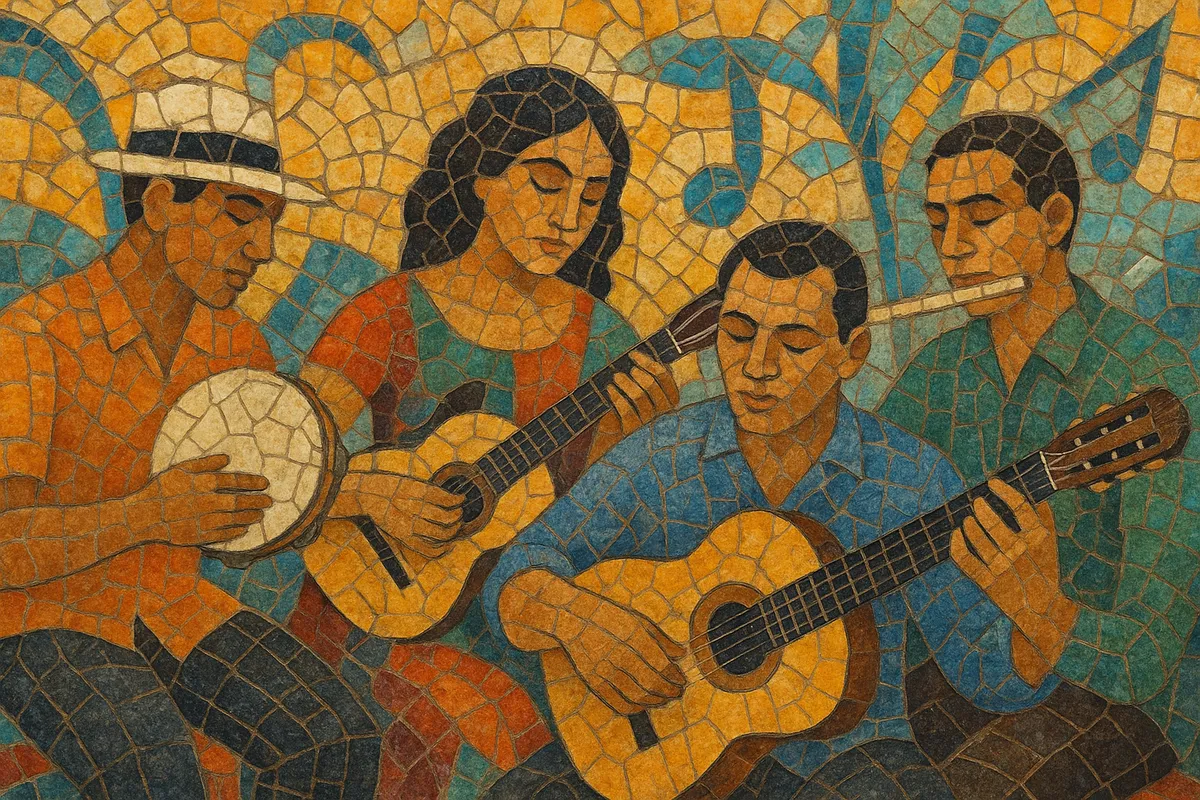
Typically at a medium tempo, samba-choro keeps the syncopated 2/4 swing of samba while adopting choro’s instrumental color—cavaquinho, seven‑string guitar, flute or clarinet—and adds lyrics, turning the choro idiom into elegant, witty popular song. The result is a sophisticated, urban style associated with the radio era, café society, and the rise of Brazilian popular music on 78‑rpm records.
History
Samba-choro emerged in Rio de Janeiro at the start of the 1930s as musicians steeped in choro performance began writing and arranging sambas with choro’s melodic and harmonic language. The new style preserved samba’s syncopated 2/4 groove and communal song tradition but added choro’s contrapuntal wind lines, ornamental melodies, and circle‑of‑fifths motion. Medium tempos and the presence of lyrics distinguished it from purely instrumental choro.
With the growth of Brazilian radio and recording (Odeon, Victor), singer‑composers and studio ensembles popularized samba-choro nationwide. Figures connected to both realms—chorões and sambistas—collaborated: arrangements often paired pandeiro and surdo with cavaquinho, 7‑string guitar bass lines, and clarinet/flute countermelodies. The repertoire favored urbane, conversational lyrics (bohemian Rio, cafés, witty social scenes) married to choro‑tinged melodies and rich harmonic turns, making the style a sophisticated face of 1930s popular music.
From the 1940s onward, samba-choro’s traits—medium tempo, refined harmony, and lyrical elegance—fed directly into samba‑canção and later influenced MPB’s classic songcraft. Dance‑hall (“gafieira”) orchestras absorbed its phrasing, and arrangers like Radamés Gnattali bridged concert techniques with choro/samba swing. Though later overshadowed by samba‑canção and bossa nova, samba-choro remains a keystone that connected instrumental choro tradition to modern Brazilian song.