Your digging level

For this genre
0/8
🏆
Sign in, then listen to this genre to level up

Description

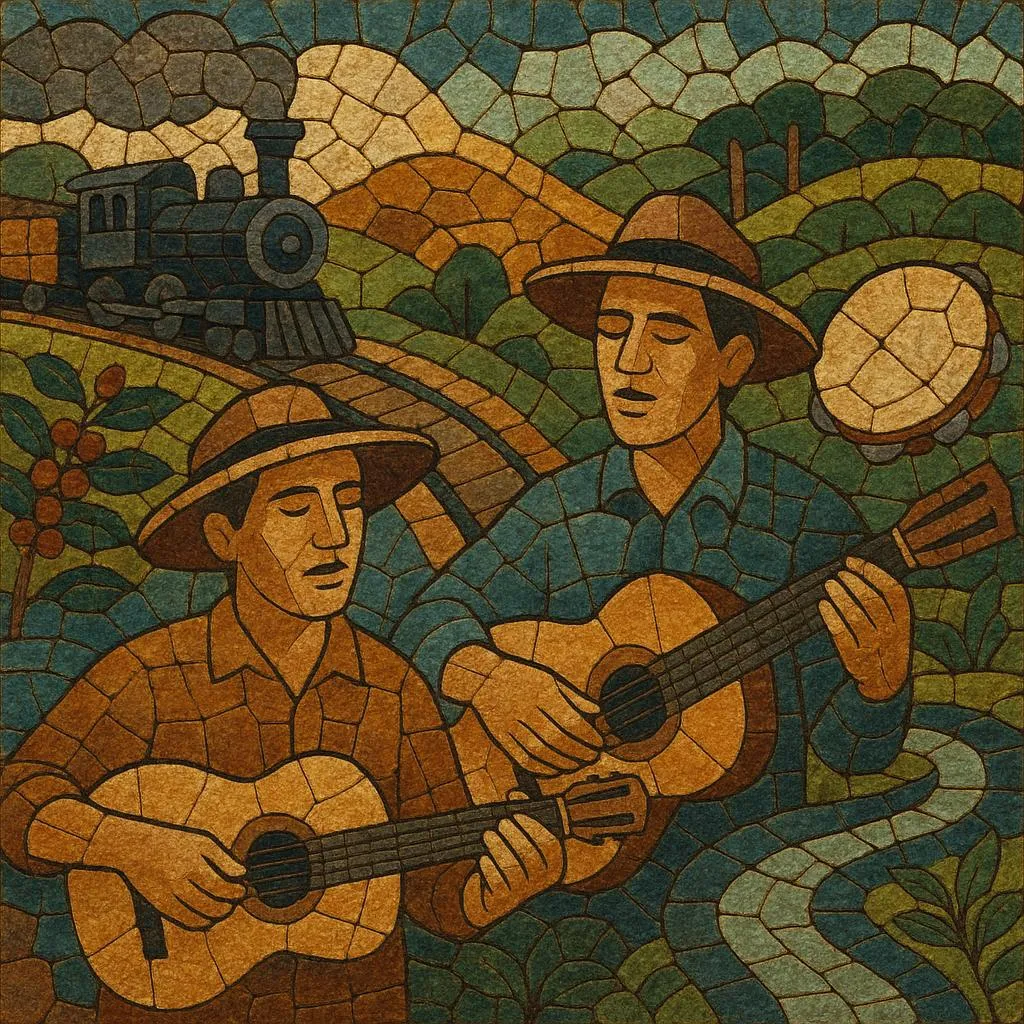
Música mogiana is the umbrella term for the musical practices and scenes linked to the Mogiana region of the interior of São Paulo (and adjacent southwest Minas Gerais), an area historically interconnected by the old Companhia Mogiana railway and coffee routes.

Rather than a single stylistic formula, it is a regional matrix that blends rural paulista traditions (moda de viola, cateretê, cururu, samba rural paulista) with urban salon and street idioms (choro, samba) and, in later decades, MPB, rock, and hip‑hop. Typical timbres include viola caipira and violão alongside cavaquinho, pandeiro, and small‑combo winds for choro; vocal writing often favors close two‑part harmony in sertanejo/caipira fashion and narrative, place‑rooted lyrics about the countryside, coffee towns, rivers, and railways.

Today the term also identifies a lively network of ensembles, duos, and independent artists centered in cities such as Campinas, Ribeirão Preto, Mogi Mirim, and Mogi Guaçu, where traditional forms coexist with contemporary pop and indie approaches.


Sources: Spotify, Wikipedia, Discogs, RYM, MB, user feedback and other online sources

History

Origins (late 19th–early 20th century)

The Mogiana region grew around coffee production and the Companhia Mogiana railway, which linked interior towns and fostered cultural exchange. In this context, rural vocal‑instrumental forms—moda de viola, cateretê, cururu, and toadas—thrived in festas, folias, and town squares. Simultaneously, choro and early samba circulated through itinerant musicians and civic bands, giving the area a dual rural–urban musical identity.

Mid‑century consolidation

From the 1930s to the 1960s, local radio, philharmonic societies, and choro/samba circles in cities like Campinas and Ribeirão Preto stabilized repertoire and performance practice. Two‑voice sertanejo/caipira duos and viola caipira technique became emblematic, while urban ensembles cultivated sophisticated choro harmony and counterpoint, often intersecting with MPB’s emergence.

Late 20th century expansions

The 1970s–1990s saw the regional palette broaden with MPB, rock, and university circuits. Civic orchestras and choros coexisted with dancehalls and bar circuits championing samba and sertanejo. The Mogiana identity remained audible in lyrical themes—train lines, coffee towns, and rural imagery—even when arrangements modernized.

21st‑century scene

Digital production and independent circuits in the 2000s–2020s connected Mogiana artists across styles: choro clubs, samba rodas, viola festivals, indie/rock venues, and hip‑hop collectives. The term “música mogiana” today denotes both heritage repertoire and contemporary hybrids, sustaining a recognizable interior paulista sensibility while engaging national pop currents.

How to make a track in this genre

Core instrumentation
•   Rural/sertanejo side: viola caipira (10-string), violão (nylon or steel), accordion, bass (acoustic or electric), hand percussion (ganzá, reco‑reco, zabumba or surdo when leaning samba), and close two‑part vocals. •   Choro/samba side: cavaquinho, 7‑string guitar (baixaria lines), pandeiro, tamborim, and a lead melody voice on flute or clarinet; add bandolim for classic choro color.
Rhythm and groove
•   For choro‑inflected pieces, use 2/4 with off‑beat syncopation and a light but precise pandeiro; let the 7‑string guitar weave counter‑bass figures (baixarias). •   For moda de viola/cateretê, keep a driving 2/4 with clapping accents and viola caipira ponteios (arpeggiated rolls). Cururu often alternates responsorial vocals over a square, danceable pulse. •   Samba rural paulista flavors add swung subdivisions, surdo on beats 1/2 with cross‑rhythmic tamborim figures.
Harmony and melody
•   Choro language: tonal centers with chromatic approach chords, secondary dominants, circle‑of‑fifths movement, and modulations to relative keys; craft singable, ornamented melodies with answering counterlines. •   Caipira/sertanejo language: diatonic progressions (I–IV–V, I–vi–IV–V), parallel thirds/sixths in vocal duos, and open‑string viola gestures outlining tonic/dominant drones.
Lyrics and themes
•   Ground songs in interior paulista imagery: trains and stations, coffee hills, rivers (e.g., Mogi‑Guaçu), festas do interior, and community life. Balance nostalgia (saudade) with everyday humor and resilience.
Arrangement and production tips
•   Blend acoustic intimacy (close‑miked viola/violão, room pandeiro) with modern clarity; for crossover tracks, layer subtle pads or electric bass without masking acoustic transients. •   In choro settings, keep the lead wind line forward and let 7‑string/guitar contrapuntal lines breathe; in sertanejo, prioritize vocal blend and viola shimmer. •   Live feel matters—slight tempo push/pull in sambas and humanized articulation in choro elevate authenticity.

Top tracks

Locked
Share your favorite track to unlock other users’ top tracks

Upcoming concerts

in this genre
Has influenced

Download our mobile app

Get the Melodigging app and start digging for new genres on the go
© 2026 Melodigging
Melodding was created as a tribute to Every Noise at Once, which inspired us to help curious minds keep digging into music's ever-evolving genres.
Buy me a coffee for Melodigging