Your digging level
Description
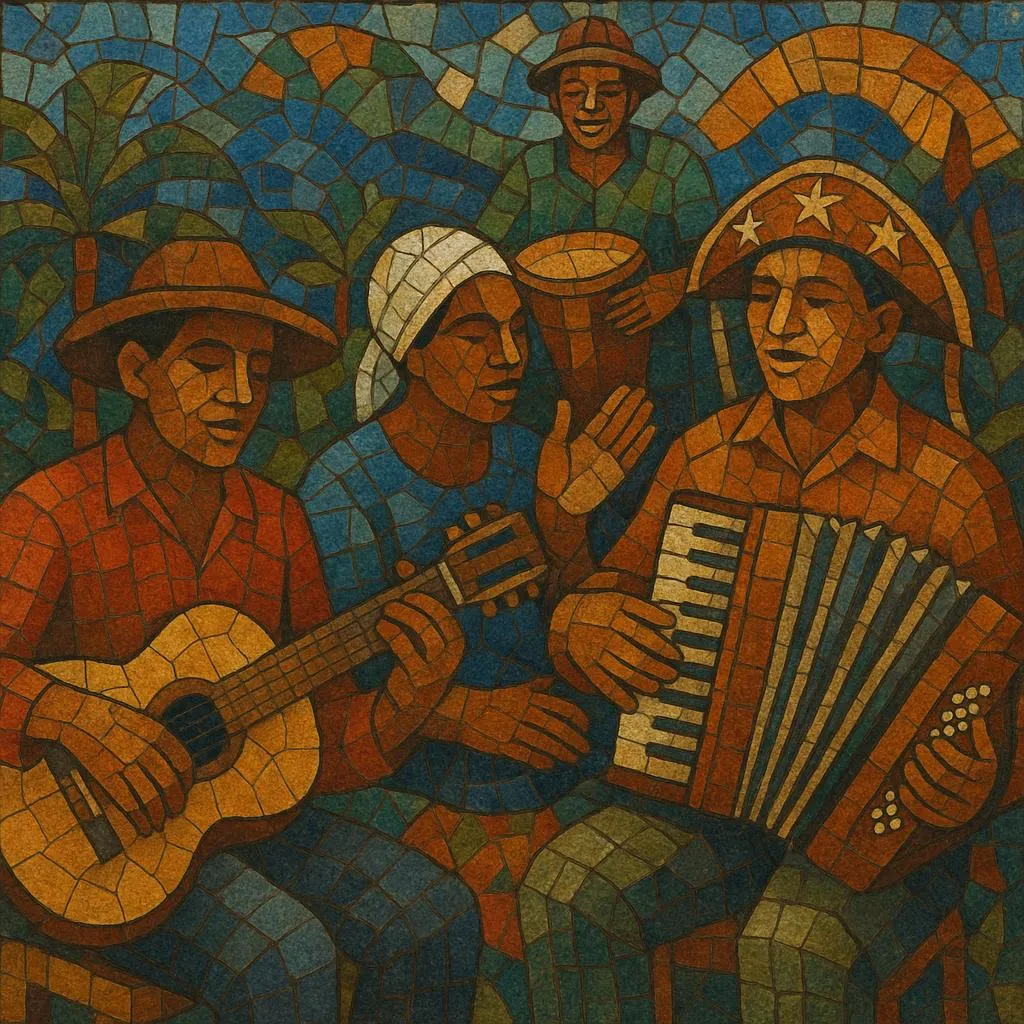
Musica alagoana refers to the diverse popular and traditional music made in the Brazilian state of Alagoas. It blends coastal and sertão (backlands) sound-worlds: the call-and-response and handclap drive of coco de roda, the accordion-led grooves of forró and baião, and the colorful pageantry rhythms of maracatu and pastoril, alongside samba, choro, and later MPB- and jazz-inflected songwriting.
From the late 20th century onward, Alagoas also cultivated a cosmopolitan side: sophisticated MPB songcraft, adventurous jazz, rock and indie scenes in Maceió, and hip hop that narrates local urban life. The result is a hybrid regional identity—deeply Northeastern in pulse and poetry, yet open to modern harmony, studio craft, and global influences.
History
Alagoas sits between the sea and the sertão, and its earliest musical identity reflects that geography. Folk forms such as coco de roda (with stomping, clapping, and responsorial singing), bumba‑meu‑boi, pastoril, guerreiro, and maracatu circulated through festivals and religious calendars. Coastal ensembles preserved choro and modinha traditions, while traveling cantadores (repentistas) kept improvised verse (repente/embolada) alive across markets and fairs.
From the 1940s–1960s, radio helped consolidate a recognizably Alagoan sound within Brazil’s wider Northeastern panorama. Accordion‑based forró and baião, xote dance rhythms, and urban samba coexisted with art‑music currents; composers from Alagoas brought regional melodies and meters into classical and popular settings, laying a foundation for later MPB and jazz dialogues.
In the 1960s–1980s, Alagoan artists became nationally influential, channeling local prosody and Northeastern grooves into refined harmony, inventive arrangements, and virtuosic improvisation. This period aligned musica alagoana with the broader MPB project while keeping a firm grip on vernacular forms like coco, forró pé‑de‑serra, and maracatu.
From the 1990s onward, Maceió’s rock and indie scenes fused jangly guitars, psychedelia, and regional percussion; meanwhile, jazz‑leaning projects and experimental producers drew on baião and coco patterns in modern studio settings. In the 2000s–2020s, independent labels, festivals, and collectives strengthened a local circuit spanning MPB, alternative rock, hip hop, and electronic fusions—often reimagining traditional timbres (rabeca, zabumba, pife) alongside synths and samplers.
Contemporary musica alagoana is plural: danceable forró and coco at festas juninas; intimate singer‑songwriters with jazz‑colored harmony; indie bands with Northeastern rhythmic DNA; and hip hop chronicling Alagoan everyday life. The scene remains rooted in community celebrations yet continually refreshes itself through collaboration and genre cross‑pollination.