Your digging level
Description
Coco is an Afro-Brazilian rhythm and community dance-song tradition from Northeastern Brazil, especially Pernambuco, Paraíba, Alagoas, and Rio Grande do Norte.
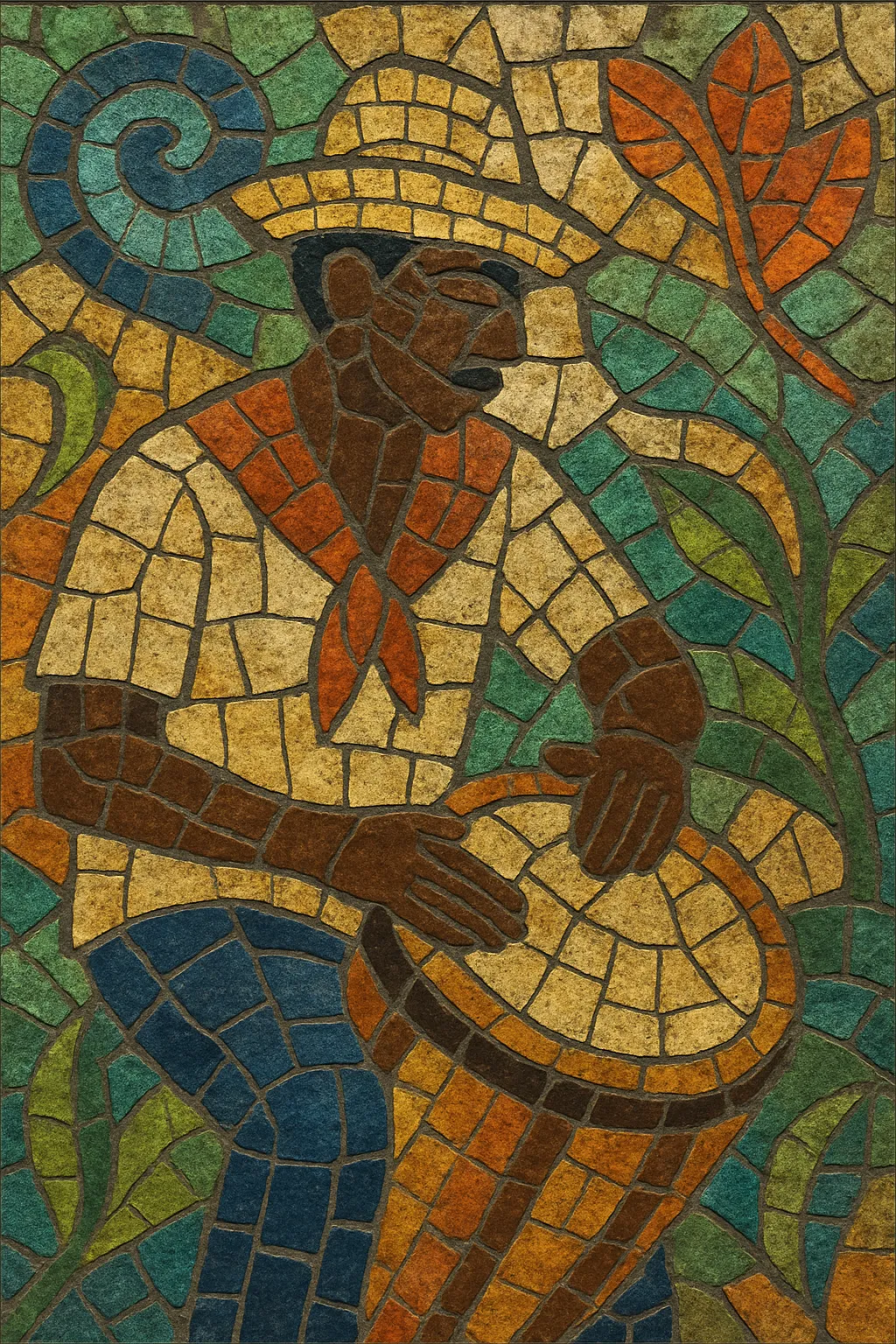
It features a propulsive, repetitive groove in duple meter, call-and-response vocals led by a mestre (leader) and answered by a chorus, and a distinctive percussive "pisada" (stomping) that turns the dancing circle into a rhythmic instrument. Performers typically gather in a roda (circle), clapping, stepping, and spinning to the beat—often at weekend street parties, religious/festive gatherings, and Carnival.
Coco is closely related to (and sometimes synonymous with) embolada, the fast, tongue‑twisting, often improvised song form accompanied by pandeiro. Its antiphonal singing and cyclic percussion patterns echo West and Central African work songs and ritual music, and its participatory energy is comparable to capoeira music—joyful, communal, and irresistibly dancing.
History
Coco crystallized in the late 1800s within Northeastern Brazil’s Black and mixed communities, where African-descended circle dances, call‑and‑response singing, and percussive body movement merged with local festivals. The genre’s name is commonly linked to coconut‑related labor and festivities; the hard, heel‑driven “pisada” (stomp) evokes collective work and communal celebration. Early coco rodas were informal—held in backyards, terreiros, beaches, and street corners—where a mestre led verses and dancers marked the beat with their feet.
As coco spread through Pernambuco, Paraíba, Alagoas, and Rio Grande do Norte, it diversified. One influential current is embolada (also called coco de embolada), where singers deliver rapid‑fire, often improvised, tongue‑twister verses over pandeiro. The line between coco and embolada is fluid: many practitioners move freely between a circle‑dance coco and a virtuosic song duel.
From the 1930s–1960s, radio and records carried coco beyond the Northeast. Artists associated with forró and baião adopted coco rhythms, helping to codify a Northeastern popular music continuum that included xote, xaxado, maracatu, ciranda, and coco. Community groups kept the roda practice alive in religious and neighborhood festivities, while professional performers brought coco onto stages.
In the 1990s and 2000s, the mangue beat movement (centered in Recife) re‑energized traditional Northeastern grooves—coco among them—by blending them with rock, hip‑hop, and electronic textures. At the same time, traditional samba de coco groups from Arcoverde, Olinda, and the Recife metropolitan area gained greater recognition. Today, coco thrives both as grassroots cultural heritage—sustained by community groups, terreiros, and family lineages—and as a source of rhythms for contemporary Brazilian popular music.
Coco remains a participatory practice: a danced music and a sung dance. The roda’s circular formation, handclaps, chorus responses, and collective stepping emphasize belonging and continuity. Lyrics range from everyday stories and playful teasing to devotional and festive themes, with improvisation and quick verbal wit prized in embolada.