

Your digging level
For this genre
0/8
🏆
Sign in, then listen to this genre to level up
Description
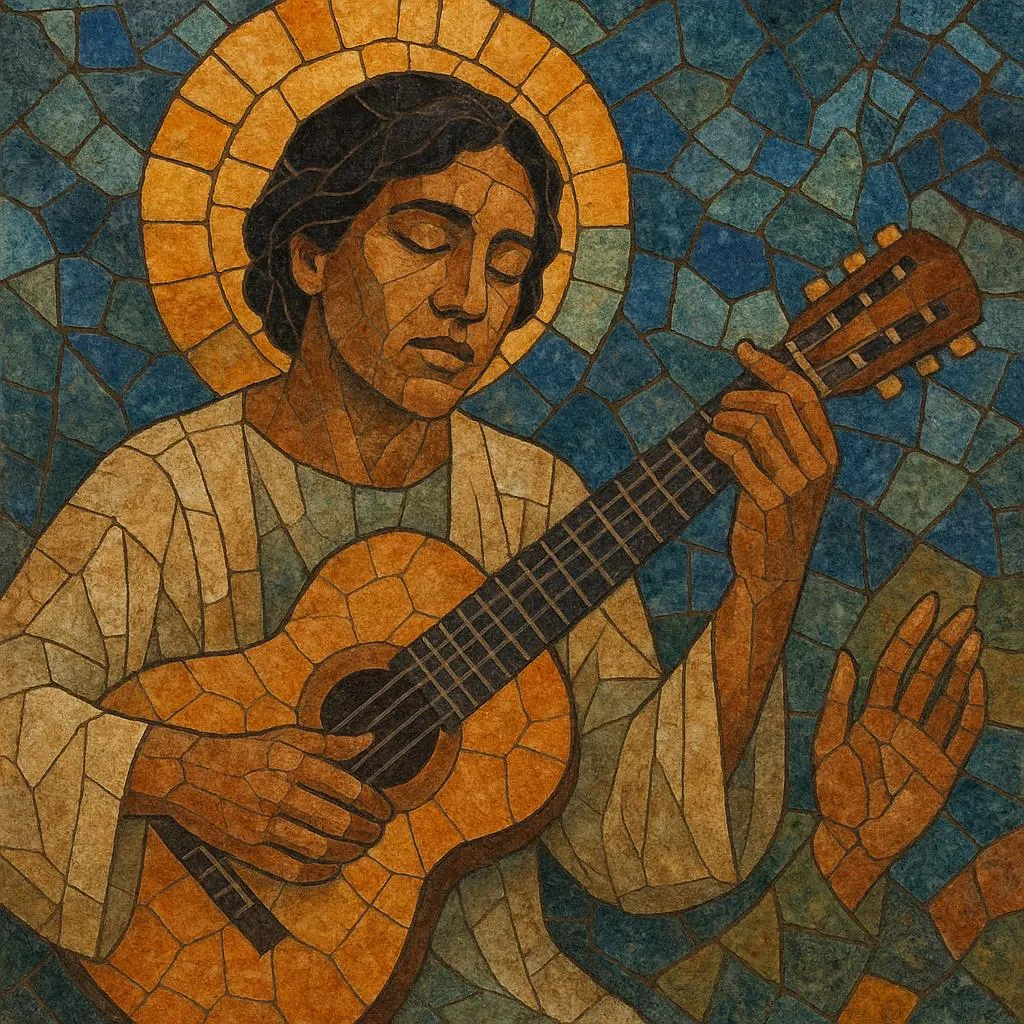
MPB gospel (Música Popular Brasileira gospel) blends the harmonic richness, rhythmic subtlety, and poetic sensibility of Brazilian MPB with explicitly Christian themes.
Typical recordings favor nylon‑string acoustic guitar, gentle samba and bossa nova grooves, jazz‑tinged chords, and intimate, reflective vocals in Portuguese. Instead of large congregational anthems, MPB gospel tends to be contemplative, singer‑songwriter oriented, and lyrically poetic—addressing faith, grace, everyday spirituality, and social conscience through the aesthetic lens of Brazilian popular song.
History
Origins
• The roots of MPB gospel lie in late 1970s–1980s Brazil, when Christian singer‑songwriters began setting devotional texts to the idioms of MPB, bossa nova, and samba rather than to imported pop/rock templates. Early evangelical and Catholic renewal movements, small ministry collectives, and campus fellowships fostered a climate in which faith‑centered lyrics could coexist with Brazilian popular songcraft and jazz harmony.
1990s consolidation
• The 1990s saw the term “gospel” gain traction in the Brazilian market, and a parallel current within that market crystallized around MPB aesthetics. Independent labels, church‑adjacent studios, and songwriter networks supported albums that sounded like classic MPB—acoustic, harmonically sophisticated, poetically inclined—while remaining unapologetically Christian in content. This period normalized the idea that Brazilian devotional music did not need to mimic Anglo‑American CCM to be spiritually resonant or artistically credible.
2000s–present
• In the 2000s and 2010s, MPB gospel matured alongside a broader explosion of Brazilian Christian music. Better production resources, digital platforms, and festivals enabled wider circulation. The style also influenced adjacent worship and indie circles: many worship leaders adopted gentler MPB textures for congregational settings, while faith‑driven indie artists borrowed MPB gospel’s lyrical intimacy and acoustic palette. Today, MPB gospel remains a respected niche within Brazil’s sacred music ecosystem, prized for its craft and reflective tone.
Instrumentation and texture
• Center the arrangement on nylon‑string acoustic guitar (fingerstyle or soft comping), upright/electric bass, brushed drum kit, and light percussion (pandeiro, shakers). Add piano or Rhodes, and occasional woodwinds (flute/sax) for color.
• Keep the mix intimate and dynamic; prioritize breathing room over stadium‑sized production.
Rhythm and groove
• Draw from bossa nova and soft samba: medium‑slow tempos (≈ 70–110 BPM) with understated syncopation.
• Use subtle partido‑alto patterns or gentle tum‑ti accents; let percussion support rather than dominate.
Harmony and melody
• Employ MPB/jazz harmony: major 7ths, 9ths, 11ths, chromatic approach tones, secondary dominants, and modal interchange.
• Craft singable, speech‑like melodies that sit comfortably in the mid register and allow for lyrical nuance.
Lyrics and themes
• Write in Portuguese with poetic imagery. Focus on faith, grace, hope, creation, and everyday discipleship; include social conscience and ethical reflection consistent with Brazilian MPB traditions.
• Favor reflective, personal prayer language over purely declarative congregational slogans.
Song form and arrangement
• Use AABA or verse–refrain with bridges; allow instrumental intros/codas for guitar or piano.
• Arrange dynamically: start sparse (voice + guitar), add textures gradually, and resolve with a quiet cadence rather than a bombastic climax.
Performance practice
• Prioritize expressive vocal delivery, clear diction, and micro‑dynamic phrasing.
• Record live‑in‑room takes when possible to capture organic interplay—hallmarks of MPB authenticity.

MELHOR MPB GOSPEL MÚSICA POPULAR BRASILEIRA EVANGÉLICA CLIPE DE MPB MUNDO CRISTÃO EVANGÉLICO
Técnica Vocal Gospel

CRER EM CRISTO Akira MPB GOSPEL Mpb Cristã MÚSICA POPULAR BRASILEIRA EVANGÉLICA Técnica Vocal Gospel
Técnica Vocal Gospel

Best playlists



Top tracks
Locked
Share your favorite track to unlock other users’ top tracks
Upcoming concerts
in this genre
