Your digging level
Description
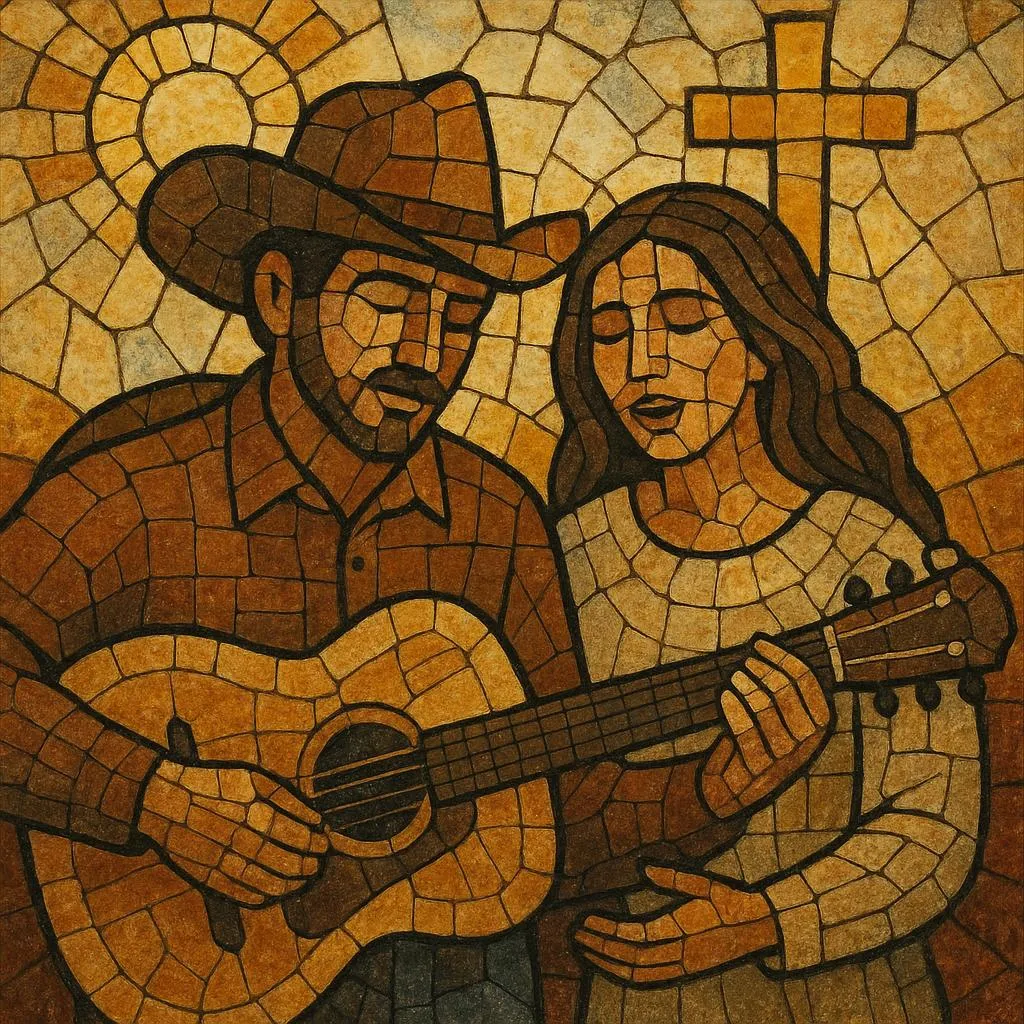
Sertanejo gospel is a Brazilian Christian subgenre that blends the melodic songwriting, duo harmonies, and rural-pop instrumentation of sertanejo with evangelical praise and testimony-centered lyrics.
Musically, it keeps the acoustic guitars, viola caipira, accordions, and polished pop-country production associated with modern sertanejo, while adopting the congregational hooks, uplifting messages, and modulated finales common in Brazilian gospel and praise & worship. The result ranges from tender ballads to danceable, radio-ready anthems that carry a devotional focus.
History
Sertanejo gospel emerged in Brazil during the 2000s as evangelical artists and producers began to fuse the mainstream popularity of contemporary sertanejo (especially the "universitário" and romantic strains) with gospel’s lyrical concerns and church-centered performance circuits. The format resonated particularly in Brazil’s interior and mid-sized cities, where sertanejo has long served as a dominant pop idiom.
As evangelical media networks, independent labels, and digital platforms expanded in the late 2000s and 2010s, sertanejo gospel singles and live videos found wider audiences beyond church events—appearing on Christian radio, regional TV, and streaming playlists. Duos and soloists adopted hallmarks of sertanejo shows (tight two-part harmonies, acoustic-led bands, and audience singalongs) while emphasizing testimonies, hope, and worship.
Arrangements typically mirror modern sertanejo’s sheen—acoustic/steel-string guitars, viola caipira arpeggios, accordion or pads, bass and pop-country drums—paired with gospel’s climactic modulations, call-and-response choruses, and lyrics rooted in scripture and everyday faith. The repertoire spans mid-tempo love-of-God ballads, narrative songs of overcoming, and upbeat dance numbers suitable for youth services and festivals.
By the 2010s–2020s, sertanejo gospel became a stable lane within Brazil’s Christian market, sharing stages with worship acts, influencing church setlists in rural and urban congregations alike, and offering a culturally familiar vehicle for evangelical messages to the broader sertanejo-listening public.