Your digging level
Description
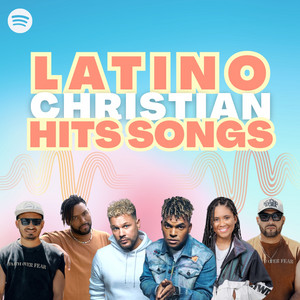
Latin Christian music is a faith-centered branch of Latin popular music and Contemporary Christian music performed in Spanish and Portuguese.
Built on the worship traditions of Latin America's large Catholic community and fast-growing Evangelical churches, it blends congregational praise with the region's rich rhythmic palette—pop-rock ballads, cumbia, salsa, merengue, bachata, reggaeton, and regional Mexican styles—while maintaining explicitly Christian themes.
The field has formal industry visibility (e.g., Latin Grammy and Latin Billboard Christian categories), yet its market is often undercounted due to low reporting and informal distribution, especially through churches and grassroots networks.

History
Spanish- and Portuguese-language worship expanded alongside the rise of Contemporary Christian Music (CCM) and the Charismatic Renewal. Early recordings circulated through churches and missionary networks, framing Latin Christian music as congregational song rather than a commercial product. Mexico, Puerto Rico, Brazil, and the U.S. Latino diaspora (especially Texas and California) became early hubs.
Labels and ministries (e.g., CanZion) professionalized production, touring, and training. Artists such as Marcos Witt, Jesús Adrián Romero, and Marco Barrientos popularized pop-rock worship and live “alabanza y adoración” albums. Parallel growth in Brazil (“música gospel”) produced major acts and a sizable domestic industry.
The genre broadened beyond pop-rock ballads into Latin popular idioms: Christian salsa and merengue in the Caribbean; cumbia, bachata, and regional Mexican styles on the mainland; and urban fusions such as Christian reggaeton, Latin Christian rap, and later Christian trap. Worship collectives and large live recordings (e.g., Miel San Marcos) emphasized stadium-scale congregational participation.
Latin Christian music gained award categories at the Latin Grammys and Latin Billboards, yet sales and streaming are often underreported because much circulation occurs via churches, independent ministries, and live events. Despite this, the scene maintains robust touring circuits, festivals, and a cross-border audience across Latin America and its diaspora.
Today the genre spans intimate devotionals to dancefloor-ready praise, with bilingual releases and global collaborations. It functions both as a worship resource and a commercial sector, sustaining a multi-generational audience within Catholic and Evangelical communities.
Write songs that enable worship and testimony in Spanish or Portuguese, prioritizing singable melodies and congregationally friendly structures (verses, pre-chorus, big hooky chorus, optional bridge).