Your digging level

For this genre
0/8
🏆
Sign in, then listen to this genre to level up

Description

Louvor ICM is the congregational praise-and-worship music associated with the Igreja Cristã Maranata (ICM), a Brazilian evangelical church founded in Espírito Santo.

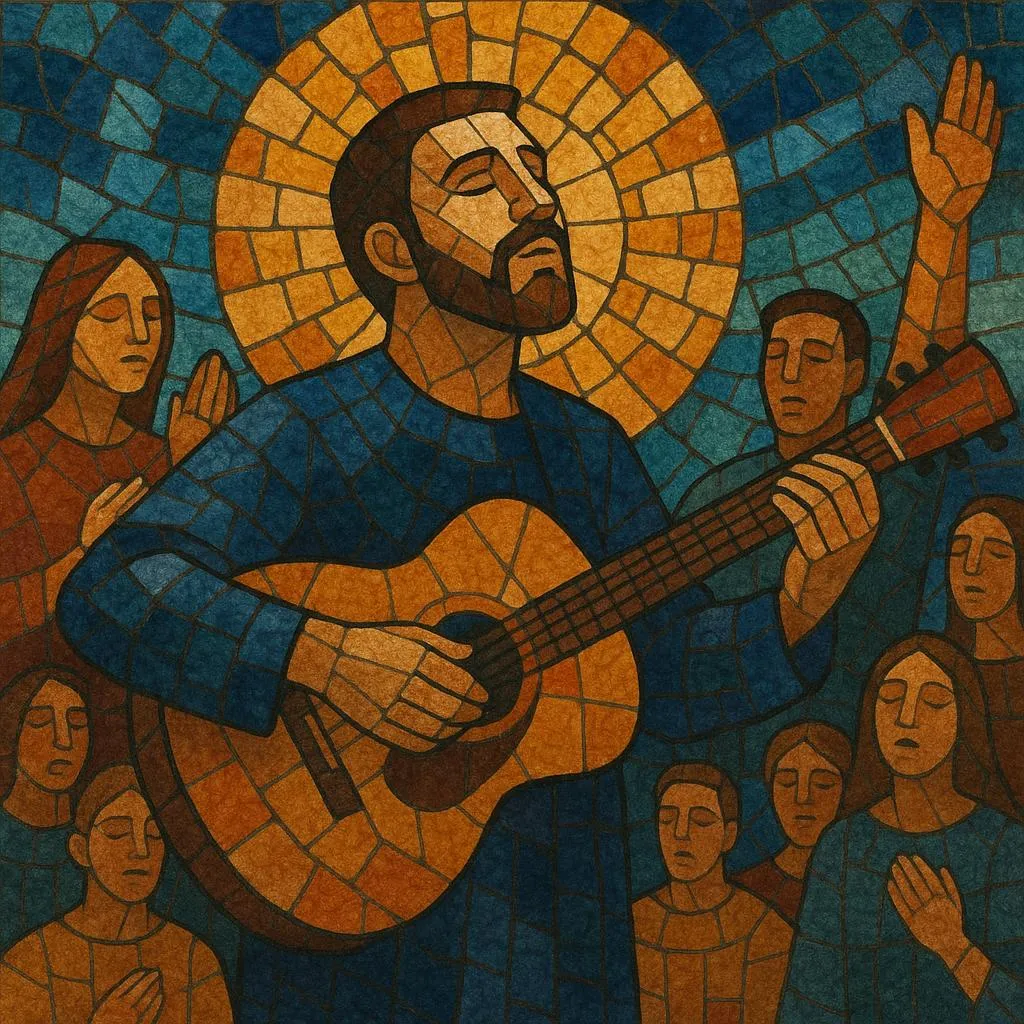
Sung in Portuguese and written for congregational participation, the songs emphasize clear, memorable melodies, simple and diatonic harmonies, and devotional lyrics focused on Christ’s redemption, the Holy Spirit, and the expectation of the Lord’s return ("Maranata!"). Performances range from intimate services led by a small "grupo de louvor" (praise team) to large services with choir and church orchestra.

Typical arrangements feature lead vocal with call-and-response refrains, keyboard or organ pads, acoustic/electric guitars, bass and drums; larger gatherings add SATB choir, strings, and brass. Tempos are moderate, with dynamic builds, occasional key changes for lift, and strong, singable refrains designed for collective worship.


Sources: Spotify, Wikipedia, Discogs, RYM, MB, user feedback and other online sources

History

Origins (late 1960s–1970s)

Igreja Cristã Maranata was founded in 1968 in Vila Velha (Espírito Santo), Brazil. From the outset, its services incorporated Portuguese-language hymns and new choruses tailored to congregational singing. These early "louvores" aligned with wider Brazilian gospel currents of the era while cultivating a distinct Maranata devotional vocabulary (e.g., the Bride, the Blood, the Trumpet, the Lord’s imminent return).

Consolidation and Liturgical Identity (1980s–1990s)

Through the 1980s and 1990s, Louvor ICM stabilized into a recognizable repertoire used across ICM congregations. The church’s emphasis on clarity of message and congregational accessibility shaped the music’s form: diatonic harmony (I–IV–V–vi), memorable melodic contours, and refrains that lent themselves to call-and-response. Larger services featured choirs and church orchestras, codifying a choral-orchestral sonority alongside the small praise-team format.

Recording, Broadcasts, and Standardization (2000s–2010s)

With the growth of church media (recordings, broadcasts, digital distribution), Louvor ICM pieces circulated widely, standardizing keys, lyrics, and forms. Arrangements increasingly balanced contemporary praise-band instrumentation with traditional choral textures, reinforcing the music’s dual identity: modern in timbre, liturgical in purpose.

Today

Louvor ICM remains an active, living repertoire within the Maranata church. New songs continue to be written within established stylistic norms—clear melodies, scriptural language, and forms optimized for congregational participation—while performances range from intimate acoustic settings to full choir-and-orchestra services.

How to make a track in this genre

Core Aims
•   Write for the congregation first: clear melody, comfortable tessitura, and straightforward rhythm. Keep the text primary and easily understood when sung by many.
Tonality, Harmony, and Form
•   Keys: Favor singable keys for mixed congregations (C, D, E♭, E, F, G). Tessitura should suit untrained voices (roughly A3–D5 for women’s melody, E3–A4 for men). •   Harmony: Diatonic progressions such as I–V–vi–IV, I–IV–V, or vi–IV–I–V; occasional secondary dominants for lift. •   Modulations: Use a whole- or half-step upward key change near the final chorus to intensify congregational singing. •   Form: Verse–Chorus (with optional Pre-Chorus), plus a brief Bridge for theological emphasis. Keep sections 8–16 bars; refrain repetition is encouraged.
Rhythm and Texture
•   Tempo: Moderate (≈68–104 BPM) to facilitate group singing and dynamic builds. •   Groove: Straight 4/4 or 6/8 hymn-like sway; minimal syncopation in melodies. •   Texture: Start with piano/keys and acoustic guitar; layer bass and drums; add choir/strings/brass for larger services. Use pads and sustained chords to support congregational intonation.
Lyrics and Theological Focus
•   Themes: Redemption through Christ, the Blood, the Cross, the Holy Spirit’s work, the Church as the Bride, the imminent return of Jesus ("Maranata!"), grace, and praise. •   Language: Simple, scriptural Portuguese; short lines with clear scansion and strong end-rhymes to aid memorization. •   Devices: Call-and-response lines, corporate pronouns ("nós"/"we"), and recurring doxological phrases ("Glória a Deus", "Aleluia").
Ensemble and Leading
•   Small setting: Lead vocal, backing singers, keyboard/organ, acoustic guitar, bass, light drums. •   Large setting: SATB choir, strings, brass, timpani/aux percussion for festival services. •   Worship leading: Clear count-ins, dynamic cues, and sectional repeats to let the congregation breathe and respond.
Arrangement Tips
•   Begin with a sparse intro (2–4 bars), present Verse 1 with minimal accompaniment, expand at the first Chorus, and reserve full-band + choir peak for the final chorus after a key change. •   Use rests and held chords to frame congregational "Améns" and spontaneous responses. •   End with a unison or octave-doubled final cadence for strong closure.

Top tracks

Locked
Share your favorite track to unlock other users’ top tracks

Upcoming concerts

in this genre
Influenced by
Has influenced

Download our mobile app

Get the Melodigging app and start digging for new genres on the go
© 2026 Melodigging
Melodding was created as a tribute to Every Noise at Once, which inspired us to help curious minds keep digging into music's ever-evolving genres.
Buy me a coffee for Melodigging