Your digging level
Description
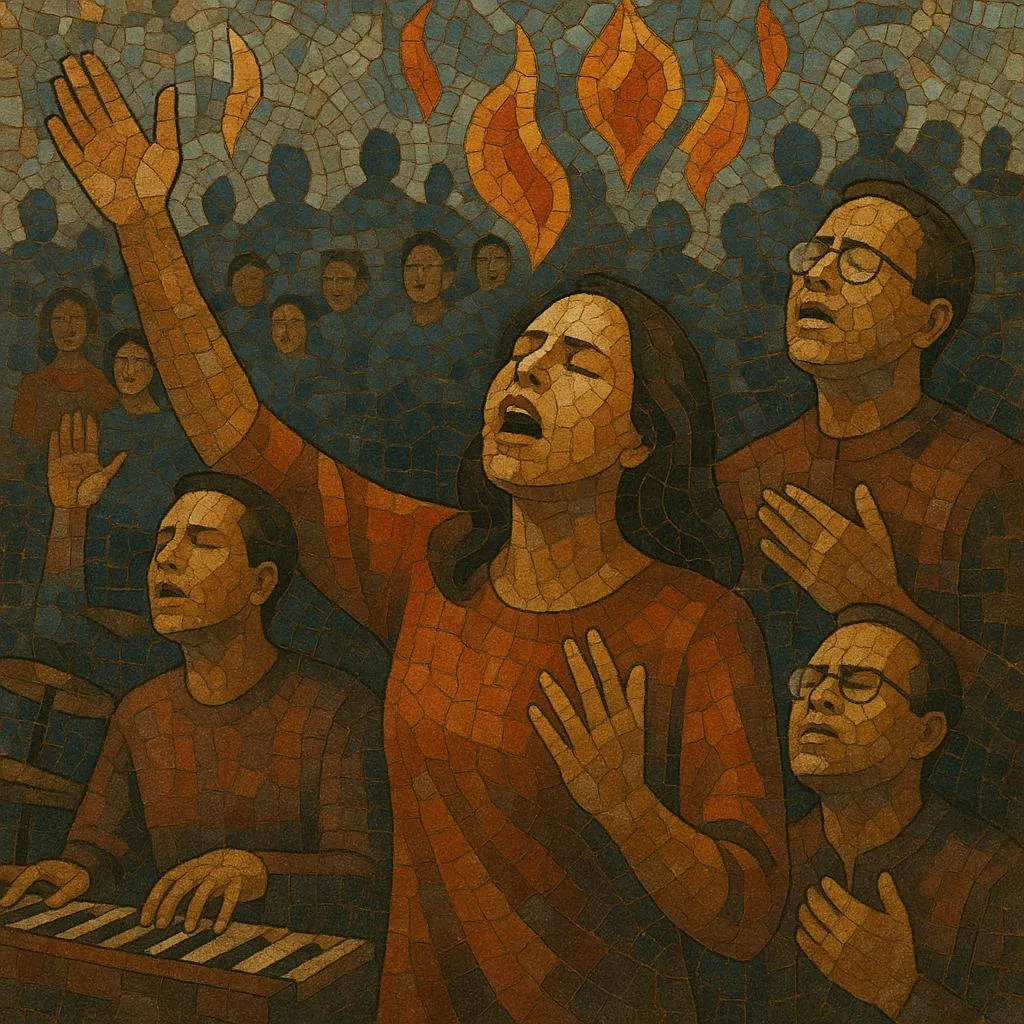
Louvores pentecostais (Pentecostal praises) is a Brazilian stream of gospel/worship music rooted in Pentecostal congregational life. It blends modern pop-rock arrangements with passionate lead vocals, choir responses, and dramatic key changes designed to lift a service into collective praise and prayer.
Musically, it alternates between soaring power ballads and uptempo praise songs, often recorded live in churches. Lyrically, it focuses on testimony, victory over adversity, spiritual warfare, and the action of the Holy Spirit (unção, fogo), using direct, faith-affirming language meant for congregational singing.
Production typically features piano and pads, electric guitars, bass and drums, with strings or brass for climactic sections, and frequent modulations to intensify emotion. Spoken exhortations, prayer interludes, and call-and-response refrains are common performance traits.
History
Pentecostalism arrived in Brazil in the 1910s (e.g., Assembleia de Deus), bringing an emphasis on expressive worship, testimonies, and congregational praise. For decades, services relied on hymnals, choruses, and regional devotional repertories.
By the 1980s, a distinct recorded sound emerged: powerful lead vocals, pop-rock bands supporting worship, and climactic key changes. Early LPs and cassettes circulated through churches and radio, establishing the emotional hallmarks of louvores pentecostais. Labels and church-based media helped standardize repertoire and performance aesthetics across Brazil.
In the 2000s, the style grew nationwide through television, radio, and the Christian music industry. Arrangements adopted contemporary pop and adult-contemporary palettes, while lyrics retained Pentecostal themes of victory, miracles, and spiritual warfare. Live albums recorded in churches became the gold standard, reinforcing the congregational call-and-response feel.
YouTube channels, streaming platforms, and specialized labels amplified the genre’s reach. "Ao vivo" recordings, spontaneous praise moments, and youth-led worship teams flourished. The sound now spans intimate piano-led devotionals to anthemic praise with choirs and orchestral layers, yet it remains rooted in Pentecostal theology and congregational usability.