Your digging level
Description
Adoracion Pentecostal (Pentecostal Worship) is a subgenre of Christian music deeply rooted in the Latin American Pentecostal movement. It is characterized by its dual nature: 'Alabanza' (Praise), which consists of fast-paced, rhythmic songs known as 'coritos' often featuring polka, merengue, or ranchera beats, and 'Adoración' (Worship), which focuses on slow, emotive power ballads designed to facilitate deep spiritual intimacy and prayer.
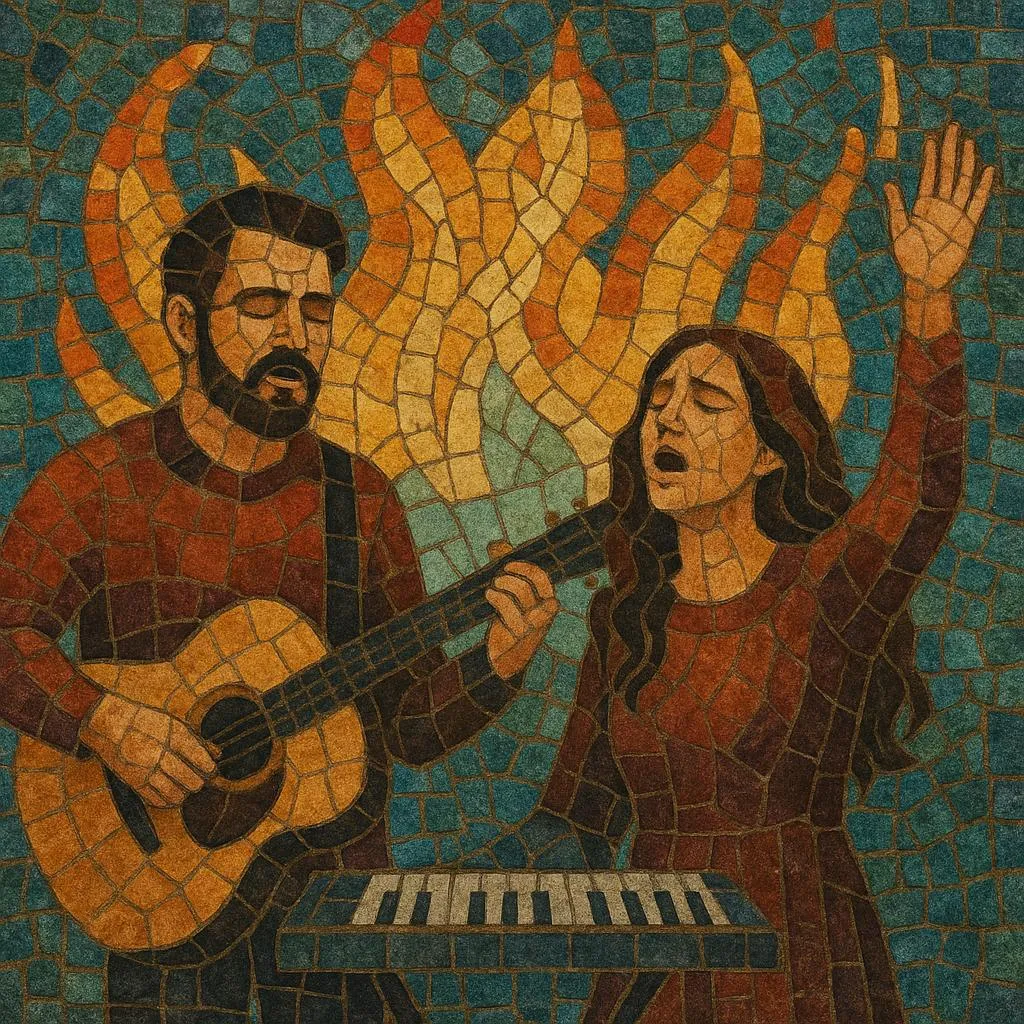
The genre places a heavy emphasis on the presence of the Holy Spirit, often including spontaneous moments of prayer, 'ministration' (speaking or praying over the music), and intense vocal delivery that can range from weeping to shouting. Musically, it relies on a core band of drums, bass, and guitar, but is distinguished by the prominent use of keyboard pads and synthesizers to create atmospheric 'backgrounds' for prayer, as well as traditional instruments like the accordion in the 'coritos' style.
History
The roots of Adoracion Pentecostal can be traced back to the Azusa Street Revival in 1906, which sparked the global Pentecostal movement. As the movement reached Latin America, particularly Puerto Rico and Mexico, it began to develop its own musical identity in the mid-20th century.
Initially, the music consisted of translated hymns and simple, repetitive choruses known as 'coritos'. These were often anonymous, transmitted orally, and accompanied by acoustic instruments like guitars and accordions. They featured fast, danceable rhythms (often influenced by Merengue or Polka) and focused on themes of power, healing, and the Second Coming of Christ.
The 1970s and 80s saw a massive expansion of the genre, driven by evangelistic campaigns (such as those by Yiye Ávila) and the rise of iconic soloists like Stanislao Marino and Duo Libano. This era solidified the 'Balada' style of Adoración—slow, dramatic songs dealing with conversion, suffering, and redemption.
In the 1990s, the 'Praise & Worship' (Alabanza y Adoración) movement, led by figures like Juan Carlos Alvarado and Marcos Witt, brought higher production values and pop/rock influences. However, a distinct 'traditional' Pentecostal scene remained vibrant, represented today by groups like Generación Pentecostal (GP Band), who preserve the raw, fiery essence of the early coritos while using modern instrumentation.
Composing Adoracion Pentecostal requires balancing theological fervor with specific musical structures.
Coritos (Praise): Use a fast 2/4 beat (approx. 130-160 BPM). The bass should play a driving 'polka' or 'merengue' pattern (Root-Fifth), while the drums emphasize the snare on the off-beats or a marching snare roll.
•Adoración (Worship): Use a slow 4/4 ballad feel (approx. 60-75 BPM). Focus on building intensity through dynamics, starting with just piano/pads and swelling to a full band climax.
Harmony: Stick to simple, emotional chord progressions (I-IV-V-vi). Use minor keys for songs about repentance or trials, and major keys for praise.
•Instrumentation: Keyboards are essential. Use 'warm pads' or 'strings' patches to fill the sonic space, especially during prayer sections. Accordion or brass synths are common for the fast songs.
Themes: Focus on the Holy Spirit ('Fuego', 'Unción'), the blood of Jesus, the rapture ('El Arrebatamiento'), and personal testimony of change.
•Vocals: The delivery should be passionate and raw. Don't be afraid of ad-libs, shouting, or crying. Include spoken word sections (ministration) where the singer prays or exhorts the listeners.