Your digging level

For this genre
0/8
🏆
Sign in, then listen to this genre to level up

Description

Adoración (Spanish-language worship music) is a stream of contemporary Christian praise centered on vertical, God-directed lyrics and congregational singing in Spanish.

Musically, it blends the harmonic simplicity and anthemic choruses of modern praise & worship with Latin pop/rock ballad aesthetics, producing songs that are easy for churches to sing. Arrangements often build from quiet, prayerful verses to expansive, declarative choruses, with bridges that encourage collective response (e.g., call-and-response, spontaneous prayer, or repeated refrains).

The style is widely used across Spanish-speaking evangelical and charismatic churches, and it has become a transnational repertoire through recordings, conferences, and worship collectives.


Sources: Spotify, Wikipedia, Discogs, RYM, MB, user feedback and other online sources

History

Overview

Adoración refers to Spanish-language worship music shaped by the global praise & worship movement but expressed with Latin pop/rock ballad sensibilities. It prioritizes congregational singing, accessible melodies, and lyrics of praise, surrender, and devotion.

1980s–1990s: Formation and Early Spread
•   The modern praise & worship wave reached Spanish-speaking churches in the 1980s through translated choruses and live worship recordings. •   Ministries and labels focused on Spanish worship fostered original songwriting, training worship leaders and bands, and disseminating live recordings that became staples in church repertoires. •   Musically, early adoración fused soft rock instrumentation (piano, acoustic/electric guitars, bass, drums) with emotive Spanish balladry, favoring singable keys and mid-tempo grooves.
2000s: Regional Consolidation and Internationalization
•   Worship conferences and church networks across Mexico, Central America, the Caribbean, and the U.S. Hispanic church scene accelerated original Spanish songwriting. •   Live albums with large congregations popularized the dramatic “build” from intimate verses to climactic choruses, now characteristic of the style. •   Collaboration with global ministries (and Spanish versions of well-known worship songs) helped standardize lyrical themes and song forms across the region.
2010s–2020s: Stylistic Breadth and Digital Era
•   Production diversified: piano-led devotionals, arena-scale rock anthems, and rhythmic fusions (cumbia, pop urbano, ballad-pop) coexisted under the adoración umbrella. •   Streaming platforms and social media amplified the reach of regional churches and collectives, making Spanish worship a transnational repertoire used from local congregations to multinational stadium events. •   Lyrically, songs retained vertical worship focus while embracing contemporary language, scripture-saturated refrains, and spontaneous interludes.
Distinguishing Features
•   Vertical, God-directed texts in Spanish; congregational keys and vocal ranges. •   Verse–chorus–bridge structures with dynamic swells. •   Pop/rock worship core augmented by Latin rhythmic feel when appropriate (hand percussion, ballad-pop grooves).

How to make a track in this genre

Core DNA
•   Aim for congregational singability: narrow melodic range, clear hooks, and repetitive, memorable refrains. •   Keep lyrics vertically focused (adoration, holiness, surrender, presence of God) and scripture-infused Spanish phrasing (e.g., “Santo,” “Te adoro,” “Tu presencia,” “Tu fidelidad”).
Harmony & Melody
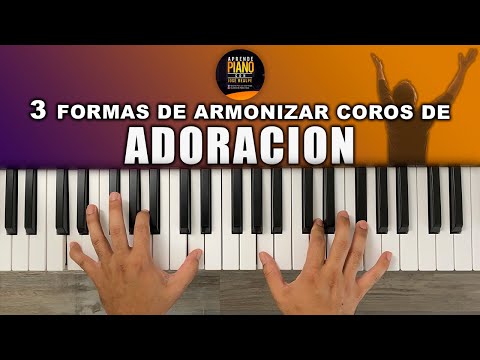
•   Common progressions: I–V–vi–IV, I–vi–IV–V, IV–I–V–vi (major keys), or vi–IV–I–V for reflective verses. •   Keys comfortable for congregations and mixed worship teams (G, A, D, E, F). •   Melodies center on stepwise motion with climactic leaps saved for the chorus/bridge.
Rhythm & Tempo
•   Ballad worship: 68–84 BPM, straight 4/4 with gentle backbeat and half-time drums in the chorus. •   Mid/uptempo praise: 96–120 BPM; incorporate Latin-pop pulse subtly (congas/shakers for texture) without overpowering singability. •   Use dynamic swells: soft verse → bigger chorus → breakdown/bridge → final soaring chorus.
Instrumentation & Arrangement
•   Core band: piano/keys (pads for atmosphere), acoustic guitar (strumming patterns), electric guitar (delays/verbs for shimmer), bass, drums. •   Add layers: strings or synth pads for warmth; light Latin percussion (shaker, cajón, congas) if appropriate. •   Arrange for builds: start sparse, add harmony vocals in the chorus, stack octaves/thirds on the final repeats.
Lyrics & Form
•   Structure: Verse (testimony/approach) → Pre-chorus (rising language) → Chorus (declaration of adoration) → Bridge (response/aspiration), with optional spontaneous vamp. •   Use inclusive, congregational Spanish; avoid overly figurative language that hinders communal singing. •   Reinforce key theological anchors: holiness of God, gratitude, dependence, surrender, hope.
Production & Performance
•   Prioritize the congregation’s voice in the mix; keep lead vocal intimate but authoritative. •   Use tasteful reverbs and delays for space; maintain clear low end (kick + bass) for stability. •   Live arrangements benefit from call-and-response, choir stacks, and room mics to capture congregational participation.

Top tracks

Locked
Share your favorite track to unlock other users’ top tracks

Upcoming concerts

in this genre
Influenced by
Has influenced

Download our mobile app

Get the Melodigging app and start digging for new genres on the go
© 2026 Melodigging
Melodding was created as a tribute to Every Noise at Once, which inspired us to help curious minds keep digging into music's ever-evolving genres.
Buy me a coffee for Melodigging