Your digging level

For this genre
0/8
🏆
Sign in, then listen to this genre to level up

Description

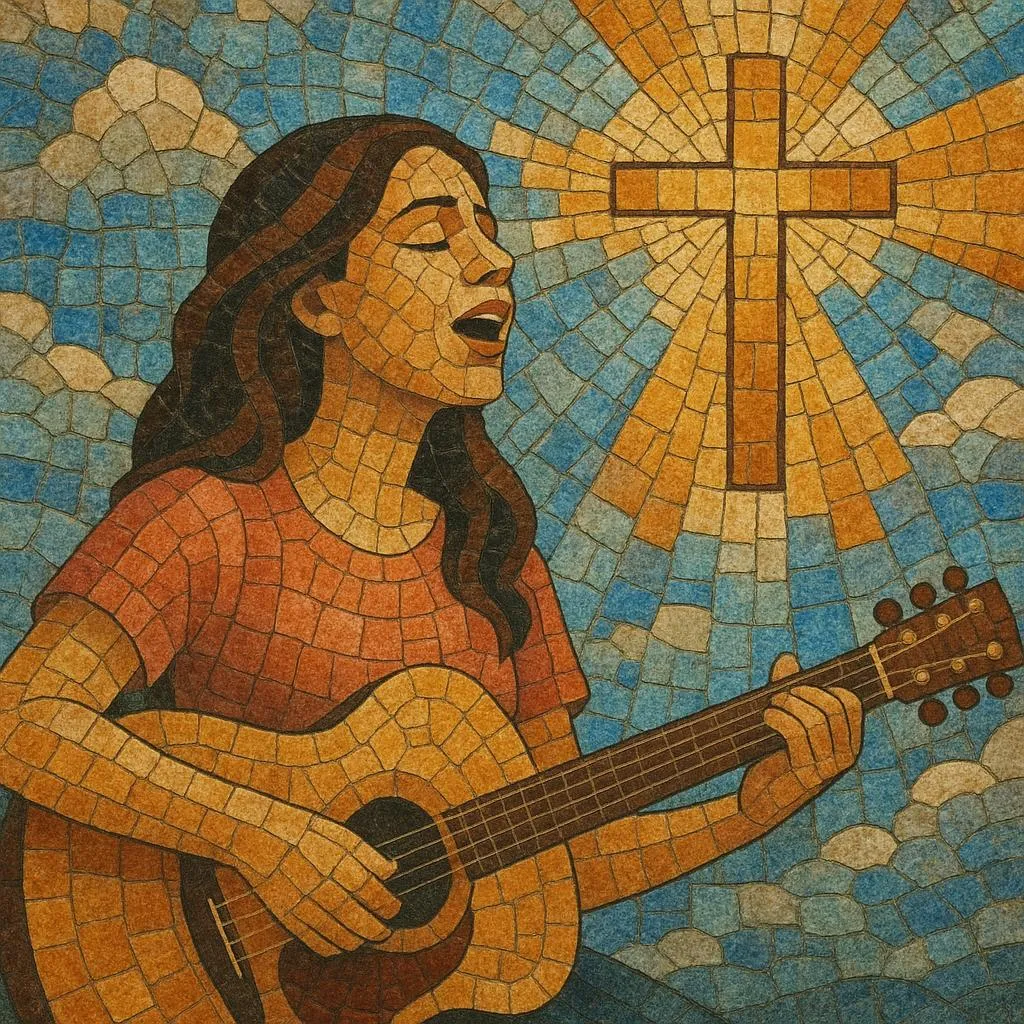
Pop cristiano is Spanish-language Christian pop that blends the melodic hooks and production of mainstream Latin pop with explicitly faith-centered lyrics.

It typically features polished vocals, singable choruses, and devotional or worship themes (gratitude, hope, testimony, prayer), delivered in contemporary arrangements that range from intimate piano-guitar ballads to upbeat, radio-ready tracks with synths and modern drum programming.

Stylistically, it draws on Latin pop ballad traditions as well as U.S. Contemporary Christian Music (CCM), often incorporating light touches of regional Latin rhythms while keeping the focus on clear messages, congregationally resonant refrains, and uplifting emotional arcs.


Sources: Spotify, Wikipedia, Discogs, RYM, MB, user feedback and other online sources

History

Origins (1990s)

Spanish-language Christian pop emerged in the 1990s as Latin ministries and labels adapted the U.S. CCM model to Spanish-speaking audiences. Mexico became an early hub through ministries, conferences, and labels that encouraged songwriting in contemporary styles while maintaining doctrinal clarity. The "balada" lineage of Latin pop provided a familiar vehicle—verse–pre-chorus–chorus ballads with expressive lead vocals—now centered on testimony, praise, and everyday discipleship.

Consolidation and Mainstream Visibility (2000s)

During the 2000s, more soloists and bands released professional studio albums with high-production values, benefitting from improved distribution across Mexico, Puerto Rico, Colombia, and the Spanish-speaking diaspora. Festivals and church networks amplified touring circuits, while Christian radio and emerging digital platforms increased airplay. Aesthetic markers crystallized: clean pop timbres, inspirational lyrics, and arrangements that could live both in church events and on Christian radio.

Digital Growth and Crossovers (2010s)

The streaming era expanded reach via YouTube and Spotify, and younger artists blended pop cristiano with adjacent styles—electropop, acoustic folk-pop, and soft R&B. Collaborations between worship collectives and pop artists became common, and singles-driven releases encouraged concise, hook-forward writing. Latin urban rhythms (e.g., light dembow patterns) began appearing in select tracks while keeping lyrical content devotional.

Present Day

Pop cristiano now encompasses a spectrum from piano-led ballads to glossy electronic pop and gentle Latin-inflected grooves. It operates transnationally—recorded in Mexico, Puerto Rico, Colombia, the United States, Spain, and Argentina—yet remains united by Spanish-language expression of Christian faith, accessible melodies, and an emphasis on encouragement and praise.


How to make a track in this genre

Core Songcraft
•   Start with a clear devotional theme (gratitude, hope in trials, God’s love/grace). Craft a single-sentence thesis that your chorus states plainly in Spanish. •   Use pop-friendly structures: intro – verse – pre-chorus – chorus – verse 2 – pre – chorus – bridge – final chorus (often with added ad‑libs or a key change). •   Aim for memorable, congregationally singable hooks with simple, uplifting imagery and inclusive language ("nosotros", "contigo", "tu fidelidad").
Harmony and Melody
•   Common progressions: I–V–vi–IV, vi–IV–I–V, or IV–I–V–vi for ballads and mid-tempo anthems. •   Keys favor comfortable vocal ranges (A–E major, F–C major). Consider a whole‑step lift for the final chorus to heighten emotion. •   Melodies should be stepwise with occasional leaps at emotional apexes; write strong pre-chorus lift lines that set up the chorus title phrase.
Rhythm and Tempo
•   Ballads: 68–84 BPM (6/8 or 4/4 with halftime drums) for intimate, prayerful tone. •   Mid/up‑tempos: 95–115 BPM with pop backbeats; optionally add subtle Latin grooves (handclaps, light dembow ghosting, or bossa/cumbia hints) without overshadowing the lyric.
Instrumentation and Production
•   Ballad palette: piano or acoustic guitar, soft pads, warm bass, restrained drums/percussion, and stacked harmonies in the chorus. •   Pop palette: synth layers, clean electric guitars, modern drum kits (kick with sidechain compression, crisp snares, airy hats), sub‑bass that supports but never dominates. •   Vocals sit forward and pristine; add tasteful doubles and harmonies on pre‑choruses/choruses. Use reverb/delay for depth but keep intelligibility for worship settings.
Lyric and Delivery
•   Keep language accessible and biblically grounded; balance personal testimony with corporate worship lines. •   Emphasize sincerity over virtuosity; dynamic arcs (quiet verses → soaring choruses) reinforce the message.
Arrangement Tips
•   Introduce motif in the intro; drop to minimal texture in verse 2 for contrast; use the bridge for a fresh lyrical angle or a communal call‑and‑response; consider a final chorus up‑lift or big tag to close. •   Ensure arrangements translate to both full-band and acoustic church settings.

Top tracks

Locked
Share your favorite track to unlock other users’ top tracks

Upcoming concerts

in this genre
Influenced by
Has influenced

Download our mobile app

Get the Melodigging app and start digging for new genres on the go
© 2026 Melodigging
Melodding was created as a tribute to Every Noise at Once, which inspired us to help curious minds keep digging into music's ever-evolving genres.
Buy me a coffee for Melodigging