Your digging level

For this genre
0/8
🏆
Sign in, then listen to this genre to level up

Description

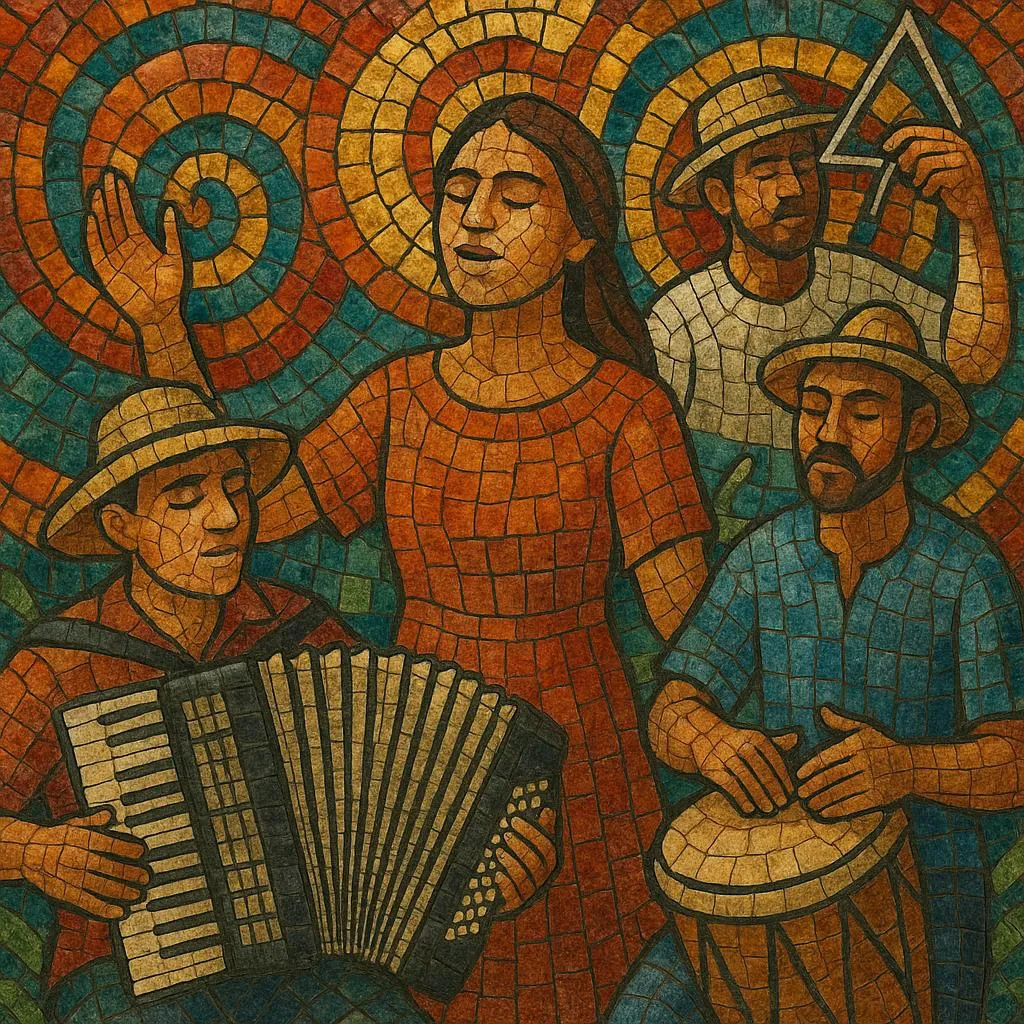
Forró gospel is a Brazilian Christian subgenre that marries the danceable rhythms and instrumentation of Northeastern forró (accordion/sanfona, zabumba, and triangle) with evangelical praise, testimony, and worship lyrics.

Musically, it draws on baião, xote, arrasta-pé, and xaxado grooves, keeping the upbeat feel of regional festas while shifting the message to faith, hope, and community. The result is celebratory and family-friendly, often performed at church events, retreats, and alternative “arraiá” festivities that echo São João traditions without the secular themes.

Production ranges from acoustic “pé de serra” setups to modern, pop-leaning arrangements with electric bass, keyboards, and light percussion layering. Vocals commonly use call-and-response hooks, congregational refrains, and memorable melodic choruses that are easy to sing and dance to.


Sources: Spotify, Wikipedia, Discogs, RYM, MB, user feedback and other online sources

History

Roots (Mid–Late 20th Century)

Forró’s core rhythms—baião, xote, and xaxado—were popularized nationally by Northeastern artists in the mid-1900s. In churches, especially in the Northeast, musicians had long adapted regional rhythms for informal gatherings and youth groups, planting seeds for later stylistic hybrids.

Emergence (2000s)

With the growth of Brazil’s evangelical music market and the parallel mainstream rise of modern forró (including electronic and pop-leaning variants), Christian artists began producing explicitly faith-centered songs in forró styles. These recordings leveraged familiar regional grooves to reach congregations and younger audiences, particularly in the Northeast and among Northeastern diasporas in major cities.

Consolidation and Reach (2010s–2020s)

Digital platforms and church media networks helped forró gospel spread beyond local events into playlists, festivals, and worship services. The style diversified from acoustic “pé de serra” formats to fuller band productions with bass, keyboards, and contemporary mixing, while still foregrounding the sanfona–zabumba–triangle sound. Community-focused lyrics—gratitude, testimony, perseverance, and hope—made the genre a natural fit for alternative São João–inspired church celebrations and retreats.

Aesthetics and Function

Forró gospel preserves the social dance aspect of forró but reframes the content: instead of romantic or party themes, songs emphasize worship and everyday faith. Call-and-response choruses and danceable backbeats support congregational singing, youth ministry activities, and family-friendly events that celebrate regional identity within a Christian framework.


How to make a track in this genre

Core Groove and Tempo
•   Choose a forró-derived rhythm: baião (driving, syncopated), xote (mid-tempo 4/4, gentle sway), or arrasta-pé (festive, brisk). •   Typical tempos: xote at ~90–110 BPM; baião/arrasta-pé at ~110–135 BPM.
Instrumentation
•   Essential trio: sanfona/accordion (melody + comping), zabumba (low/high stroke pattern), and triangle (constant high-end pulse). •   Add bass (often roots and fifths with syncopations), acoustic/electric guitar (light strums or arpeggios), and optional keys (pads, simple hooks) for contemporary polish.
Harmony and Form
•   Favor bright major keys (A, D, G, C) and singable progressions (I–V–vi–IV, I–IV–V, or ii–V–I variants). •   Common structure: Intro – Verse – Pre-Chorus – Chorus – Verse – Chorus – Bridge – Double Chorus/Tag. •   Use brief turnarounds (e.g., V/IV → IV → V → I) to re-enter choruses with energy.
Melody and Vocals
•   Write concise, catchy choruses with congregational range (A3–D5 for leads; leave space for group responses). •   Employ call-and-response and unison refrains to invite audience participation. •   Ornamentation can include forró-style slides and grace notes on accordion and voice.
Lyrics and Themes
•   Center texts on praise, gratitude, testimony, hope, and everyday discipleship. •   Incorporate Northeastern imagery (journey, rain/sertão, community celebration) as metaphors for faith and perseverance. •   Keep language direct and uplifting; repeat key phrases for memorability during dance and worship.
Arranging and Production
•   Keep zabumba and triangle clear in the mix; let sanfona carry hooks and countermelodies. •   Layer handclaps or light percussion (shaker/ganza) for festivity without cluttering the groove. •   If aiming for modern worship crossover, add subtle pads, stacked backing vocals, and a dynamic bridge that builds into a final, bigger chorus.
Performance Practice
•   Encourage dance-friendly staging (space for xote/baião steps) and communal clapping. •   Use brief exhortations between sections (e.g., scripture snippets, short blessings) that flow naturally into the next chorus.

Top tracks

Locked
Share your favorite track to unlock other users’ top tracks

Upcoming concerts

in this genre
Influenced by

Download our mobile app

Get the Melodigging app and start digging for new genres on the go
© 2026 Melodigging
Melodding was created as a tribute to Every Noise at Once, which inspired us to help curious minds keep digging into music's ever-evolving genres.
Buy me a coffee for Melodigging