Your digging level
Description
American folk revival is a mid-20th-century movement that brought traditional American songs, ballads, and rural styles into mainstream consciousness.
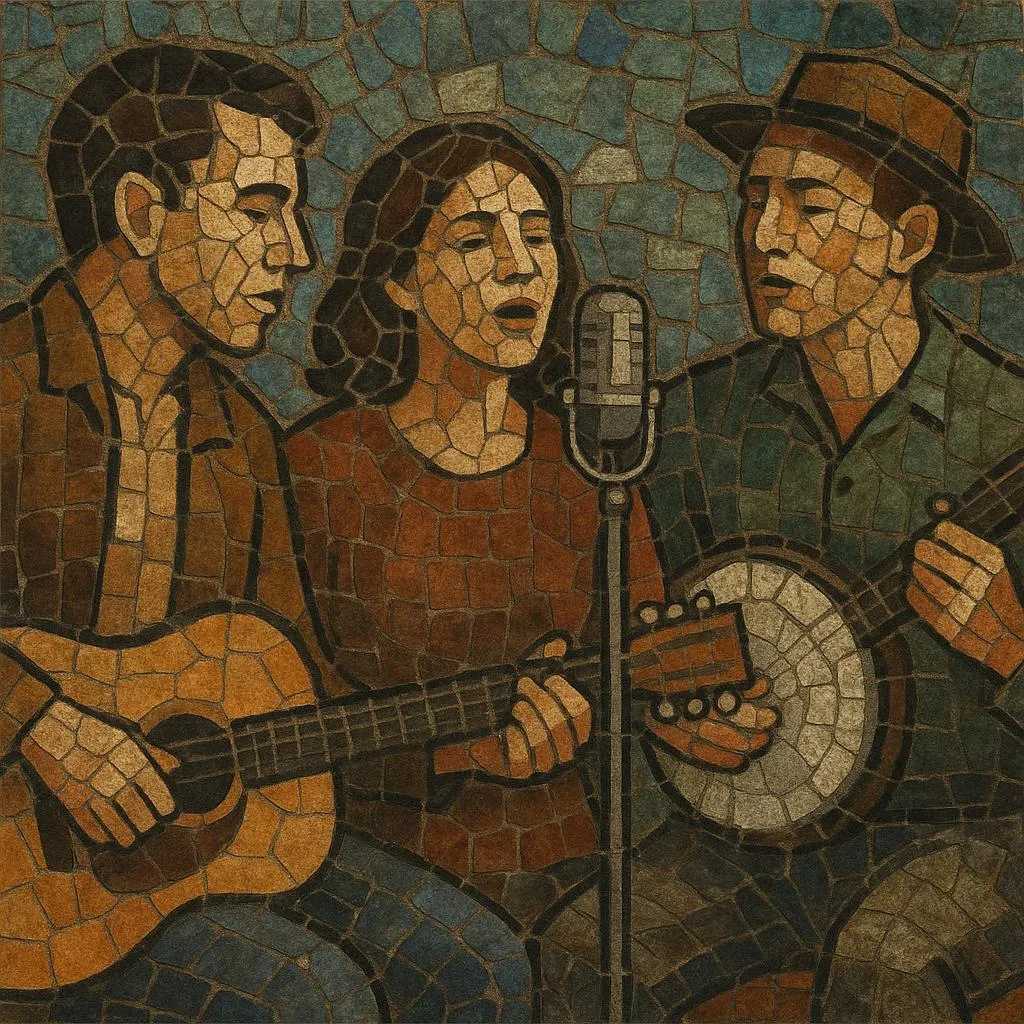
Centered on acoustic performance, close vocal harmony, and community sing‑alongs ("hootenannies"), the revival emphasized authenticity, plainspoken storytelling, and topical lyrics connected to labor organizing, civil rights, and peace movements. Its repertoire drew from Appalachian ballads, spirituals, blues, work songs, old-time fiddle tunes, and early country, while coffeehouse and campus circuits in places like Greenwich Village and Cambridge nurtured a new generation of performers.
The sound is typically intimate and unadorned—voice, acoustic guitar, banjo, and occasionally fiddle, mandolin, or upright bass—designed to foreground lyrics, lineage, and participation.
History
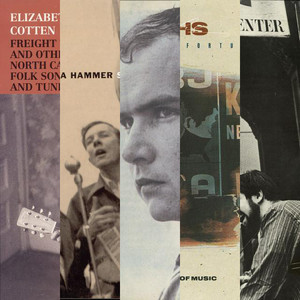
Field collectors (e.g., the Lomaxes) and New Deal–era documentation helped preserve ballads, spirituals, and work songs, feeding an urban fascination with “people’s music.” Activist performers like Woody Guthrie and Pete Seeger (with ensembles such as the Almanac Singers, later The Weavers) bridged traditional sources with contemporary topical songwriting. Their success in the early 1950s (and subsequent blacklisting during the Red Scare) set a template for music as both folk art and social commentary.
The Kingston Trio’s 1958 hit “Tom Dooley” sparked a national craze. Coffeehouses, college hootenannies, and labels like Vanguard and Elektra amplified artists such as Odetta, Joan Baez, and a young Bob Dylan. The Newport Folk Festival (founded 1959) became a focal point, while magazine and radio coverage brought regional styles (Appalachian, old-time, spirituals, blues) to wide audiences.
By 1965, Dylan’s electrified sets and The Byrds’ charting folk‑rock reimagined the idiom, integrating drums and amplified instruments without abandoning lyric-driven storytelling. Purist and progressive camps diverged, but the revival’s core—songcraft, social conscience, and tradition—remained influential.
The revival seeded the singer‑songwriter era, country rock, Americana, indie folk, and later experimental offshoots. Reissues, archives, and festivals continue to refresh the canon, while the movement’s participatory ethos (community singing, topical songwriting, and respect for sources) guides each new wave of acoustic, roots‑oriented artists.
Use voice, acoustic guitar (steel‑string), 5‑string banjo (clawhammer or three‑finger), fiddle, harmonica, mandolin, and upright bass. Keep arrangements sparse and portable to foreground lyrics and audience participation.
Favor diatonic progressions (I–IV–V, occasional ii and vi) in major or modal flavors (Mixolydian, Dorian). Melodies should be singable and strophic, often derived from or echoing traditional ballad contours. Employ capo and folk‑friendly keys (G, C, D, A) to suit vocal range and group singing.
Use steady, unhurried tempos in simple meters (2/4, 3/4, 4/4). Common guitar feels include boom‑chuck strums, alternating bass, or Travis picking. Banjo can provide clawhammer drive; fiddle offers drones and simple countermelodies.
Write clear, direct verses with narrative or topical focus: personal testimony, social justice, labor, civil rights, wartime reflections, environmental concerns, or timeless morality tales. Favor plain language, recurring refrains, and call‑and‑response sections to invite audience singing.
Keep dynamics organic and close‑mic’d. Blend two‑ or three‑part harmonies on refrains. Quote or adapt public‑domain material respectfully; credit sources and communities of origin. Encourage communal clapping and choruses.
Minimal processing: light compression, natural room ambience, and mono‑oriented balances work well. Prioritize intelligibility of the lead vocal and acoustic presence over heavy layering.