Your digging level
Description
Modern old-time is a 21st‑century continuation of the Appalachian old‑time string band tradition, played with contemporary ensemble sensibilities and recording aesthetics.
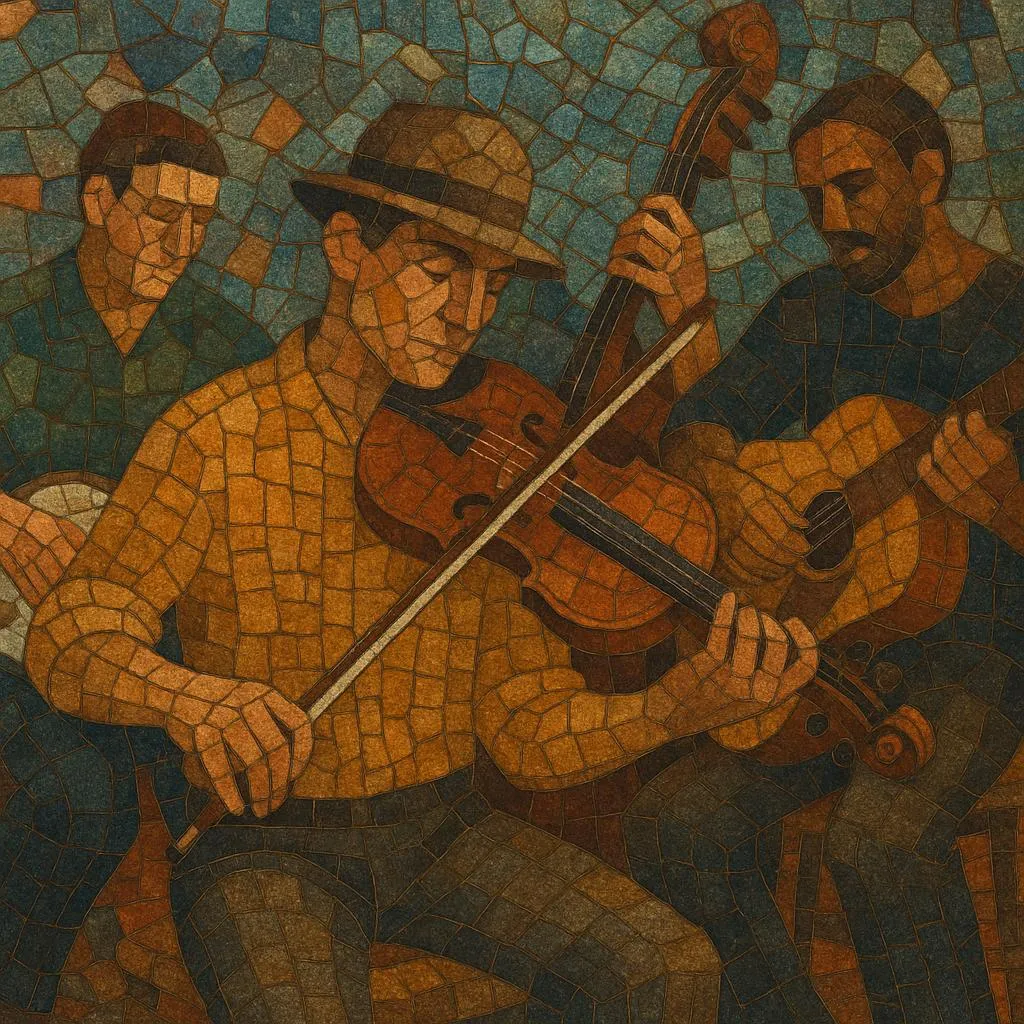
It keeps the core dance‑driven groove, crooked tune shapes, and modal flavors of historic fiddle‑banjo music, but embraces wider repertoire sources, new arrangements, and inclusive narratives. You’ll hear clawhammer banjo and fiddle drones up front, with guitar, bass, and sometimes mandolin, cello, or subtle percussion reinforcing the pulse.
Compared with bluegrass, modern old‑time favors ensemble blend over virtuoso solos, maintaining a hypnotic, steady drive suited to social dancing and listening alike.


History
Old‑time music coalesced in the Southern Appalachian region in the late 19th and early 20th centuries from British/Irish fiddle traditions, African American banjo styles, ballad singing, and community dance music. Early commercial recording (1920s–30s) documented string bands, solo fiddlers, and songsters. Mid‑century, the music persisted in local communities even as bluegrass and country rose in the mainstream.
The 1960s American folk revival brought urban interest, festivals, and field collecting that stabilized tune repertoires and styles. A further wave in the 1990s–2000s—spurred by camps, old‑time weeks, and independent labels—helped younger musicians adopt traditional bowing, clawhammer techniques, cross‑tunings, and square‑dance tempos. By the 2000s, a cohort of artists began presenting old‑time sets with contemporary production, broader song choices (including neglected Black and Indigenous sources), and touring circuits adjacent to Americana and indie folk.
Modern old‑time keeps the ensemble‑first ideal: the groove and melody ride together, with few extended solos. Fiddle drones and shuffles, frailed banjo syncopations, and guitar/bass backbeat form a trance‑like engine. The sound is often warmer and roomier than vintage 78s, but engineers aim to preserve the organic blend and rhythmic cohesion crucial for dancers.
Today, modern old‑time thrives at festivals, dance halls, listening rooms, and online archives. Musicians pair canonical Southern tunes with newly surfaced regional pieces, contemporary originals in traditional forms, and socially aware ballads—expanding the tradition while respecting its dance function and community roots.