

Your digging level
Description
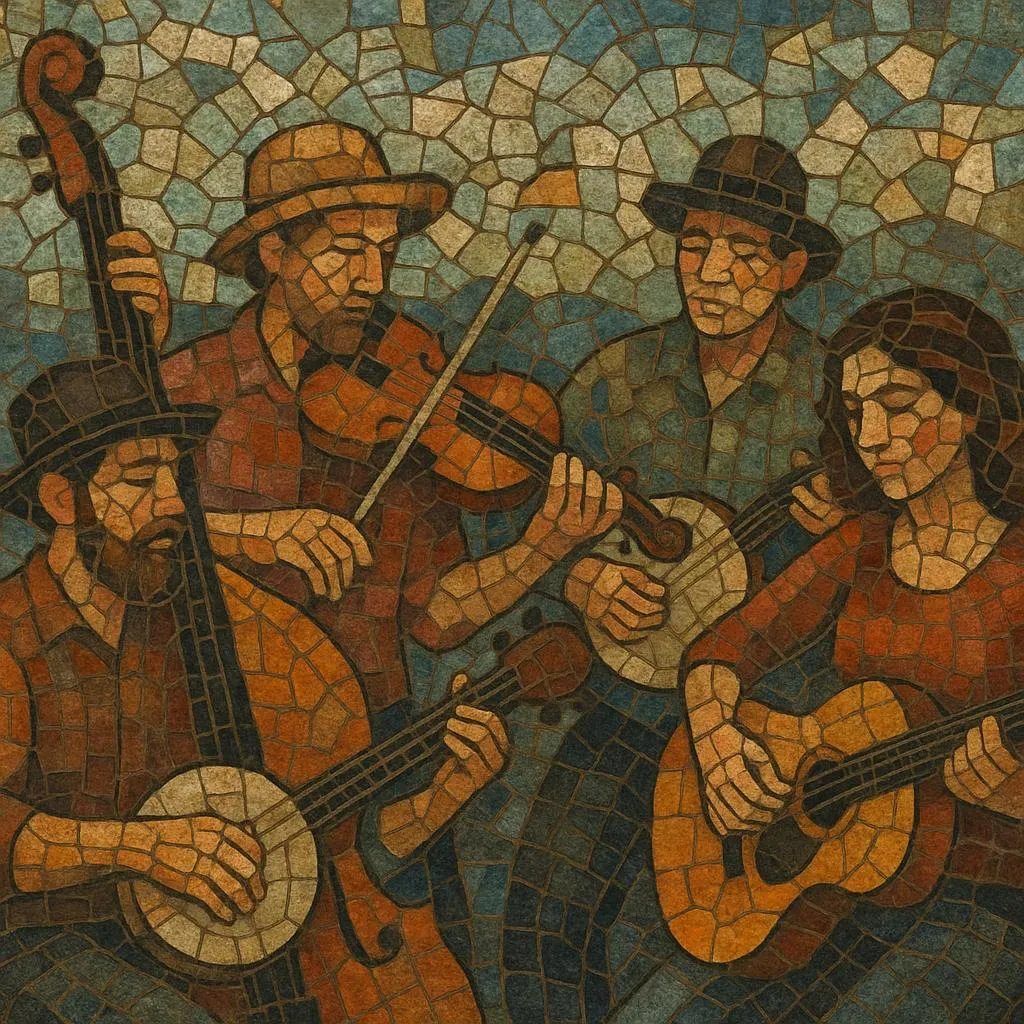
String band is a North American ensemble-based folk style centered on bowed and plucked string instruments—most commonly fiddle, banjo, guitar, mandolin, and bass—played for social dancing and communal entertainment.
Rooted in rural Southern and Appalachian communities, its repertoire mixes dance tunes (reels, breakdowns, hoedowns, waltzes), lyrical ballads, and parlor pieces. Performance emphasizes steady, danceable groove, unison or heterophonic melody led by the fiddle, and driving banjo rhythms, with minimal harmonic complexity and little or no percussion.
String band music is often participatory and intergenerational: musicians swap tunes, vary parts by ear, and prioritize feel and continuity over virtuosic soloing, making it a living, locally inflected tradition.
History
The string band grew in the American South from the meeting of British/Irish/Scottish fiddle traditions and African‑American banjo and rhythm practices. By the 1900s, community dances, barn gatherings, and county fairs featured small groups—typically fiddle and banjo, soon joined by guitar and later mandolin and bass—playing repertory shared across regions.
With the advent of records and radio, string bands became some of the first commercially recorded “hillbilly” and “old‑time” acts. Contest fiddling, medicine shows, and barn‑dance broadcasts standardized tune names, ensemble formats, and a dance‑forward sound. Regional bands brought local repertoires (e.g., breakdowns, rags, waltzes) to national audiences while retaining vernacular bowing, tunings, and banjo styles (clawhammer and early three‑finger).
Amplified country and western swing absorbed string band instrumentation and repertoire, while bluegrass formalized solo trading and virtuosic technique. In parallel, folklorists and revivalists documented tradition bearers, keeping social, ensemble‑first string band playing alive at festivals, square dances, and on college campuses.
Old‑time and string band revivals emphasized dance tempo, groove, and ensemble blend over showy breaks. Today, the tradition thrives in jams, fiddle conventions, and dance communities. Contemporary groups honor archival sources while composing new tunes, experimenting with modal harmony, and restoring the central role of African‑American and Indigenous contributors to the music’s history.





