Your digging level
Description
Melanesian pop is a contemporary popular music of the southwest Pacific—centered on Papua New Guinea, the Solomon Islands, Vanuatu, and Fiji—that blends local string‑band traditions and communal harmonies with reggae, dancehall, calypso/soca grooves, and global pop songwriting.
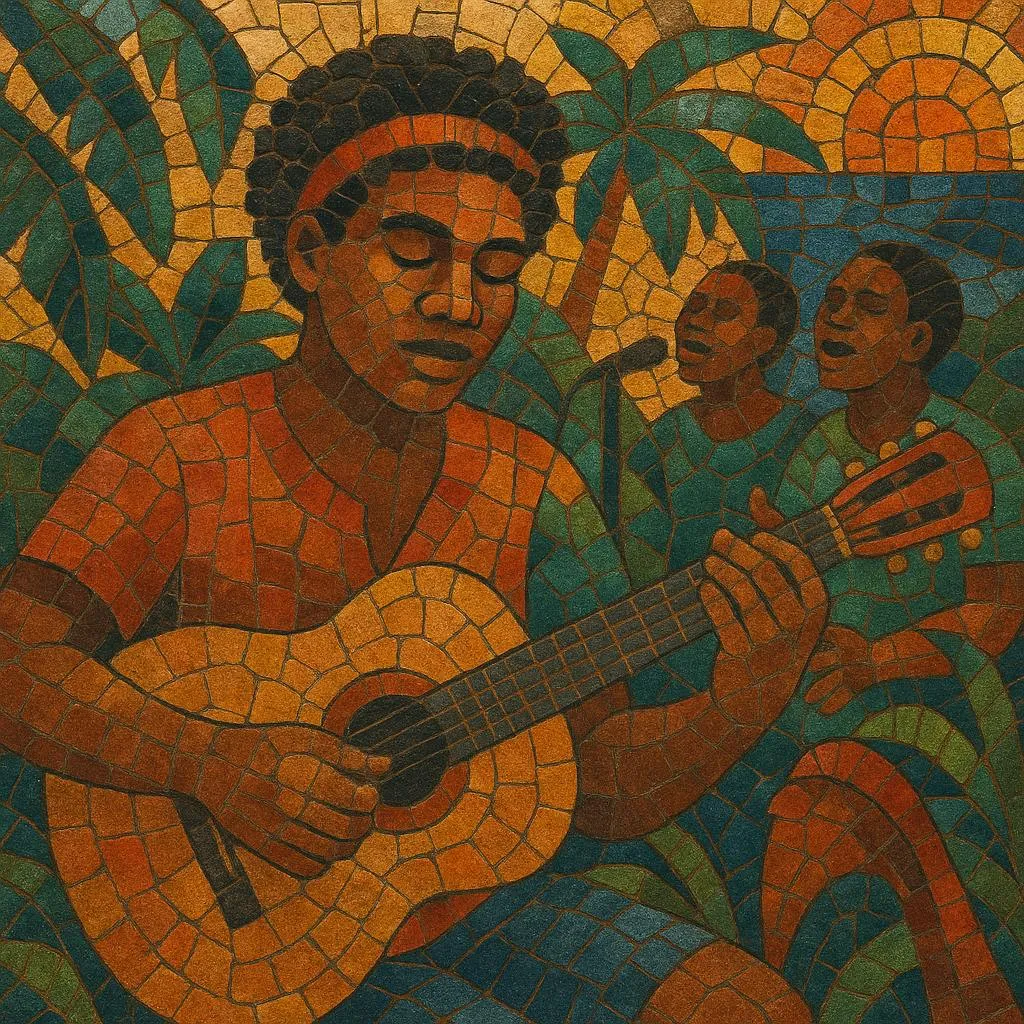
Songs are typically mid‑tempo, romantic, and danceable, with lilting off‑beat guitar “skanks,” warm melodic bass lines, and close vocal harmonies sung in regional lingua francas (Tok Pisin, Solomon Islands Pijin, Bislama) as well as Fijian and other local languages. Modern productions add synth pads, drum machines, and occasional rap verses while retaining village‑party instrumentation (acoustic guitars, ukulele, bamboo or log drums).
The result is an instantly recognizable island pop feel—bright, melodic, and communal—rooted in Melanesian social life yet connected to wider Caribbean and global pop currents.
History
Melanesian pop grows out of string‑band traditions and church/community singing. Acoustic guitars, ukulele, bamboo stamping tubes, and hand percussion supported call‑and‑response songs at village events across Papua New Guinea, the Solomon Islands, Vanuatu, and Fiji. Radio relays from Australia/New Zealand and records introduced Caribbean styles (calypso, later reggae) and Anglo‑American pop.
Affordable cassette tech and local studios catalyzed a distinctly Melanesian pop sound. Musicians fused string‑band harmonies with reggae one‑drop feels, romantic pop hooks, and local languages. Fiji’s urban dance form vude, PNG and Solomons island‑reggae/pop bands, and Vanuatu’s scene all took shape in this decade.
Independent labels and church networks spread cassettes and CDs across islands and diasporas (Australia, New Zealand, Hawaii). Artists began touring regionally; music videos aired on national TV, and island‑reggae/pop aesthetics standardized: skanking rhythm guitars, melodic bass, stacked harmonies, and mid‑tempo love songs.
YouTube, Facebook, and inexpensive DAWs expanded reach. Producers integrated dancehall, contemporary R&B, Afrobeats‑adjacent grooves, and rap features while retaining local languages and communal refrains. Collaborations across Melanesia and with Polynesian/Jawaiian and NZ urban‑Pasifika scenes further globalized the sound. Today, Melanesian pop functions as both dance music for parties and a soft‑power emblem of island identity.