Your digging level

For this genre
0/8
🏆
Sign in, then listen to this genre to level up

Description

Appalachian music is the traditional music of the Appalachian Mountains in the Eastern United States. It blends Anglo‑Celtic balladry and dance tunes with African American musical practices, sacred hymnody, and local storytelling traditions.

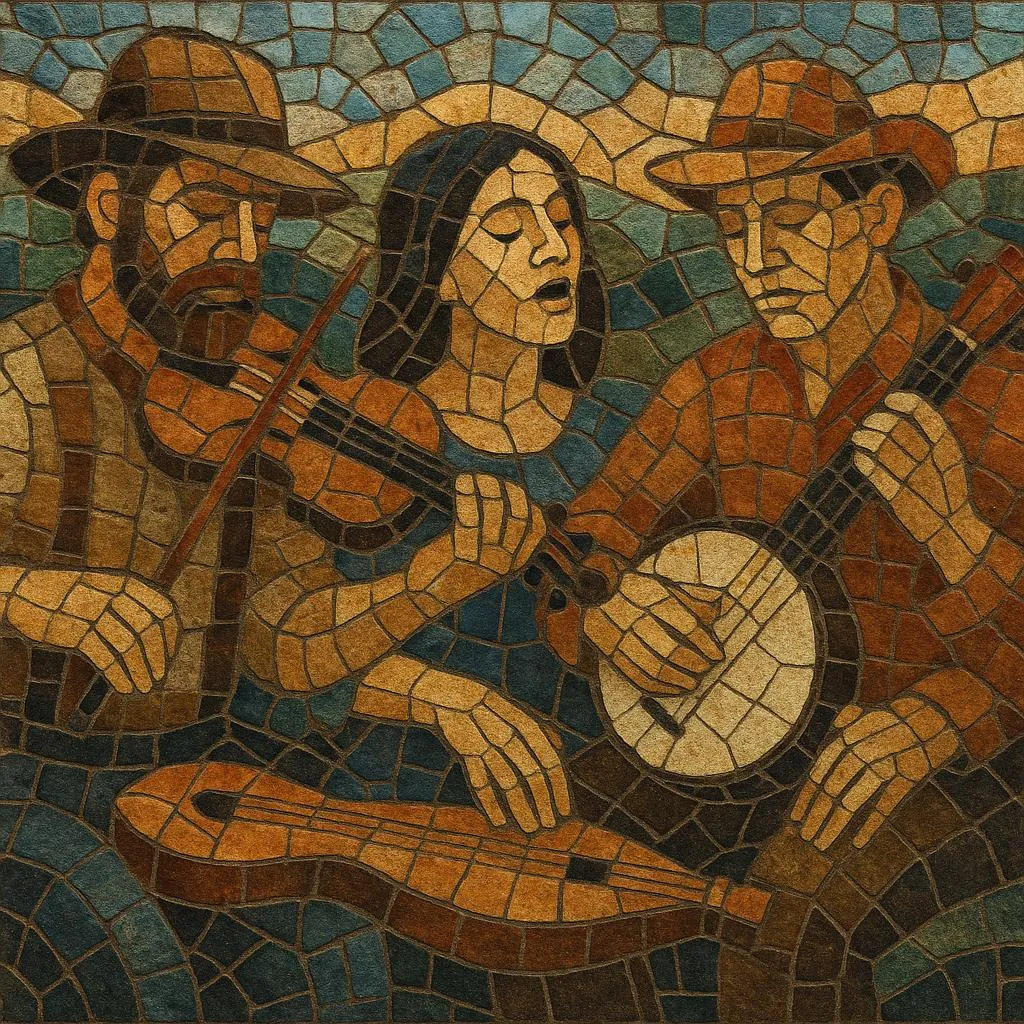
Core sounds center on the fiddle and banjo (often in clawhammer style), guitar, dulcimer, and unaccompanied voice. Melodies frequently use pentatonic, Mixolydian, or Dorian modes, with driving dance rhythms for square and clog dancing, as well as slow narrative ballads. Harmony practices range from solo ballad singing to powerful, open-voiced congregational styles (e.g., shape‑note/Sacred Harp).


Sources: Spotify, Wikipedia, Discogs, RYM, MB, user feedback and other online sources

History

Early Roots (18th–19th centuries)

Settlers from the British Isles—especially Scots‑Irish and English—brought ballads, fiddle tunes, and dance music to the Appalachian frontier in the 1700s. In the mountains, these traditions mingled with African American musical practices (notably the banjo’s West African lineage and rhythmic approaches) and with religious singing traditions, including lined‑out hymns and shape‑note/Sacred Harp practices.

Regional Consolidation (late 19th–early 20th centuries)

Isolation, small communities, and local dances helped preserve older ballads while encouraging regional variants. Fiddle‑banjo duos, later joined by guitar and dulcimer, became standard. Field collectors and early folklorists documented ballads and instrumental tunes, while local radio and barn dances amplified the sound beyond the mountains.

Commercial Era and Revival (1920s–1960s)

The “hillbilly” record boom of the 1920s and 1930s recorded Appalachian string bands and ballad singers, shaping the national perception of mountain music. After World War II, elements of Appalachian string‑band music helped catalyze bluegrass, while the folk revival of the 1950s–60s brought renewed attention to traditional singers and pickers.

Legacy and Continuity (1970s–present)

Festivals, old‑time and bluegrass scenes, and community traditions (square dances, church singings) have kept Appalachian music vibrant. Contemporary artists preserve ballads, expand banjo and fiddle repertoires, and blend tradition with new songwriting, ensuring the style remains central to American roots music.

How to make a track in this genre

Instruments and Ensemble
•   Core pairing: fiddle and banjo (clawhammer/frailing for old‑time drive). Add guitar (boom‑chuck rhythm), mountain dulcimer (drone and modal textures), mandolin or bass as needed. •   Keep arrangements intimate; prioritize unison melody or melody-with-drone over dense chordal textures.
Rhythm and Form
•   For dance tunes (reels, breakdowns): brisk tempos, steady groove, and strong backbeat from clawhammer banjo; common keys are A, D, and G. •   For ballads: flexible tempo, story‑led phrasing, and minimal accompaniment (often a single instrument or unaccompanied voice).
Melody and Harmony
•   Favor pentatonic, Mixolydian, or Dorian modes; use drones and double‑stops on fiddle. •   Harmony is optional; when used, keep to simple triads or open, parallel intervals. For sacred pieces, emulate shape‑note power with open voicings and parallel motion.
Lyrics and Storytelling
•   Ballads recount historical events, tragedies, outlaw tales, love, and work life; use plainspoken, image‑rich language and stanzaic forms (e.g., quatrains with refrains). •   Dialect and local place‑names enhance authenticity.
Techniques and Style Tips
•   Banjo: bum‑ditty pattern, drop‑thumb phrasing, syncopated brush strokes. •   Fiddle: cross‑tuning (e.g., AEAE) for resonance and drones; shuffle bowing patterns. •   Record live, close‑miked, in natural rooms to retain raw timbre and communal feel.

Top tracks

Locked
Share your favorite track to unlock other users’ top tracks

Upcoming concerts

in this genre
Influenced by
Has influenced

Download our mobile app

Get the Melodigging app and start digging for new genres on the go
© 2026 Melodigging
Melodding was created as a tribute to Every Noise at Once, which inspired us to help curious minds keep digging into music's ever-evolving genres.
Buy me a coffee for Melodigging