Your digging level for this genre

0/8
🏆
Sign in, then listen to this genre to level up

Description

Country and Irish is a hybrid style that blends the melodies, storytelling, and dance-band feel of Irish traditional and ballad singing with the instrumentation, song forms, and production values of American country music.

Rooted in the Irish showband and dancehall circuits, the style favors clear, emotive vocals (often delivered in a distinct Irish accent), sing-along choruses, and rhythms suited to waltzes, shuffles, and two-steps. Pedal steel, fiddle, and acoustic guitar are staples from country, while accordion, banjo, and fiddle ornamentation nod to Irish practice. Lyrically, it revolves around love, home, the countryside, emigration, faith, and everyday stories—often told with warmth and plainspoken sincerity.

History

Overview

Country and Irish emerged as a distinctly Irish take on American country music, shaped by local dancehall culture and the long Irish tradition of narrative balladry. While it borrows instruments and songcraft from Nashville, its vocal phrasing, repertoire choices, and social context are rooted in Irish popular and folk music.

Roots (1950s–1960s)
•   The showband era—ballroom dance groups covering contemporary hits—primed Irish audiences for American country repertoire. •   Irish singers began favoring country songs for their relatable stories and danceable meters (waltz, shuffle), aligning naturally with Irish ballad sensibilities. •   By the mid-to-late 1960s, acts like Larry Cunningham and Big Tom and The Mainliners helped fix a recognizably Irish accent and dancehall feel onto country material, catalyzing a scene of its own.
Consolidation and Popularity (1970s–1980s)
•   Philomena Begley, Margo, Brian Coll, and Susan McCann broadened the audience at home and among the diaspora, while Irish performers increasingly interacted with Nashville’s ecosystem. •   The sound standardized around pedal steel, fiddle, acoustic rhythm guitar, and accordion—suited to social dancing and rural venues across Ireland and the UK. •   Themes of emigration, faith, and family resonated strongly, helping the style dominate regional charts and radio.
Modern Era and Revivals (1990s–present)
•   Daniel O’Donnell carried the sound into mainstream and international markets with a gentle, polished approach. •   From the 2000s onward, artists like Declan Nerney, Mike Denver, and Nathan Carter refreshed the repertoire with contemporary production, high-energy live bands, and crossover covers (while retaining the dancehall orientation). •   Radio shows, festivals, and dance venues across Ireland (and among Irish communities abroad) sustain a vibrant circuit, ensuring continuity between traditional balladry and modern country songcraft.

How to make a track in this genre

Core Instrumentation
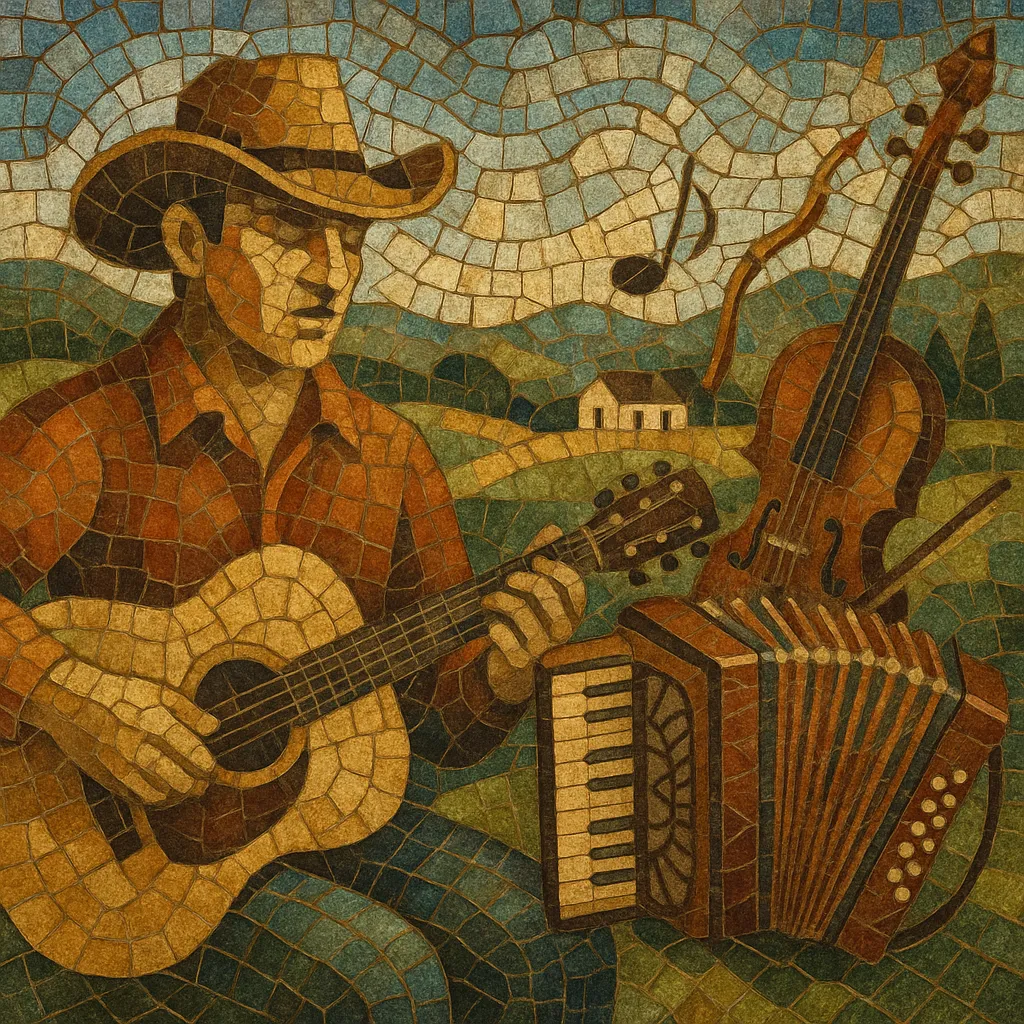
•   Rhythm section: acoustic guitar (strummed), electric bass, and a light drum kit with brushes or a gentle shuffle feel. •   Country color: pedal steel or lap steel for sustained, lyrical fills; fiddle for leads and fills; occasional telecaster-style clean electric guitar. •   Irish color: accordion or button box doubling melodies and adding ornaments; banjo or tin whistle as texture where appropriate.
Rhythm and Form
•   Favor danceable meters: 4/4 two-step/shuffle and 3/4 waltz. Keep tempos moderate to suit social dancing. •   Use simple, singable forms: verse–chorus with an optional middle-eight; repeatable refrains that invite audience participation.
Harmony and Melody
•   Diatonic, major-key progressions (I–IV–V with ii and vi as color tones). Occasional key change up a whole tone for a final chorus is idiomatic. •   Melodies should be clear, memorable, and comfortably within a baritone-to-mezzo range. Ornamentation can include gentle slides on pedal steel and Irish-style cuts/rolls on accordion/fiddle, used tastefully.
Lyrics and Delivery
•   Tell relatable stories about love, home, rural life, emigration, faith, and everyday hardship/joy. Use plain, conversational language. •   Sing with a natural Irish accent; prioritize clarity and warmth over stylized twang. Backing harmonies in thirds or sixths enhance choruses.
Production and Arrangement
•   Keep mixes clean and intimate: modest compression, plate or spring-style reverbs, and minimal overdrive. •   Alternate instrumental fills between pedal steel and accordion/fiddle; avoid busy textures that distract from the vocal. •   Include at least one waltz and one up-tempo two-step in a set to satisfy dancefloor expectations.

Top tracks

Locked
Share your favorite track to unlock other users’ top tracks
Influenced by
Has influenced
No genres found
Challenges
Digger Battle
Let's see who can find the best track in this genre
© 2025 Melodigging
Melodding was created as a tribute to Every Noise at Once, which inspired us to help curious minds keep digging into music's ever-evolving genres.
Buy me a coffee for Melodigging