

Your digging level

For this genre
0/8
🏆
Sign in, then listen to this genre to level up

Description

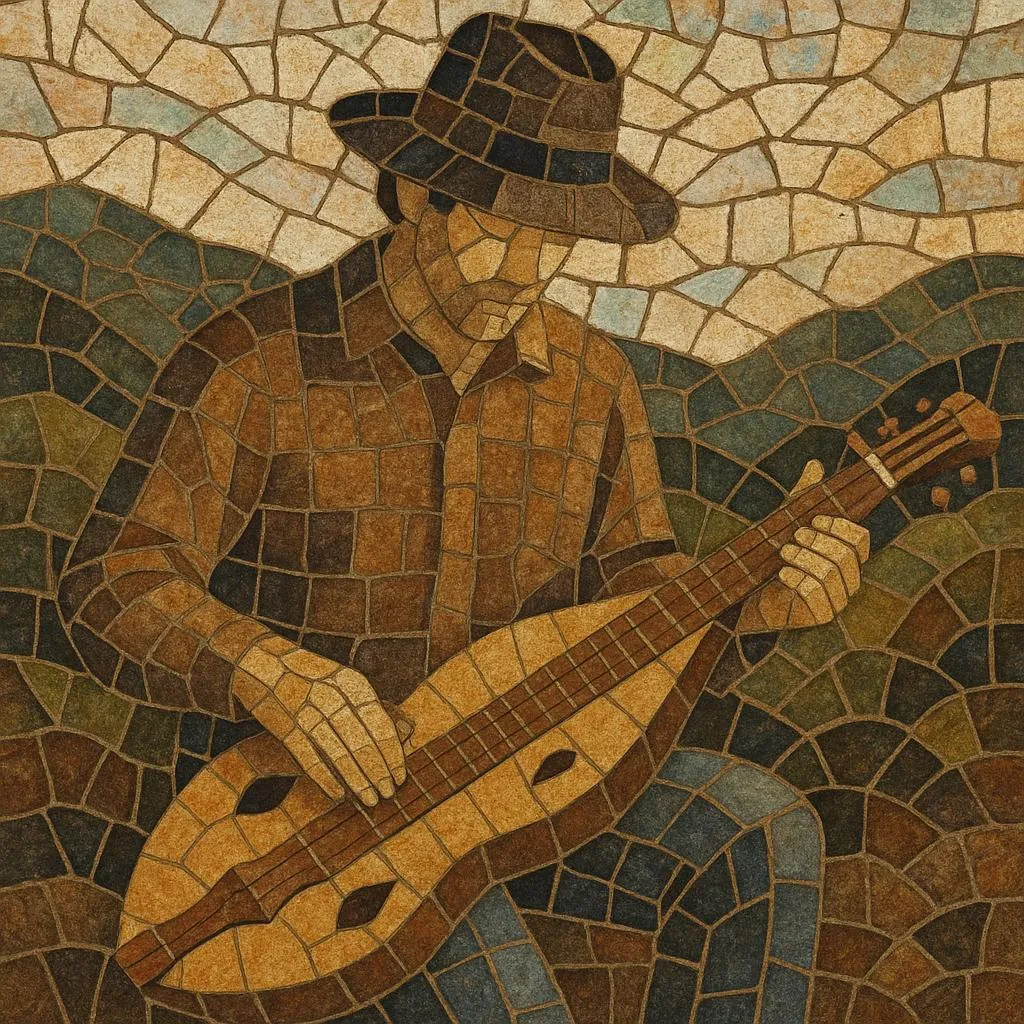
Mountain dulcimer is a North American lap-played fretted zither associated with the Appalachian region of the United States. It features a diatonic fretboard (often with added "6½" and sometimes "1½" frets), two or more drone strings, and a modal sound that suits ballads, hymns, and dance tunes.

Traditionally tuned to modal tunings such as DAA (Ionian) or DAD (Mixolydian), it is strummed or flatpicked while resting on the player’s lap. Older styles use a small wooden stick (noter) to stop the melody string while drones ring; contemporary approaches add fingerstyle, chord–melody, and cross-string drones. The instrument’s airy resonance and pentatonic/modal vocabulary give it a distinctively nostalgic, intimate tone that adapts well to old-time music, Celtic airs, waltzes, and modern arrangements.


Sources: Spotify, Wikipedia, Discogs, RYM, MB, user feedback and other online sources

History

Origins (19th century)

The mountain dulcimer emerged in the Appalachian highlands during the 1800s, evolving from European fretted zithers such as the German scheitholt and related board zithers brought by settlers of Scots-Irish, English, and German descent. In rural communities, it became a home music instrument for ballads, hymns, play-party songs, and dance tunes. Its diatonic fretboard and drone strings supported modes common to Anglo-American song traditions.

Early 20th century to Folk Revival

Through the early 20th century, the dulcimer remained a regional folk instrument made by local luthiers, with distinctive hourglass, teardrop, or elliptical body shapes. Mid-century tradition bearers and craftspeople carried the instrument beyond Appalachia. During the 1950s–60s American folk revival, performers and educators introduced the dulcimer on college campuses, in song collections, on recordings, and on festival stages, turning a regional practice into a national folk icon.

1970s–1990s Professionalization and Expansion

Specialist makers standardized build quality and scale lengths; contest stages and festivals (along with workshops and instructional books) helped codify technique. Players integrated flatpicking, fingerpicking, and chord–melody approaches; luthiers added the now-common "6½" fret to ease major-scale harmony. The repertoire broadened from ballads and fiddle tunes to include Celtic airs, contemporary folk, ragtime, and even classical transcriptions.

2000s–Present: Global Reach and Genre Crossovers

Today the mountain dulcimer enjoys worldwide communities, with formal pedagogy, online lessons, and ensembles. Modern performers employ capos, alternate tunings (DAD, DAA, DAC, DAG, CGC), chromatic fretboards, and amplification with light effects. The instrument appears in Americana, indie folk, Celtic-influenced new-age settings, and educational programs, while remaining a living link to Appalachian musical heritage.

How to make a track in this genre

Tunings and Modes
•   Start with DAD (Mixolydian) for fiddle tunes and chord–melody, or DAA (Ionian) for noter–drone style. Explore DAC (Dorian), DAG ("bagpipe" flavor), and CGC for lower tessitura. •   Embrace modal colors: Mixolydian (major with flat 7), Dorian and Aeolian for minor/modal ballads. Use capos (often at 1st fret) to shift modes without retuning.
Technique and Texture
•   Noter–drone: Use a smooth wooden noter to glide on the melody string while drones ring, producing an authentic old-time buzz and sustain. •   Strumming/flatpicking: Keep a steady strum close to the fretboard; favor down–up patterns in 2/4 or 4/4 for reels and 6/8 for jigs. For waltzes, use a gentle 3/4 boom–chuck–chuck. •   Fingerstyle/chord–melody: Arrange melodies on the melody string while fretting harmonies on the middle/bass strings. Incorporate cross-string drones, partial barre chords, and campanella effects. •   Ornaments: Slides (with noter or finger), hammer-ons, pull-offs, grace notes, and cross-picking add lilt and rhythmic lift.
Harmony and Form
•   Use simple I–VII (Mixolydian), i–VII (Aeolian), or i–VII–IV (Dorian) loops; let drones supply the fifths and open-string resonance. •   Common forms: strophic ballads, AABB fiddle-tune structures, and 16- or 32-bar dance sets. Keep phrasing breathable so drones can bloom.
Repertoire and Ensemble
•   Compose for ballads, hymn-like airs, fiddle tunes, and waltzes. Lyric themes often reflect nature, frontier life, faith, and family. •   Ensemble colors: blend with fiddle, guitar, banjo, mandolin, and light percussion (bones/spoons). Keep dynamics moderate; the dulcimer’s voice shines in intimate textures.
Instrument Setup
•   A standard 3- or 4-string setup (1 or 2 melody strings + drones) works well. The common added "6½" fret enables full major scales and smoother harmony. Light amplification and reverb can enhance sustain while preserving the acoustic character.

Top tracks

Locked
Share your favorite track to unlock other users’ top tracks

Upcoming concerts

in this genre
Influenced by
Has influenced

Download our mobile app

Get the Melodigging app and start digging for new genres on the go
© 2026 Melodigging
Melodding was created as a tribute to Every Noise at Once, which inspired us to help curious minds keep digging into music's ever-evolving genres.
Buy me a coffee for Melodigging
