Your digging level
Description
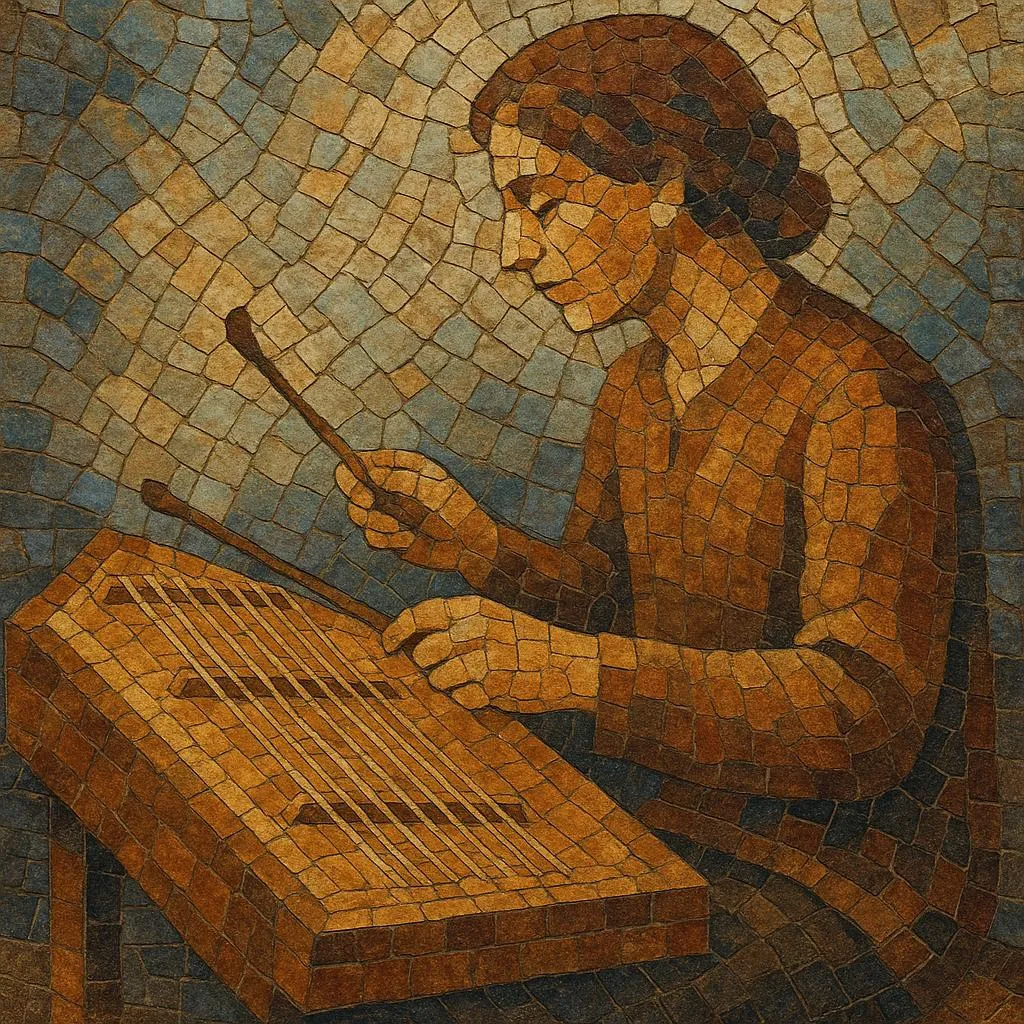
Hammered dulcimer is both the name of a trapezoidal, struck zither and a repertoire-centered performance tradition built around it. The instrument’s strings are stretched across a soundboard and struck with lightweight "hammers," producing a brilliant, bell‑like tone with long sustain and shimmering overtones.
In practice, the hammered dulcimer has repertories in dance music (jigs, reels, hornpipes, waltzes), lyrical airs, seasonal tunes, and arranged concert works. It thrives in folk and neo‑traditional contexts—especially Celtic and Anglo‑American music—while also appearing in early‑music, world‑fusion, and contemporary instrumental settings. Characteristic techniques include rapid rolls (tremolos), cross‑string melodies, drones, open fifths, and delicate damping for articulation and dynamic shaping.
History
Most scholars trace the hammered dulcimer’s origins to medieval Persia, where the related santur appears in sources from the late Middle Ages. Through trade and cultural exchange across the Silk Road and the Mediterranean, struck zithers spread into Central and Western Asia and then into Europe by the 15th century, where they were adapted under local names and tunings.
By the early modern era, dulcimer traditions were present across the British Isles and continental Europe. In Central/Eastern Europe the family developed into larger, chromatic instruments (e.g., the cimbalom), while in Jewish communities the tsimbl became a core voice of early klezmer ensembles. In the British Isles and North America, smaller diatonic instruments supported dance music—country dances, reels, hornpipes, waltzes—and song accompaniments.
Industrialization and the rise of louder, more versatile instruments (piano, accordion) led to a general decline in the 19th and early 20th centuries. Yet the hammered dulcimer survived in pockets of rural England, Ireland, and the United States. From the mid‑20th century onward—particularly during the folk revival of the 1960s–1980s—players, builders, and folk clubs revitalized the instrument. New competitions, festivals, and luthiers expanded its reach, standardized common tunings, and improved portability and chromatic options.
The hammered dulcimer now bridges folk, early music, and contemporary instrumental scenes. It is common in Celtic‑influenced ensembles, contra‑dance bands, and acoustic crossover projects, and it continues to evolve through amplified performance, extended techniques, chromatic models, and original composition.