Genres
Artists
Albums
Make Music
Sign in
Sign in
Artists
Sigilkore
Artists
Sigilkore
Nuvfr
2024
·
1 album
Listen
3
/5
Genres
Sigilkore
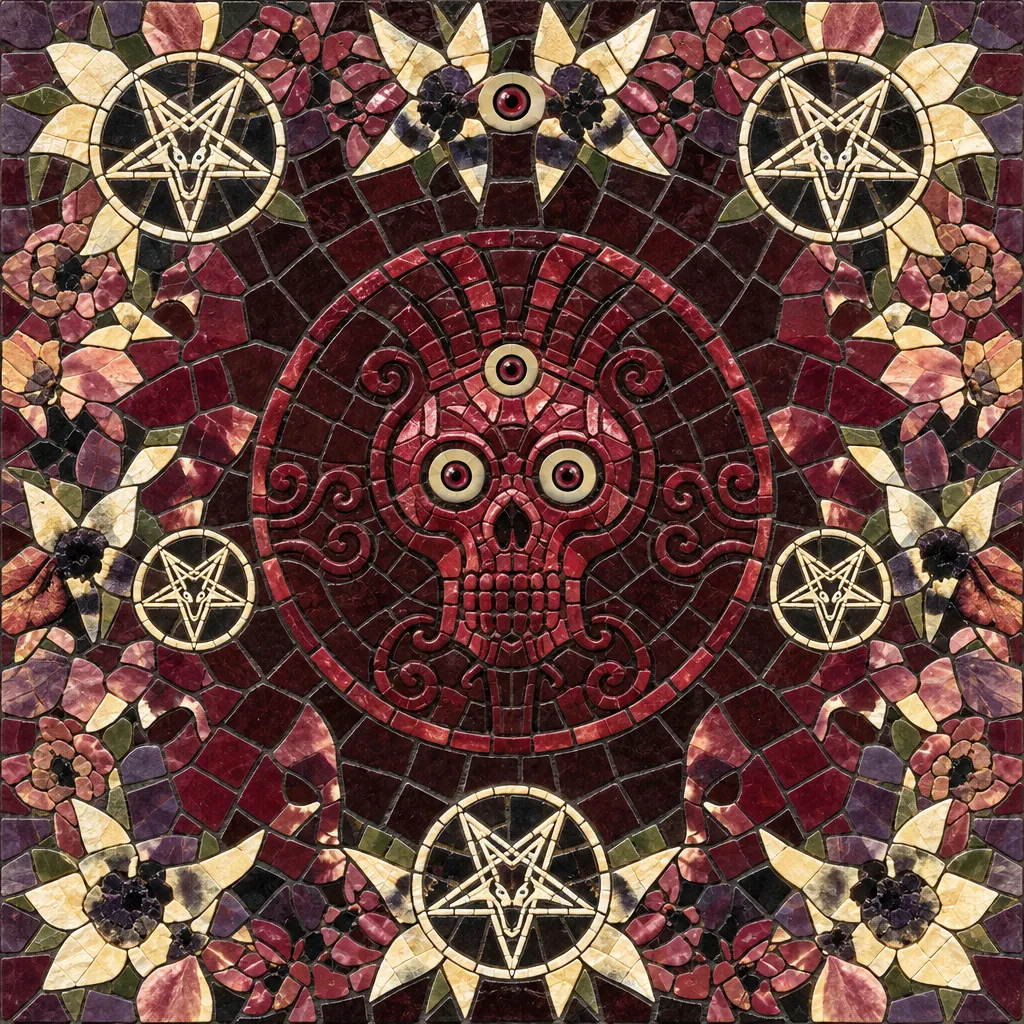
Sigilkore is an internet-born microgenre that merges the ominous atmospheres of witch house with the bounce and drum programming of trap, the tape-warped grit of Memphis rap, and the granular, reverb-heavy haze of dark ambient. Defined as much by its occult visual language as its sound, the style favors heavy 808 subs, skittering hi-hats, detuned pads, bell and choir timbres, pitched-down or formant-shifted vocals, and lo‑fi processing reminiscent of chopped-and-screwed techniques. Tracks often feel ritualistic and hypnotic, with minor-mode motifs, phrygian inflections, and long reverb tails that blur bar lines. Emerging across SoundCloud, Discord communities, and small collectives, sigilkore thrives on DIY anonymity, esoteric cover art (sigils, runes, glyphs), and a mood that’s simultaneously bleak, ethereal, and aggressive.
Discover
Listen
Digital Horror
Digital horror is a contemporary horror aesthetic that focuses on dread emerging from networked technologies, software, and always‑on media. Narratives and sound worlds revolve around screens, social platforms, livestreams, malware, deepfakes, and the uncanny presence of algorithmic systems. In music and sound design, the style translates this fear of the digital into glitching textures, corrupted audio artifacts, synthetic drones, and the weaponization of familiar interface sounds (alerts, keyboards, notification pings). It often blends dark ambient, industrial noise, and hauntological sampling to suggest threats that live inside code, clouds, and data centers—consistent with the wider definition that emphasizes anxiety and supernatural menace arising from the Internet and modern media.
Discover
Listen
Experimental Club Music
Experimental club music (often called post-club or deconstructed club) is a hybrid, avant‑garde approach to club production and performance that treats the dancefloor as a laboratory. It uses the grammar of contemporary club forms—heavy sub‑bass, kick patterns, samples, MC or chopped vocals—as raw material to be cut apart, collaged, and reassembled. Instead of four‑to‑the‑floor regularity, it favors asymmetry, abrupt contrasts, negative space, and extreme sound design drawn from noise, industrial, grime, ballroom/vogue, reggaeton, and internet culture. The result ranges from skeletal, percussive workouts to dense, cinematic soundscapes that can be as confrontational as they are cathartic. Just as importantly, the scene has been a site of diasporic, queer, and trans expression, where identity and politics are embedded in sonic choices and performance practice.
Discover
Listen
Gamecore
Gamecore is an internet-native electronic microgenre that fuses the timbres, melodies, and narrative tropes of classic and modern video game music with contemporary EDM songcraft. Its palette leans heavily on chiptune waveforms (square, triangle, noise), retro console/arcade sound effects, and leitmotif-style hooks, but frames them within club-forward rhythms and sound design drawn from electro house, future bass, glitch hop, dubstep, and drum & bass. The result is a bright, kinetic, and often nostalgic sound that feels like a “boss battle” drop or a euphoric level clear. Scenes and labels tied to VGM remix culture, doujin circles, and demoscene aesthetics helped codify the style, while streamers, esports content, and indie game culture amplified its reach.
Discover
Listen
Hyperpop
Hyperpop is an internet-native pop movement known for its maximalist sound design, pitch-shifted vocals, and frenetic genre collisions. It exaggerates pop tropes—ultra-bright synths, hard-clipping drums, sugary hooks—then smashes them together with elements of club music, trap, and experimental electronica. The style favors hyper-synthetic timbres, extreme processing (auto‑tune, formant shifting, heavy sidechaining, distortion), and abrupt structural left turns. Lyrically, it swings between irreverent internet humor and disarmingly sincere confessions, often reflecting online identity, queerness, and hyper-modern life. Although diverse, the common thread is a playful, self-aware push of pop to surreal, high-saturation extremes.
Discover
Listen
Utopian Virtual
Utopian virtual is an online-born microgenre that recreates the glossy optimism of late‑20th‑century futurism and corporate media. Instead of relying on chopped samples like much vaporwave, producers write original cues that sound like in‑house ‘90s corporate BGM, software demos, tech‑expo reels, and promotional VHS soundtracks. The palette leans deliberately "tacky": General MIDI and ROMpler presets, glassy digital bells, airy synth brass, smooth-jazz pads, and bright slap or fretless bass. The result is a clean, hyper-synthetic sheen that suggests a frictionless corporate future—equal parts sincere nostalgia and gently uncanny pastiche.
Discover
Listen
Krushclub
Krushclub is a SoundCloud-born microgenre that fuses trap and club music with the distorted, post-internet aesthetics popularized by sigilkore. Its signature sound centers on bitcrushed synths, heavy post-processing of vocals (pitch-shifting, formant play, and hard clipping), and energetic, Jersey Club–derived kick patterns and bounce. Producers stack layers of digital artifacts—bitcrush, sample-rate reduction, tape-warp, and brickwall limiting—over cloud-rap-adjacent melodies and pads. The result is a hyper-digital, high-contrast mix: glossy top-end grit over booming 808s, chopped call‑and‑response vocal hooks, and edits that nod to slowed+reverb culture, nightcore acceleration, and DJ-style mash layering.
Discover
Listen
Jirai Kei
Jirai kei is a recent Japanese internet-born pop micro‑genre and aesthetic that blends cute, sugary sounds with darker, obsessive and self‑destructive themes. The term comes from a fashion/aesthetic scene associated with yamikawaii and menhera culture, and in music it describes songs that sound soft and adorable on the surface but conceal lyrics about toxic love, dependency, jealousy, and emotional volatility. Sonically, jirai kei draws from J‑pop and Vocaloid traditions (denpa/picopop brightness, catchy hooks) while adopting modern hyperpop gloss, trap/EDM percussion, and highly edited, youthful vocals. The contrast between childlike, pastel timbres and intense, confessional writing is central to the style, making it both immediately hooky and emotionally sharp—an audio embodiment of “cute but dangerous.”
Discover
Listen
Broken Transmission
Broken transmission is a vaporwave-adjacent microgenre built from fragmented, channel-surfing collages of analog broadcast ephemera. Producers splice together tiny shards of TV idents, news stingers, commercials, interstitial music, and dead air, emphasizing tape hiss, static, dropouts, and tuning noise as musical material. Often beatless or only loosely pulsed, tracks unfold like late-night flipping through channels: abrupt cuts, fleeting jingles, station sign‑offs, and half-heard voiceovers that dissolve into snow. The result is a liminal, hauntological mood—nostalgia filtered through the mechanical errors and material decay of VHS, cable boxes, and broadcast tape. Where classic vaporwave slows and loops pop smoothness, broken transmission foregrounds the texture of the medium itself. It treats errors, transitions, and broadcast artifacts as hooks, creating an uncanny documentary of mediated memory.
Discover
Listen
Chill Breakcore
Chill breakcore is a micro-style that softens the jagged edges of classic breakcore with lush ambience, dreamy pads, and emotive melodies. It retains the genre’s telltale chopped Amen breaks, granular edits, and breakneck rhythmic vocabulary, but tempers them with downtempo moods, lo‑fi textures, and vaporous sound design. Producers often work at drum-and-bass or breakcore tempos (typically 150–175 BPM) while shaping the overall feel to be intimate, melancholic, and relaxed—sometimes even half‑time—so the beats feel intricate but weightless. The result sits somewhere between atmospheric jungle, IDM, and vaporwave: breakbeats that shimmer instead of bludgeon, and harmony that leans nostalgic rather than abrasive.
Discover
Listen
Glitchcore
Glitchcore is an internet-born microgenre that fuses pop-forward songwriting with hyperactive, digitally mangled sound design. It is characterized by bitcrushed and over-distorted synths, stuttered edits, sudden beat-switches, and heavily pitch-shifted, Auto-Tuned vocals. Arrangements tend to be short, hook-centric, and maximalist, often compressing multiple sections and textures into tracks that last 90–150 seconds. The genre borrows the emotive directness of emo rap and bedroom pop, the rhythmic backbone of trap, and the candy-coated sheen of hyperpop and bubblegum bass, while leaning into deliberate digital artifacts—glitches, dropouts, resampling, and hard clip distortion—as expressive tools. Culturally, glitchcore is inseparable from online communities (Discord, SoundCloud, TikTok), where rapid iteration, meme literacy, and DIY production workflows shaped its sound and aesthetics.
Discover
Listen
Vapor House
Vapor house is a micro-genre that fuses the hazy nostalgia and sample-based aesthetics of vaporwave with the groove and structure of deep/lo‑fi house. It favors softened transients, tape-like saturation, and dreamy pads over a four‑on‑the‑floor pulse, often at mid-tempo house speeds. Producers lean on chopped-and-screwed samples from 1980s–1990s muzak, R&B, smooth jazz, and corporate media, then filter, detune, and time-stretch them into wistful loops. The result feels simultaneously club-ready and memory-soaked—dance music that sounds like it’s playing from a worn VHS tape or mall PA system.
Discover
Listen
Fluxwork
Fluxwork is a contemporary microgenre of electronic music optimized for sustained concentration and “flow state” listening. It blends the warmth and space of ambient with the pulse and structure of minimal techno and microhouse, emphasizing unobtrusive rhythms and gradual, textural movement. Tracks usually feature understated four-on-the-floor or gently broken patterns, soft sidechained pads, subtle arpeggios, and carefully filtered transitions. Vocals, if present at all, are sparse and textural. The result is music that feels propulsive yet calm—capable of fading into the background while quietly supplying kinetic focus.
Discover
Listen
Solo Wave
Solo wave is an internet-era microgenre that blends the intimate, DIY sensibility of bedroom pop with vaporwave- and chillwave-tinged atmospheres and soft indie pop songwriting. Typically produced by solo artists working from home studios, it favors gentle synth pads, chorus-washed guitars, understated trap- or pop-leaning drums, and confessional vocals framed by nostalgic reverb and tape-like warmth. The result is dreamy, sentimental, and highly shareable songs that circulate on streaming platforms and social media. Lyric themes often center on young adult relationships, self-reflection, mental health, and digital-age loneliness—delivered in a direct, diaristic tone that reinforces the genre’s solitary, “one-person project” ethos.
Discover
Listen
Weirdcore
Weirdcore is an internet-native microgenre and aesthetic of experimental electronic music that leans into liminal nostalgia, eerie memory, and uncanny ambience. Its sound palette often combines misty pads, degraded samples, tape hiss, and bitcrushed percussion with disembodied voices, classroom and mall PA announcements, retro operating system chimes, and field recordings of empty or transitional spaces. Harmonically, weirdcore favors drones, slowly shifting modal clusters, and ambiguous, memory-warping intervals that feel familiar yet distorted. Rhythm ranges from beatless, foggy soundscapes to brittle, broken 2-step and slow, stumbling downtempo pulses. Heavy time-stretching, granular manipulation, wow-and-flutter, convolution reverbs, and spectral or cassette-style degradation are central to its texture. Although closely tied to a visual aesthetic (liminal spaces, late-night analog glow, low-resolution signage), weirdcore as a musical style is defined by its uncanny collage sensibility: sampling and warping everyday audio detritus until it becomes emotionally charged, melancholic, and faintly unsettling.
Discover
Listen
Seapunk
Seapunk is an early-2010s internet-born microgenre and multimedia aesthetic that fuses retro-rave sonics with Y2K-era, ocean-themed visuals. Its sound blends 1990s house and trance riffs, chopped-and-screwed and vaporwave-adjacent sampling, splashy 808/909 drums, and glossy, “watery” synth textures. The visual world is as important as the music: turquoise/teal palettes, 3D chrome dolphins, coral gradients, pixel seas, and GIF-era net art. Together, these define a playful, nostalgic, and cyber-aquatic identity that celebrates both rave euphoria and web-native DIY culture.
Discover
Listen
Jersey Club
Jersey club is a high-energy, club-oriented dance music from Newark, New Jersey that evolved in the early 2000s. It is known for punchy three-kick patterns, chopped vocal stabs, stop‑and‑go drops, and a relentless, call‑and‑response party ethos. Typically around 130 BPM, the sound blends house and breakbeat drum programming with hip‑hop sampling aesthetics. Producers often flip R&B hooks, sprinkle in signature effects (notably the "bed squeak" timbre popularized in 2000s rap), and build arrangements around short, repeatable phrases designed for coordinated dance routines.
Discover
Listen
Breakcore
Breakcore is a high-intensity electronic music genre built around hyper-edited breakbeats, extreme dynamics, and a deliberately transgressive, collage-like approach to sampling. It prioritizes rhythmic complexity, abrupt structural shifts, and heavy sound design over smooth continuity. Typical tempos range from 160 to 220 BPM (and beyond), with the Amen break, Think break, and other classic breakbeats chopped into micro-fragments, re-sequenced, and processed with distortion, compression, and glitch edits. The palette freely fuses elements from jungle and drum and bass with gabber kicks, industrial noise, classical or choral snippets, ragga vocals, metal guitar samples, and odd-meter patterns. More than a single “sound,” breakcore is a methodology: confrontational energy, maximalist editing, and anti-formalist structures that often subvert dance-music expectations. It thrives in DIY scenes, warehouse parties, and netlabel cultures, where forward-pushing experimentation and boundary-blurring sampling are central values.
Discover
Listen
Ambient
Ambient is a form of electronic and electroacoustic music that prioritizes tone, atmosphere, and texture over conventional song structures and rhythmic drive. It typically features slow-moving harmonies, sustained drones, gentle timbral shifts, and extensive use of space and silence. Rather than drawing attention to itself through hooks or beats, ambient is designed to be as ignorable as it is interesting, rewarding both background listening and focused immersion. Artists often employ synthesizers, samplers, tape loops, field recordings, and subtle acoustic instruments, with reverb and delay creating a sense of place. Substyles range from luminous, consonant soundscapes to darker, more dissonant atmospheres.
Discover
Listen
Show all 19 genres
Albums
2024
3
/5
Hydromania
Nuvfr
Sigilkore
Similar artists
2
/5
Universe
Sigilkore
Hyperpop
Jersey Club
4
/5
Odetari
Nightcore
Krushclub
Jersey Club
4
/5
ODECORE
Digital Horror
Hyperpop
Jersey Club
3
/5
Metaroom
Speedcore
Weirdcore
Analog Horror
3
/5
*67
Sigilkore
Brony Music
Hyperpop
3
/5
kaystrueno
Sigilkore
Hyperpop
Glitchcore
2
/5
Xxtarlit⚸
Sigilkore
Breakcore
Jungle
2
/5
Sephe
Sigilkore
Hyperpop
Krushclub
1
/5
Corvus
Sigilkore
Hyperpop
Tread
4
/5
Lumi Athena
Nightcore
Jersey Club
Hyperpop
Download our mobile app
Get the Melodigging app and start digging for new genres on the go
Download on the App Store
Get it on Google Play
© 2026 Melodigging
Give feedback
Legal
Melodding was created as a tribute to
Every Noise at Once
, which inspired us to help curious minds keep digging into music's ever-evolving genres.