Your digging level
Description
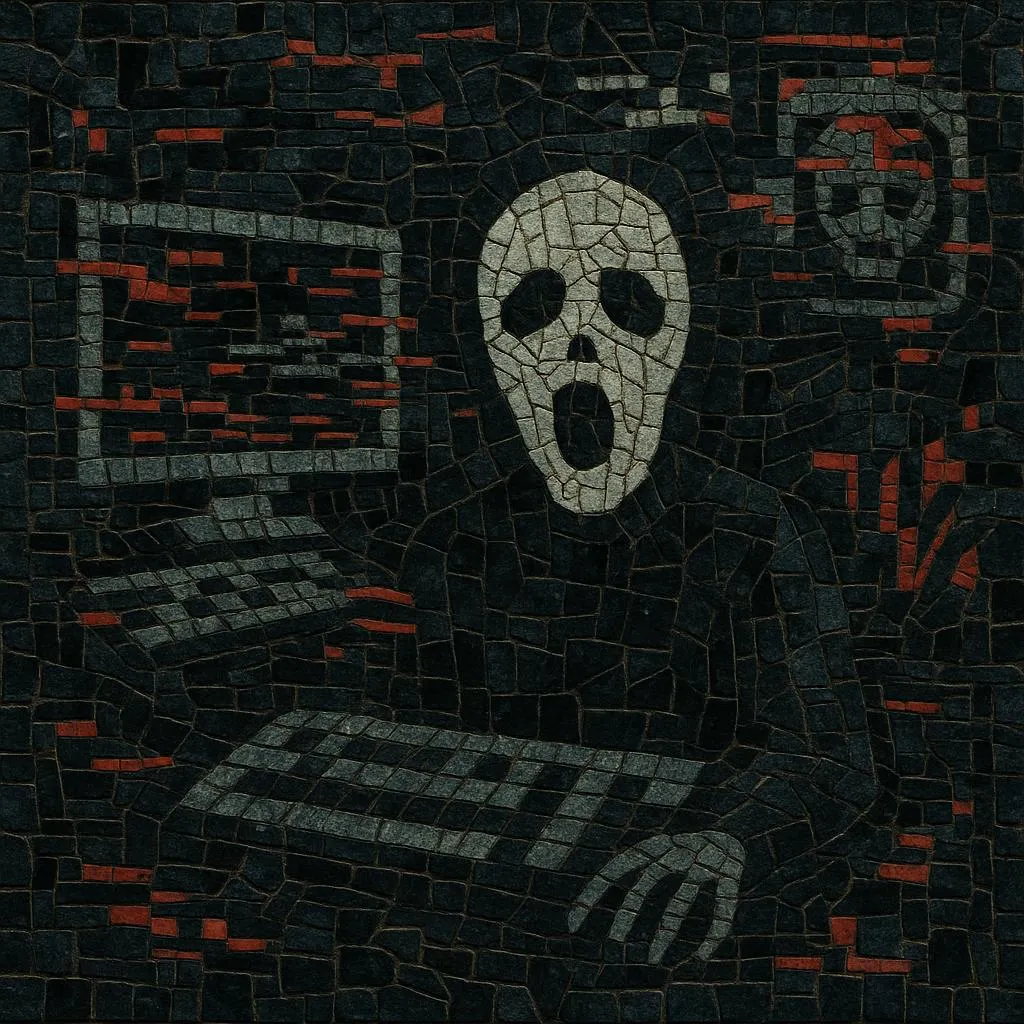
Digital horror is a contemporary horror aesthetic that focuses on dread emerging from networked technologies, software, and always‑on media. Narratives and sound worlds revolve around screens, social platforms, livestreams, malware, deepfakes, and the uncanny presence of algorithmic systems.
In music and sound design, the style translates this fear of the digital into glitching textures, corrupted audio artifacts, synthetic drones, and the weaponization of familiar interface sounds (alerts, keyboards, notification pings). It often blends dark ambient, industrial noise, and hauntological sampling to suggest threats that live inside code, clouds, and data centers—consistent with the wider definition that emphasizes anxiety and supernatural menace arising from the Internet and modern media.


History
Digital horror coalesced in parallel with the maturation of social media and “screenlife” storytelling. Early web‑native horror (creepypasta, browser‑based ARGs, and webcam/found‑screen narratives) created a new space where the fear wasn’t a haunted house but a haunted interface. Musically, producers borrowed from dark ambient and industrial while integrating UI sounds, codec distortion, and granular errors as expressive tools.
As screen‑centric films and series multiplied, composers and independent electronic artists carved a recognizable palette: bitcrushed basses, sub‑bass pulses mimicking server hums, smeared drones suggesting bandwidth drag, and chopped samples of system prompts or speech‑to‑text engines. Hauntology’s obsession with media memory intersected with glitch and witch house aesthetics to evoke corrupted archives and lost data.
Livestream culture, deepfake anxieties, and ubiquitous surveillance imagery intensified the genre’s thematic core. Musicians widened the toolkit with machine‑listening artifacts (auto‑caption misreads, voice‑cloned whispers), adversarial synthesis, and spectral processing that makes voices sound “algorithmic.” The result is a codified sonic language for online dread that now informs not only film/series scoring but independent releases and experimental club contexts.