Your digging level
Description
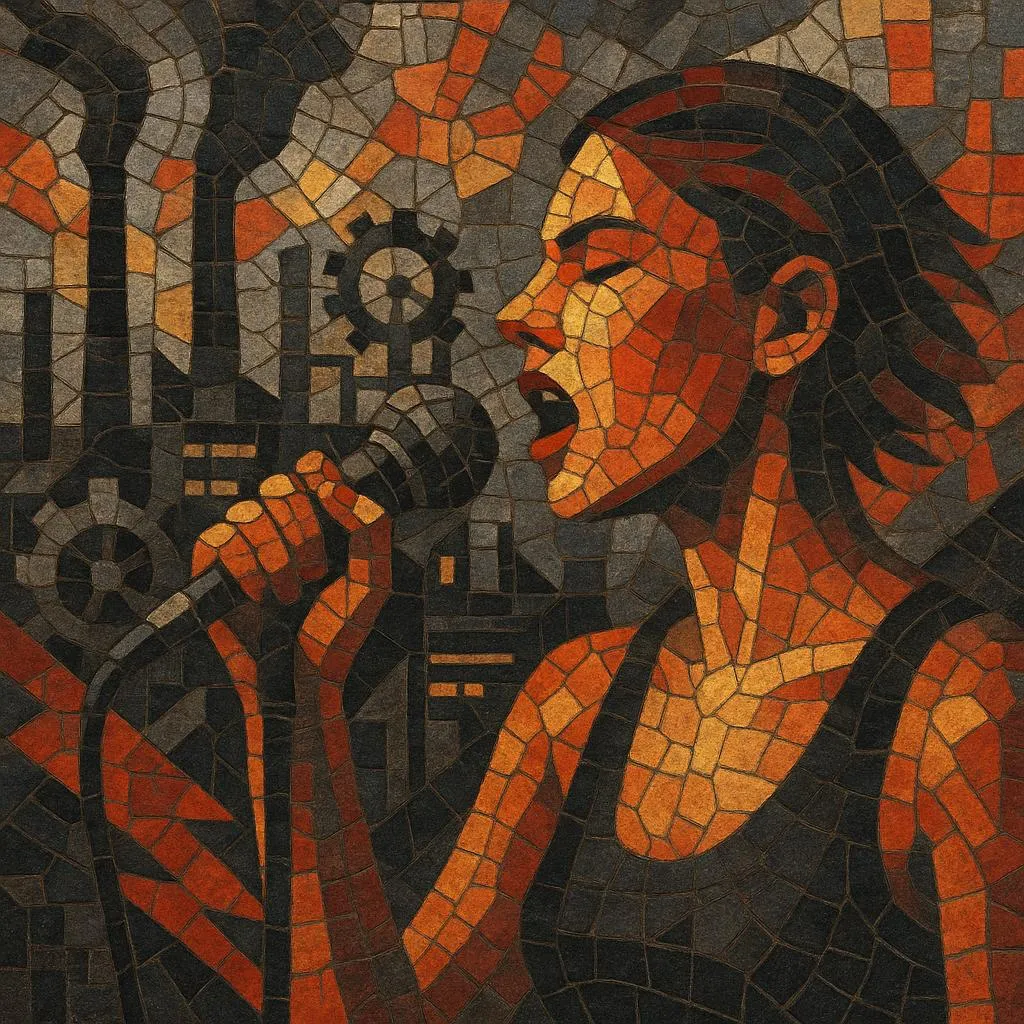
Industrial pop fuses the abrasive textures and transgressive sound design of industrial music with the hooks, song forms, and accessibility of pop. It retains industrial’s distorted synthesizers, metallic percussion, sampling, and noise layers, but frames them within verse–chorus structures, memorable toplines, and danceable grooves.
Where classic industrial confronted listeners with confrontational art tactics, industrial pop focuses on immediacy: catchy choruses, strong rhythm sections, and cinematic production. The result is a sleek yet gritty palette—bitcrushed drums, saturated bass synths, and processed vocals—that explores themes of alienation, technology, desire, and power while remaining radio- and club-friendly.


History
Industrial pop’s foundations lie in industrial music’s emergence in the late 1970s, a scene named around Industrial Records and defined by experiments with musique concrète, noise, tape manipulation, and early electronics. As synth-pop and new wave rose in the early 1980s, some artists began to graft industrial timbres onto more conventional songcraft—adopting tighter forms, prominent hooks, and club-ready beats.
Through the 1990s, the template solidified: hard-edged sound design and dystopian aesthetics presented with pop immediacy. Acts with industrial roots embraced glossy production, anthemic choruses, and strong melody-writing, helping the style circulate on mainstream radio and music television. Dance floors—already attuned to EBM and electro—proved a natural home for this catchier, hook-forward strain.
Digital production tools broadened the palette: sidechained synths, bitcrushed drums, and cinematic processing became common. Industrial pop threaded through electroclash, alternative pop, and dark pop, influencing club-oriented electropop and singer–producer projects that balanced intimacy with ferocity. The style’s theatrical flair aligned with visual-forward pop culture, music videos, and performance art.
In the 2020s, industrial pop aesthetics proliferated across alternative and mainstream spaces. Artists combined hyper-slick hooks with serrated textures, borrowing from EBM, darkwave, and glitch while foregrounding pop structures. The result is a fluid ecosystem where industrial sonics, glossy toplines, and genre-agnostic collaborations continuously refresh the form.