




Genres
Artists
Albums
Make Music
Sign in
Sign in
Artists
Classical
Artists
Classical
New York Philharmonic
1940–2019
·
12 albums
Listen
4
/5
Genres
Meme
Meme is an internet-native umbrella genre for songs and audio clips that are created for, shaped by, or propelled through online meme culture. It blends humor, parody, and fast-turnaround production with infectious hooks designed to spread rapidly across platforms. Stylistically, meme music is eclectic. It can be rap, pop, EDM, rock, or mashup-driven collage; the common thread is comedic framing, referential lyrics, exaggerated vocal processing, and recognizable samples that cue shared online in-jokes. Tracks often favor short runtimes, bold punchlines, and instantly loopable sections optimized for social media. Because it thrives on virality rather than a fixed instrumentation set, meme functions as a meta-genre. It borrows techniques from mashup culture, YTPMV, soundclown, nightcore, and novelty/comedy traditions, while using platform-specific aesthetics from YouTube, SoundCloud, Vine, and TikTok.
Discover
Listen
Doble Paso
Doble paso is a high‑tempo reggaetón variant characterized by running the classic dembow groove at double speed, creating a frenetic, hard‑hitting feel aimed squarely at the dance floor. Compared with standard reggaetón drum patterns (typically around 90–100 BPM), doble paso accelerates the same rhythmic skeleton to roughly 120–140 BPM, often accompanying a club dance of the same name. Producers keep the core syncopation and low‑end punch of reggaetón while tightening hi‑hats, adding denser percussion fills, and favoring short, chant‑like hooks that match the breathless pace. The result is intense, perreo‑ready energy that bridges classic reggaetón, Dominican dembow’s urgency, and club‑forward editing trends.
Discover
Listen
Writing
Writing is a functional, streaming-era microgenre designed to support reading and writing by providing an unobtrusive sonic backdrop. It favors gentle dynamics, sparse textures, and a stable emotional temperature that reduces distraction while maintaining a subtle sense of flow. The sound palette commonly blends modern classical elements (felt piano, light strings), ambient pads and drones, soft post-rock guitars with long reverb tails, and understated downtempo or lo-fi rhythms. Tempos are typically slow to moderate (often 60–90 BPM) or pulse-free, with simple, repetitive motifs and gradual evolution rather than dramatic contrasts. Harmonically, it leans on consonant, slowly changing chords, modal centers, and extended triads for warmth, avoiding sharp dissonance or sudden modulations. Vocals, when present at all, are wordless; most tracks are instrumental to preserve focus.
Discover
Listen
Modern Classical
Modern classical is a contemporary strand of instrumental music that applies classical composition techniques to intimate, cinematic settings. It typically foregrounds piano and strings, is sparsely orchestrated, and embraces ambience, repetition, and timbral detail. Rather than the academic modernism of the early 20th century, modern classical as used today refers to accessible, mood-driven works that sit between classical, ambient, and film music. Felt pianos, close‑miked string quartets, tape hiss, drones, soft electronics, and minimal harmonic movement are common, producing a contemplative, emotionally direct sound that translates well to headphones, streaming playlists, and screen media.
Discover
Listen
Moscow School
The Moscow School is a classical performance tradition centered on the Moscow Conservatory and its satellite institutions, renowned especially for its pianism. It is characterized by a singing tone, long-breathed phrasing, structural clarity, and rigorous technique coupled with emotional depth. Although best known for piano, the approach extends to chamber music and orchestral playing: careful voicing, architectural control of large forms, expressive but disciplined rubato, and a rich dynamic palette. Its practitioners balance fidelity to the score with a cultivated cantabile line and a deep, often elegiac lyricism associated with the Russian late-Romantic aesthetic.
Discover
Listen
Fairy Tale
Fairy tale (often called Skazka in Russian or Märchen in German) is a Romantic-era, narrative form in classical music that paints scenes and characters from folklore, myths, and children’s tales through instrumental color and memorable leitmotifs. It commonly appears as piano character pieces and orchestral tone poems, but its spirit also infuses ballets and operas based on folk narratives. Typical hallmarks include lush harmonies, modal or folk-derived melodies, magical timbres (harp, celesta, woodwinds), and sharply contrasted moods to depict wonder, danger, and transformation.
Discover
Listen
Saint Petersburg School
The Saint Petersburg school refers to interrelated circles of 19th-century Russian Western Classical composers centered in Saint Petersburg. Its core aim was to develop a distinctly Russian national style within Western art-music forms, blending European conservatory craft (symphony, opera, chamber music) with Russian-language declamation, folk-like melodic turns, Orthodox-tinged sonorities, and programmatic subjects drawn from Russian history and literature. In practice, the term often overlaps with the so‑called “Mighty Handful” (Balakirev’s circle) and their broader St. Petersburg milieu, where national-romantic aesthetics were pursued alongside vigorous debate with more academically oriented musicians.
Discover
Listen
Symphonic Poem
A symphonic poem (also called a tone poem) is a single-movement orchestral work that conveys an extra-musical narrative, image, or idea through purely instrumental means. Rather than following traditional multi-movement symphonic forms, it uses flexible structures—often rhapsodic or episodic—to mirror a story, painting, landscape, poem, or philosophical concept. Rooted in Romantic aesthetics, the symphonic poem emphasizes vivid orchestration, thematic transformation, and striking harmonic color to achieve narrative coherence. It commonly deploys leitmotif-like themes that evolve as the program progresses, creating an arc that feels cinematic long before the advent of film scoring.
Discover
Listen
Orchestral Song
Orchestral song is an art-song tradition in which a solo voice is accompanied by a full orchestra rather than piano or a small chamber ensemble. It preserves the intimate, text-led focus of lieder and mélodie while expanding the expressive palette with orchestral color, timbral contrast, and large-scale dynamic shaping. Unlike opera, it is not staged and typically sets discrete poems or groups of poems, often assembled into cycles. Forms range from strophic to through-composed, and the style spans late-Romantic tonal idioms to early modernist harmonies. Central to the genre is the careful balance between textual clarity and orchestral richness, with the orchestra acting as a commentator and colorist—introducing motives, painting imagery, and framing the vocal line with preludes, interludes, and postludes.
Discover
Listen
Choral Symphony
A choral symphony is a large-scale symphonic work that integrates chorus (and often vocal soloists) into the symphonic fabric, rather than treating the voices as an add-on or separate cantata-like appendix. Pioneered most famously by Beethoven’s Symphony No. 9 (1824), the genre fuses the instrumental architecture of the symphony with texted, choral expression drawn from sacred and secular traditions. Composers use the chorus to broaden timbral range, intensify climaxes, and articulate philosophical or narrative ideas that purely instrumental music cannot directly convey. Across the 19th and 20th centuries, choral symphonies ranged from liturgical meditations (Stravinsky’s Symphony of Psalms) to epic, humanistic statements (Mahler’s Symphonies Nos. 2 and 8; Vaughan Williams’s A Sea Symphony), and politically charged works (Shostakovich’s Symphony No. 13).
Discover
Listen
Romanticism
Romanticism in music is a 19th‑century movement that prioritizes individual expression, emotional intensity, and evocative storytelling over the balanced clarity of the Classical era. It expands harmony with richer chromaticism and distant modulations, stretches forms (longer developments, cyclic structures), and favors flexible tempo (rubato) and extreme dynamics. Orchestras grow in size and color (tuba, piccolo, contrabassoon, harp, expanded brass and percussion), while the piano becomes a primary vehicle for intimate expression and virtuoso display. Key genres include the art song (Lied), character piece, symphony and symphonic poem, and grand opera with leitmotifs. Program music—works that narrate scenes, poems, or ideas—stands alongside absolute music, both suffused with heightened subjectivity, nature imagery, nationalism, and the sublime.
Discover
Listen
Romantic Classical
Romantic classical (Romantic-era) music is the 19th‑century phase of Western art music in which expression, individuality, and imagination came to the fore. Composers expanded the orchestra, embraced chromatic harmony and bold modulations, and favored long‑breathed, emotive melodies. Aligned with the wider Romantic movement in literature and the arts, it prized the subjective—love, nature, the supernatural, nationalism, and the sublime—often through programmatic narratives. New and transformed genres (the symphonic poem, grand opera, the art song/Lied, concert overtures) coexisted with reimagined Classical forms (symphony, sonata, concerto) that grew in scale and harmonic daring. From ca. 1800 through the early 20th century, Romantic music stretched from Beethoven’s heroic style and Schubert’s lyricism to Wagner’s leitmotivic dramas and Tchaikovsky’s symphonic ballet-infused language, culminating in late-Romantic gigantism and post-Romantic continuations.
Discover
Listen
American Orchestra
American orchestra refers to the tradition and sound-world of symphonic and concert orchestras based in the United States. It is centered on large ensemble performance (strings, woodwinds, brass, percussion, and sometimes harp, piano/celesta, and auxiliary instruments) across the Western classical repertoire, but it is also shaped by specifically American institutional history, performance practice, commissioning culture, and repertoire preferences. In practical listening terms, it often points to recordings and performances by U.S. orchestras and conductors, spanning Romantic symphonies, late-Romantic tone poems, 20th/21st-century concert music, and American concert works (including nationalist, modernist, and film-influenced symphonic idioms).
Discover
Listen
Symphony
A symphony is a large-scale composition for orchestra, typically cast in multiple movements that contrast in tempo, key, and character. In the Classical era, the most common layout was four movements: a fast opening movement (often in sonata form), a slow movement, a dance-like movement (minuet or later scherzo), and a fast finale. Over time, the symphony evolved from compact works of the mid-18th century into expansive, architecturally ambitious statements in the 19th and 20th centuries. Composers increasingly treated the symphony as a vehicle for thematic development, cyclical unity, and dramatic narrative—sometimes programmatic, sometimes abstract—using the full coloristic range of the modern orchestra. While rooted in Classical balance and clarity, symphonies incorporate a wide spectrum of harmonic languages and orchestral techniques. From Haydn’s wit and structural innovation to Beethoven’s heroic scope, Mahler’s cosmic breadth, and Shostakovich’s modern intensity, the symphony has remained a central pillar of Western concert music.
Discover
Listen
Ballet
Ballet (as a musical genre) refers to orchestral music written to accompany choreographed dance on stage. It prioritizes clear tempi, strongly articulated rhythms, and memorable leitmotifs to support narrative, character, and movement. While rooted in court entertainment, ballet music evolved into a sophisticated, self-sufficient concert art: many ballets yield popular orchestral suites that are performed independently. Typical numbers include adagios, variations, codas, divertissements, character dances, and large ensemble scenes that mirror the dramatic arc of the choreography. Stylistically, ballet spans Baroque courtly idioms, Classical clarity, Romantic lyricism, and 20th‑century modernism and neoclassicism. It is predominantly instrumental (full orchestra), but can occasionally include choral or vocal parts when dramaturgy requires it.
Discover
Listen
Orchestral Performance
Orchestral performance refers to the live or studio presentation of music by a full orchestra—strings, woodwinds, brass, and percussion—under the direction of a conductor. It is less a compositional genre than a performance tradition that interprets repertory from the Baroque era to contemporary works. Its core values are balance among sections, timbral blend, dynamic control, and expressive phrasing shaped by conducting technique and ensemble discipline. Venue acoustics, seating plans, and modern recording practices (from single-point to multi-mic arrays) further define how orchestral performance is experienced. Although most closely associated with Western classical repertoire, orchestral performance practices have also shaped film music, symphonic rock/metal, and large-scale jazz projects.
Discover
Listen
Orchestral
Orchestral music refers to compositions written for an orchestra—a large ensemble typically built around a string section (violins, violas, cellos, double basses), complemented by woodwinds, brass, percussion, and often harp, keyboard, or other auxiliary instruments. A conductor coordinates the ensemble, shaping balance, phrasing, and expression. The style emphasizes coloristic timbre combinations, dynamic range from the softest pianissimo to explosive tuttis, and textures that can shift seamlessly between transparent chamber-like writing and monumental masses of sound. Orchestral writing underpins concert genres such as symphonies, overtures, and tone poems, as well as opera, ballet, and modern film and game scores. While orchestral writing evolved across centuries, its core craft centers on melody, counterpoint, harmony, register, and orchestration—the art of assigning musical ideas to instruments to achieve clarity, contrast, and narrative impact.
Discover
Listen
Classical
Classical music is the notated art-music tradition of Europe and its global descendants, characterized by durable forms, carefully codified harmony and counterpoint, and a literate score-based practice. The term “classical” can refer broadly to the entire Western art-music lineage from the Medieval era to today, not just the Classical period (c. 1750s–1820s). It privileges long-form structures (such as symphonies, sonatas, concertos, masses, and operas), functional or modal harmony, thematic development, and timbral nuance across ensembles ranging from solo instruments to full orchestras and choirs. Across centuries, the style evolved from chant and modal polyphony to tonal harmony, and later to post-tonal idioms, while maintaining a shared emphasis on written notation, performance practice, and craft.
Discover
Listen
Western Classical
Western classical is the notated art-music tradition that developed in Europe from medieval Christian chant into the large-scale secular and sacred forms of the Baroque, Classical, Romantic, and modern eras. It is characterized by staff notation, evolving systems of modality and tonality, and forms such as symphony, sonata, concerto, mass, opera, and chamber music. Across its history, Western classical established an extensive theory of harmony and counterpoint, refined orchestration across strings, winds, brass, and percussion, and cultivated performance practices from a cappella chant to full symphonic and operatic forces. Its repertoire, pedagogy, and institutions (conservatories, orchestras, opera houses) made it a global reference point for compositional craft and instrumental technique.
Discover
Listen
Choral
Choral refers to music written for and performed by a choir—an ensemble of voices organized into sections such as soprano, alto, tenor, and bass (SATB), or same-voice groupings (SSA, TTBB). It encompasses both sacred and secular repertoire and may be sung a cappella or with accompaniment by organ, piano, or full orchestra. Stylistically, choral music ranges from chant-like monophony to intricate polyphony and rich homophonic textures. Texts are drawn from liturgy, scripture, poetry, and vernacular sources, and are set in many languages. Performance contexts include church services, concert halls, and community events, making choral one of the most socially embedded and widely practiced forms of ensemble music. Across history, choral music has served as a laboratory for vocal counterpoint, word painting, and text-driven form, while functioning as a cultural bridge among religious rites, national traditions, and contemporary concert practice.
Discover
Listen
Show all 20 genres
Albums
2019
1
/5
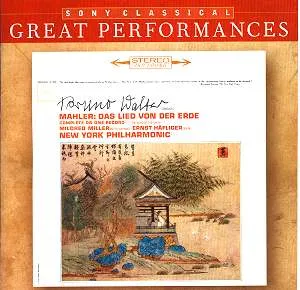
Das Lied von der Erde
Gustav Mahler
Orchestral Song
2018
1
/5
Symphony No. 3 in D minor
Gustav Mahler
Choral Symphony
Choral
Symphony
2018
1
/5
Symphony No. 2 in C minor "The Resurrection Symphony"
Gustav Mahler
Choral Symphony
Choral
Symphony
2017
1
/5
The Planets
Gustav Holst / New York Philharmonic / Leonard Bernstein
Symphonic Poem
2017
1
/5
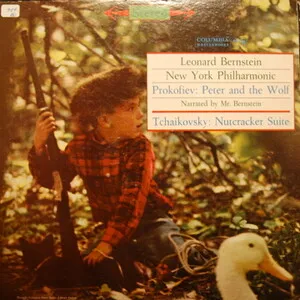
Peter and the Wolf / Nutcracker Suite
Sergei Prokofiev Сергей Прокофьев / Pyotr Tchaikovsky Пётр Чайковский
Fairy Tale
2017
3
/5
Symphony No. 5, Op. 47
Dmitri Shostakovich Дмитрий Шостакович / New York Philharmonic / Leonard Bernst…
Symphony
Modern Classical
Classical
1990
1
/5
Symphony No. 5; Romeo & Juliet
Pyotr Tchaikovsky Пётр Чайковский / New York Philharmonic / Leonard Bernstein
Moscow School
1987
2
/5
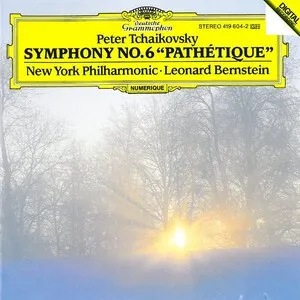
Symphony No. 6 "Pathétique"
Pyotr Tchaikovsky Пётр Чайковский / New York Philharmonic / Leonard Bernstein
Moscow School
Symphony
1960
1
/5
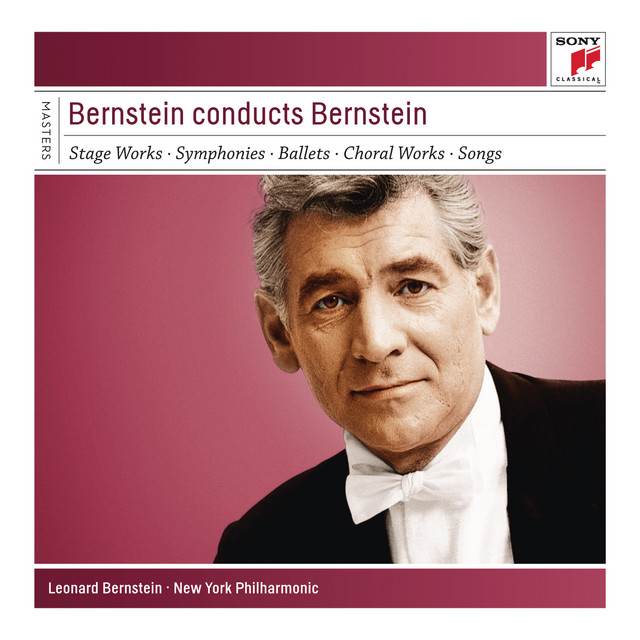
Leonard Bernstein conducts Bernstein
Leonard Bernstein
Orchestral Performance
1959
1
/5
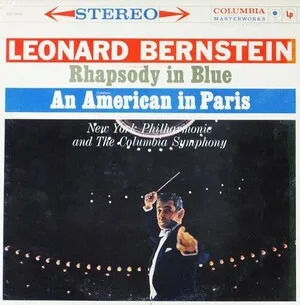
Rhapsody in Blue; An American in Paris
George Gershwin
Modern Classical
Classical
1954
1
/5
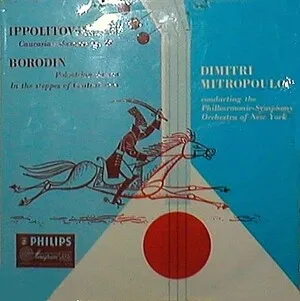
Caucasian Sketches, Op. 10 / Polovtsian Dances; In the Steppes of Central Asia
Mikhail Ippolitov-Ivanov Михаил Ипполитов-Иванов / Alexander Borodin Александр…
Saint Petersburg School
1940
1
/5
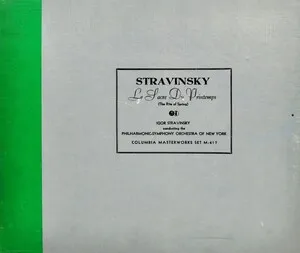
Le sacre du printemps
Igor Stravinsky / New York Philharmonic
Ballet
Similar artists
4
/5
Berliner Philharmoniker
Classical
Romantic Classical
Romanticism
4
/5
Ludwig van Beethoven
Classical
Classical Period
Romantic Classical
4
/5
Wiener Philharmoniker
Classical
Romantic Classical
Romanticism
4
/5
Leonard Bernstein
Orchestral Performance
Classical
Symphony
3
/5
Gustav Mahler
Choral Symphony
Orchestral Song
Classical
4
/5
Herbert von Karajan
Classical
Symphonic Poem
Symphony
3
/5
Wiener Singverein
Choral
Classical
Requiem
3
/5
Chicago Symphony Orchestra
Classical
Choral Symphony
Concerto
3
/5
Sir Georg Solti
Classical
Romantic Classical
Romanticism
2
/5
José van Dam
Classical
Opera
Requiem
Download our mobile app
Get the Melodigging app and start digging for new genres on the go
Download on the App Store
Get it on Google Play
© 2026 Melodigging
Give feedback
Legal
Melodding was created as a tribute to
Every Noise at Once
, which inspired us to help curious minds keep digging into music's ever-evolving genres.