Your digging level
Description
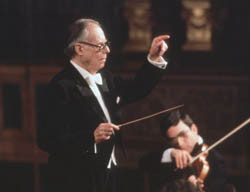
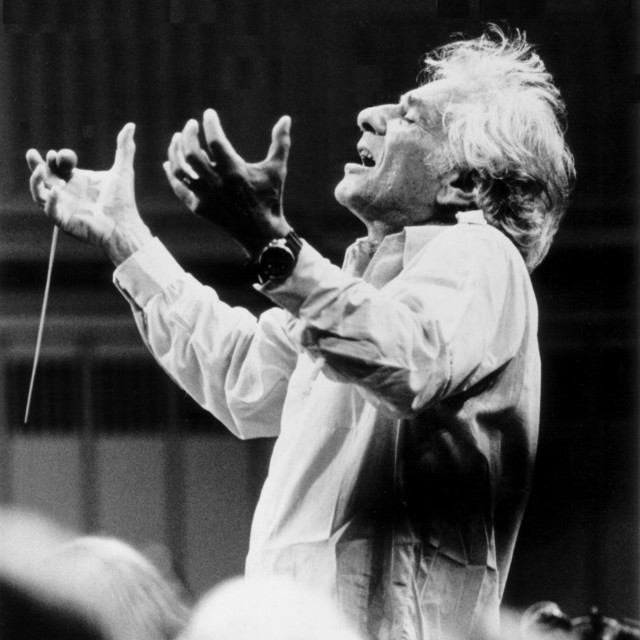
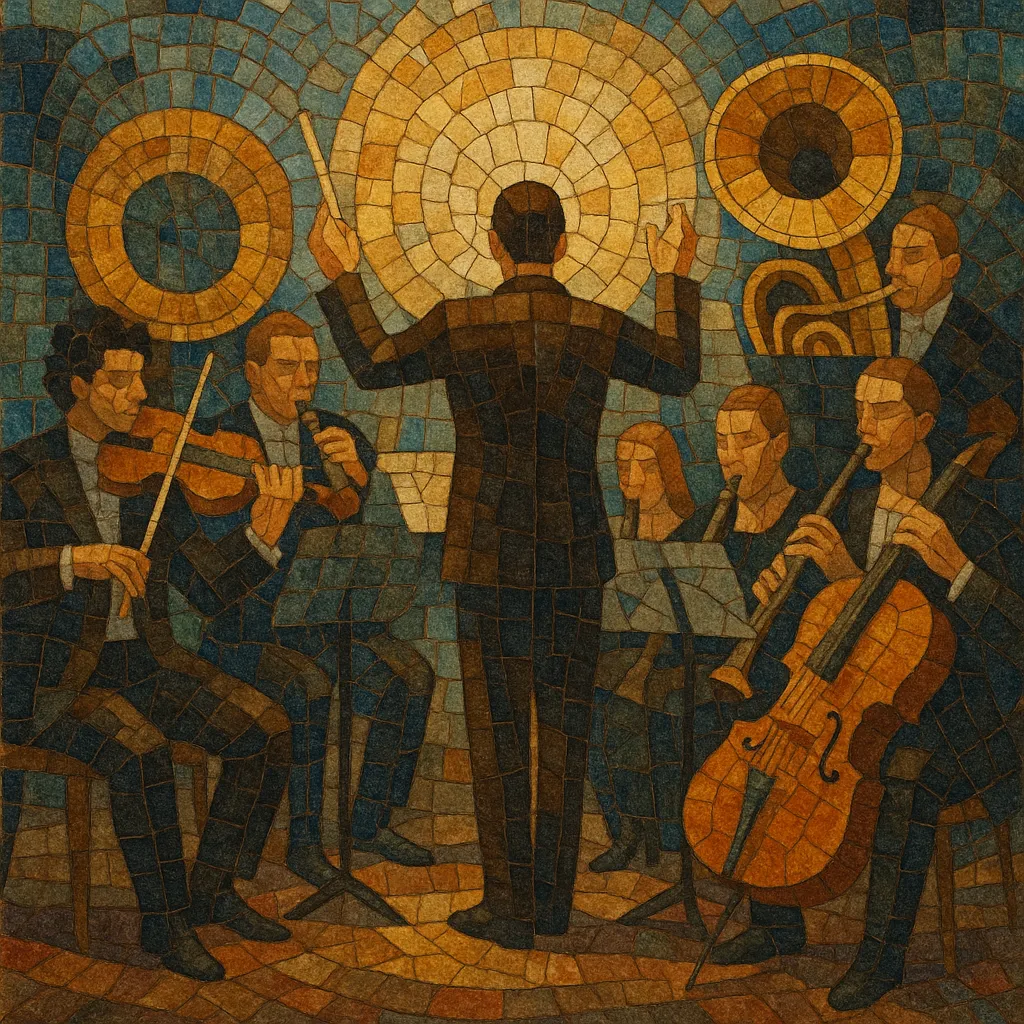
Orchestral performance refers to the live or studio presentation of music by a full orchestra—strings, woodwinds, brass, and percussion—under the direction of a conductor. It is less a compositional genre than a performance tradition that interprets repertory from the Baroque era to contemporary works.
Its core values are balance among sections, timbral blend, dynamic control, and expressive phrasing shaped by conducting technique and ensemble discipline. Venue acoustics, seating plans, and modern recording practices (from single-point to multi-mic arrays) further define how orchestral performance is experienced.
Although most closely associated with Western classical repertoire, orchestral performance practices have also shaped film music, symphonic rock/metal, and large-scale jazz projects.
History
The orchestral performance tradition coalesced in Italian courts and opera houses during the early Baroque, where grouped instrumental families and basso continuo accompanied singers and dance. As standardized forms (concerto, overture, suite) spread, so did the need for coordinated ensemble leadership—first by the concertmaster and harpsichordist, then increasingly by a dedicated conductor.
The Classical period formalized orchestral seating and section roles, with Haydn, Mozart, and Beethoven pushing clarity, balance, and motivic development. In the 19th century, larger halls and more powerful instruments enabled expansive forces and coloristic writing (Berlioz, Wagner, Tchaikovsky). Conducting matured into a specialized art, emphasizing tempo flexibility, phrasing, and sectional balance.
Recording technology reshaped expectations of precision and color; landmark orchestras (Berlin, Vienna, Concertgebouw, LSO, BSO) and star conductors defined signature sounds. New works extended timbres, percussion arsenals, and extended techniques, while historically informed performance refined approaches to earlier repertoire. Beyond the concert hall, orchestral performance became central to cinema scoring, game music, crossover projects, and live-to-picture events.
From shoebox halls to vineyard designs, architecture shapes blend and projection. Studio practice evolved from minimalist stereo capture to multitrack, close-mic’d sessions, later mixed for cinematic scale. These factors, alongside rehearsal methodology and audition standards, continue to define the orchestral performance ideal.
Start with the standard sections: strings (Vln I/II, Vla, Vc, Cb), woodwinds (pairs or triples: flutes, oboes, clarinets, bassoons), brass (horns, trumpets, trombones, tuba), and percussion (timpani plus color percussion). Add harp, piano/celesta, saxophones, or expanded percussion as the score requires.
Choose clear large-scale forms (sonata, theme-and-variations, ternary, through-composed) and articulate them with orchestral color. Use functional harmony for clarity or modal/pandiatonic/extended sonorities for modern palettes. Balance homophonic blocks with contrapuntal lines; reserve full tutti for structural climaxes.
Assign melodies to instruments whose registers suit the character (e.g., oboe for plaintive lyricism, horn for noble warmth, violins for soaring lines). Double selectively for strength or timbral fusion; thin textures to maintain transparency. Exploit articulation contrasts (legato vs. spiccato), mutes, harmonics, flutter-tongue, and divisi for coloristic variety.
Vary rhythmic density and accent patterns across sections to create propulsion without clutter. Write dynamic contours that shape phrases and preserve foreground–background hierarchy. Ensure bass clarity (celli/basses/tuba) and support inner voices so the melody projects naturally.
Provide precise tempo markings, clear cues, and practical page turns. Mark expressive phrasing and bowings where necessary but avoid over-marking. Anticipate rehearsal time by simplifying overly complex divisi or notating ossias. Leave room for conductor rubato and ensemble breathing at cadential points.
Consider hall acoustics when balancing forces (e.g., brass dynamics in reverberant spaces). For studio work, write with close-mic detail in mind; for concert hall, favor blend and projection. If scoring to picture, synchronize tempo maps and click-track structures while preserving musical phrasing.