Your digging level
Description
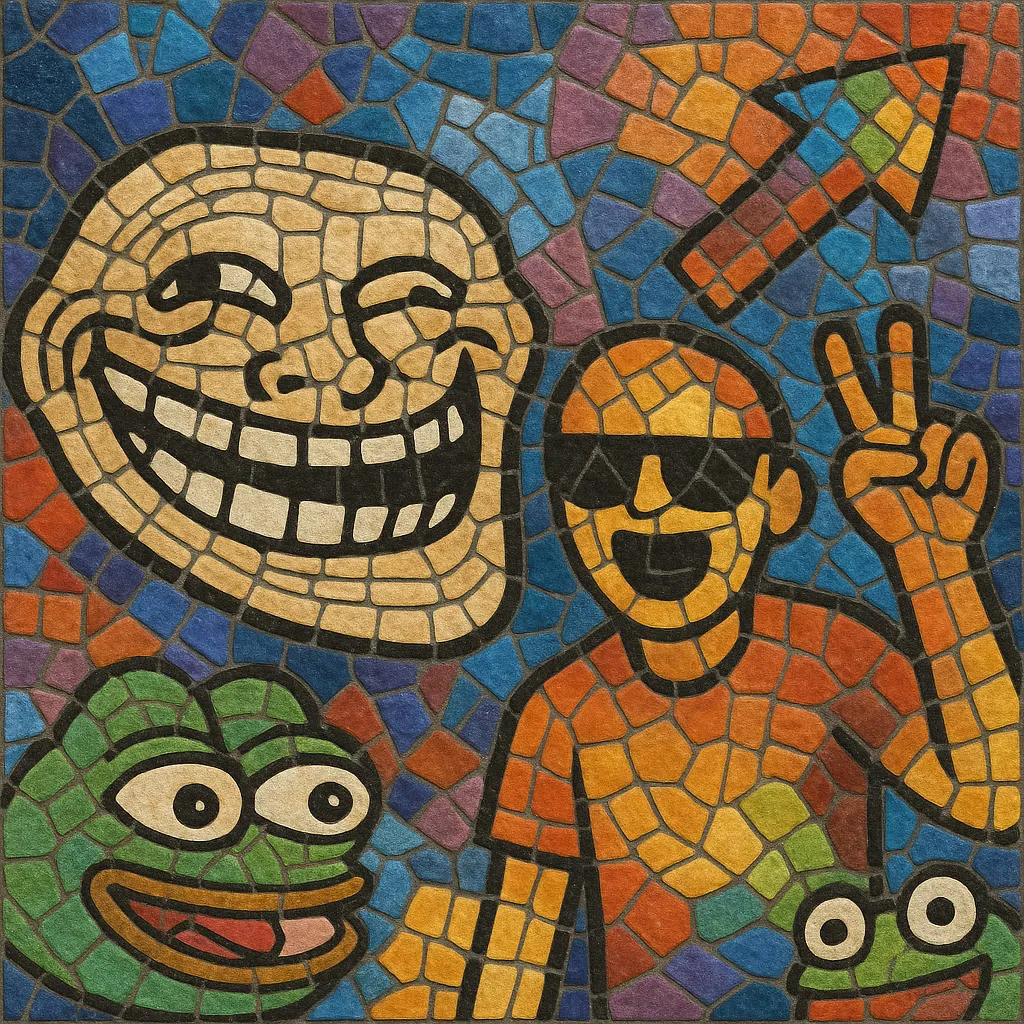
Meme is an internet-native umbrella genre for songs and audio clips that are created for, shaped by, or propelled through online meme culture. It blends humor, parody, and fast-turnaround production with infectious hooks designed to spread rapidly across platforms.
Stylistically, meme music is eclectic. It can be rap, pop, EDM, rock, or mashup-driven collage; the common thread is comedic framing, referential lyrics, exaggerated vocal processing, and recognizable samples that cue shared online in-jokes. Tracks often favor short runtimes, bold punchlines, and instantly loopable sections optimized for social media.
Because it thrives on virality rather than a fixed instrumentation set, meme functions as a meta-genre. It borrows techniques from mashup culture, YTPMV, soundclown, nightcore, and novelty/comedy traditions, while using platform-specific aesthetics from YouTube, SoundCloud, Vine, and TikTok.

History
Meme music’s roots trace to the mid-2000s with YouTube Poop music videos (YTPMV), novelty and parody traditions, and early internet mashup culture. Viral one-offs like Chocolate Rain and Auto-Tune the News demonstrated that humor, amateur production, and platform-specific editing could propel songs outside traditional industry channels.
During the 2010s, YouTube, SoundCloud, and Vine normalized rapid, comedic music production. Nightcore edits, soundclown mashups, and comedic rap/rock tracks blurred boundaries between parody and original work. Artists and channels specialized in quick-turn meme songs, while community in-jokes and sample sources (cartoons, games, commercials) became compositional building blocks.
TikTok’s short-form, loop-first format further standardized the meme song structure: brief runtime, immediate hooks, and punchy drops tailored for dance challenges, lip-syncs, and skits. Viral meme tracks began to chart, while internet-native microgenres (for example, collage-heavy styles) leaned into meme logic—rapid referentiality, saturation, and shared nostalgia.
Rather than displacing established genres, meme operates atop them. It reframes pop, rap, EDM, and rock through comedic intent and platform-savvy presentation. Its aesthetic—self-referential humor, exaggerated processing, and recognizable cultural signifiers—continues to influence how songs are written, packaged, and circulated online.
Start with a clear comedic premise or recognizable cultural reference. Define a single, repeatable hook that works in 10–20 seconds for looping contexts, and build the song around that moment.
Borrow from pop, rap, EDM, or rock depending on the joke. Use familiar samples, cartoon/game SFX, text-to-speech, or meme voiceovers to immediately signal the reference. Pitch-shifting, time-stretching, and hard edits help exaggerate comedic beats.
Aim for 1–2 minutes. Front-load the hook within the first 5–10 seconds; design a section that can loop seamlessly for short-form video. Keep verses minimal and tightly written around punchlines, then return quickly to the chorus.
Write concise, referential lyrics with a clear setup–punchline flow. Lean on catchphrases, internet slang, and call-and-response. Delivery can be intentionally exaggerated (deadpan, over-auto-tuned croon, or hyper-animated rap) to heighten the joke.
Use straightforward harmony (I–V–vi–IV and relatives) and a danceable groove (100–150 BPM is common), or parody the rhythmic tropes of the style you reference. Compress drums aggressively, and carve space for the vocal hook. Over-the-top ad-libs and stingers help land comedic timing.
Work fast: sketch the hook, assemble key samples, program a simple beat, record lead vocals, then mix to make the hook pop. Test the loop in a 15-second export. Consider meme-friendly visuals or captions at release to drive context.
When sampling copyrighted material, consider transformative use and licensing. If clearance is not feasible, recreate motifs with original soundalikes or rely on public-domain/cleared sources.


![How to make a meme music mashup [Tutorial]](https://i.ytimg.com/vi/HtbjwCl4Zyc/hqdefault.jpg)