Your digging level
Description
The Moscow School is a classical performance tradition centered on the Moscow Conservatory and its satellite institutions, renowned especially for its pianism. It is characterized by a singing tone, long-breathed phrasing, structural clarity, and rigorous technique coupled with emotional depth.
Although best known for piano, the approach extends to chamber music and orchestral playing: careful voicing, architectural control of large forms, expressive but disciplined rubato, and a rich dynamic palette. Its practitioners balance fidelity to the score with a cultivated cantabile line and a deep, often elegiac lyricism associated with the Russian late-Romantic aesthetic.
History
Founded in 1866, the Moscow Conservatory quickly became a powerhouse of Russian musical life. By the 1890s, a distinctive pedagogical lineage—shaped by figures such as Sergei Taneyev and, soon after, Alexander Goldenweiser and Konstantin Igumnov—began to coalesce. The milieu synthesized Germanic structural rigor with Russian lyricism and spiritual depth, reflecting both Western conservatory training and local musical sensibilities (including liturgical chant and folk-inflected melodicism).
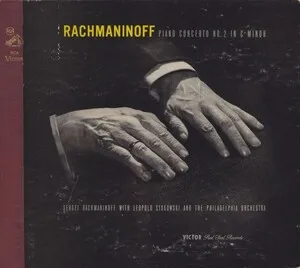
In the early 1900s, alumni such as Sergei Rachmaninoff and Alexander Scriabin embodied the school’s ideals in composition and performance, projecting a singing tone, refined pedaling, and long-arc phrasing. Teachers like Goldenweiser, Igumnov, and later Samuel Feinberg developed methodical approaches to touch, voicing, and polyphonic clarity, establishing the Moscow School’s international reputation for piano.
Under Heinrich Neuhaus, the piano tradition achieved iconic status. His students—Sviatoslav Richter, Emil Gilels, Lev Oborin, and others—won major international competitions, toured widely, and set interpretive benchmarks for core Romantic repertoire. Despite ideological pressures, the Conservatory preserved an emphasis on intellectual analysis, structural coherence, and emotive sincerity, which resonated globally.
After the USSR’s dissolution, artists such as Evgeny Kissin, Boris Berezovsky, and Nikolai Lugansky carried the lineage into new generations and recording eras. The school’s principles continue to inform chamber ensembles and orchestras trained in Moscow, while its pedagogical writings and masterclasses circulate worldwide, influencing contemporary classical performance practice.

Top albums