Genres
Artists
Albums
Make Music
Sign in
Sign in
Artists
Idm
Artists
Idm
Max Tundra
1999–2008
·
2 albums
Listen
1
/5
Genres
Proto-Hyperpop
Proto-hyperpop is a retrospective label for the cluster of internet-born pop experiments in the early-to-mid 2010s that foreshadowed what would later be called “hyperpop.” It fused candy-coated melodies and pitched-up vocals with maximalist sound design, glossy synthetic timbres, and playful, self-aware pop tropes. Rather than being a single scene, proto-hyperpop emerged across YouTube nightcore edits, early PC Music releases, and adjacent electronic and indie-pop circles. It drew heavily from Eurodance and trance hooks, J-pop and Vocaloid aesthetics, chiptune brightness, and the irreverent futurism of experimental pop and deconstructed club, while keeping an addictive, radio-ready sense of melody.
Discover
Listen
Digital Fusion
Digital fusion blends the hardware‑limited timbres of Chiptune and Bit Music with the harmonic language and arranging scope of jazz fusion, cinematic/classical writing, progressive music, and contemporary electronic production. Producers often start with authentic chip palettes (NES, Game Boy, YM2612/Genesis, or tracker/sample-based 8/16‑bit sets), then write harmonically rich progressions, orchestrate with layered synths and sample libraries, and sometimes add live performers (saxophone, guitar, bass, drums, strings). The result feels both retro and forward‑looking: agile, rhythmically intricate, melodically ear‑catchy, and frequently “filmic” in scope. Compared with straight Chiptune, digital fusion leans harder into jazz harmony, odd meters, and cinematic development; compared with jazztronica, it keeps a stronger attachment to console/arcade sound design and tracker‑style articulation.
Discover
Listen
Bubblegum Bass
Bubblegum bass is a hyper-sweet, high-gloss strain of experimental pop that exaggerates mainstream chart tropes until they feel surreal. It blends candy-coated melodies, plastic synth timbres, and pitch-shifted vocals with club-ready drums and maximalist sound design. Emerging around the London-based PC Music collective, the style often juxtaposes childlike hooks with abrasive textures, sudden drops, and tongue-in-cheek, consumerist imagery. The production is meticulous and synthetic—supersaws, metallic hits, hard sidechaining, and formant-shifted toplines—yet it retains an earworm pop sensibility. The result is music that feels both satirical and sincere: an ecstatic, futuristic twist on electropop and dance-pop that helped set the stage for the wider hyperpop movement.
Discover
Listen
Idm
IDM (often expanded as "Intelligent Dance Music") is a strand of experimental electronic music that applies the sound palette and production methods of club genres to listening-focused, often home-oriented works. It favors intricate rhythm programming, unusual time signatures, and richly textured sound design, blending ambient atmospheres with techno’s pulse, electro’s syncopation, and breakbeat’s fragmentation. The music often de-emphasizes the dancefloor in favor of headphone detail, algorithmic structure, and timbral exploration. The term itself is contentious—many artists rejected the "intelligent" label—yet it became a convenient tag for the early- to mid‑1990s cluster of Warp, Rephlex, and related scenes that foregrounded complexity, abstraction, and emotional ambiguity.
Discover
Listen
Indietronica
Indietronica is a hybrid of indie rock/pop songwriting and electronic music production. It blends guitars, bass, and live vocals with drum machines, samplers, soft-synths, and laptop-based sequencing, often favoring intimate, breathy vocal deliveries and hooky melodic lines. The sound typically features crisp programmed beats, warm analog-style synths, glitchy micro-edits, and dreamy pads, with arrangements that move between reflective verses and euphoric, danceable choruses. Lyrics lean toward introspection and romance, while production aesthetics range from lo‑fi bedroom textures to polished, club‑ready gloss.
Discover
Listen
Jazzstep
Jazzstep is a subgenre of drum and bass that fuses jazz harmony, timbres, and an improvisational sensibility with the fast, syncopated breakbeats of the UK jungle/DnB continuum. Typical hallmarks include swung and ghost‑noted breakbeats at 165–175 BPM, upright or electric "walking" basslines, lush Rhodes piano or vibraphone chords, and saxophone or trumpet phrases—either sampled from classic sessions or performed anew. Harmonically, it favors extended chords (9ths, 11ths, 13ths), chromatic passing tones, blue notes, and modal colors, giving it a smooth yet propulsive, late‑night club atmosphere. Compared with adjacent styles like liquid funk, jazzstep leans more explicitly into jazz vocabulary and instrumental colors, while retaining the momentum and dancefloor architecture of drum and bass.
Discover
Listen
Jazztronica
Jazztronica is a hybrid style that fuses the improvisational language, harmony, and timbres of jazz with contemporary electronic music production and rhythms. It often balances live instrumentation—such as saxophone, keys, bass, and drums—with programmed beats, sampling, and synthesis. Producers and bands in this genre draw from jazz-funk, acid jazz, and fusion, then layer in elements of downtempo, house, hip hop, broken beat, and IDM. The result ranges from head‑nod, beat‑driven tracks to club‑leaning grooves and cinematic, atmospheric pieces. Hallmarks include extended jazz chords, swung or syncopated drum programming, elastic basslines (both electric and synthesized), and textural sound design that supports improvisation and groove.
Discover
Listen
Sequencer & Tracker
Sequencer & tracker is a computer-music meta-genre centered on pattern-based composition using step sequencers and sample-based trackers (e.g., Ultimate Soundtracker, ProTracker, FastTracker II, Scream Tracker, Impulse Tracker, Renoise). It emphasizes vertical, grid-driven writing with short samples, limited channels, and hexadecimal effect commands. Compositions are stored as modules (.MOD, .S3M, .XM, .IT) that bundle patterns and samples, enabling small file sizes and platform portability. The aesthetic spans from 8/16‑bit microcomputer timbres to more modern, high‑fidelity sample and VST workflows. Historically tied to the demoscene and game audio, the style covers diverse substyles—electro, techno, jungle/breakbeat, ambient, chip—and is characterized by tight quantization, looped sample instruments, and clever tricks (e.g., arpeggio commands) to simulate harmony and motion under technical constraints.
Discover
Listen
Tracker Music
Tracker music is music composed with tracker software, a pattern-based, sample-oriented sequencer that displays notes in vertical columns and steps through them row by row. Composers arrange short audio samples (often 8-bit/16-bit) into patterns, apply command-based effects (such as arpeggio, vibrato, portamento, and volume slides), and chain patterns via an order list to form a complete piece. Emerging from the Amiga and PC demoscenes, tracker music encompasses a wide aesthetic range: from chiptune-like bleeps and crunchy breakbeats to ambient modules and high-energy rave and hardcore. Characteristic traits include tight, staccato phrasing, rapid arpeggios simulating chords, lo‑fi sample color, and creative use of limited polyphony/channels. Common module formats include MOD, XM, IT, and S3M, and classic tools include ProTracker, FastTracker II, Impulse Tracker, and their modern descendants such as OpenMPT, MilkyTracker, and Renoise.
Discover
Listen
Bit Music
Bit music is a broad term for music built around the sound and constraints of low bit‑depth digital audio, early sound chips, and primitive computer/console hardware. It foregrounds square and pulse waves, noise channels, simple PCM, and the characteristic artifacts of bit‑crushing and low sample rates. While closely related to chiptune, bit music emphasizes the sonic signature of "the bit" itself: 1‑bit beeper techniques, 4/8/16‑bit sample playback, and tracker-based sequencing that exploits extremely limited polyphony and memory. The result is a bright, pixelated timbre that celebrates computational austerity through clever composition tricks, rapid arpeggios, duty‑cycle modulation, and noise percussion.
Discover
Listen
Art Pop
Art pop is a strand of pop music that treats the pop song as a canvas for high-concept ideas, experimental techniques, and cross-media aesthetics. It marries accessible melodies and hooks with the visual culture of art schools, the conceptual rigor of the avant-garde, and the studio-as-instrument ethos. Sonically, art pop favors eclectic instrumentation (synths, orchestral timbres, guitars, found sounds), unusual song forms, and sophisticated harmony. It often employs collage, musique concrète–like textures, and theatrical vocal delivery while still keeping a pop-facing surface. Beyond sound, art pop is deeply visual and conceptual: albums are framed as coherent artworks, stagecraft and video are integral, and lyrics tend toward intertextuality, character work, irony, and social commentary. The result is pop that is both immediate and idea-driven.
Discover
Listen
Avant-Garde Pop
Avant-garde pop is a strain of pop music that uses experimental techniques while retaining some degree of songcraft, memorability, or accessibility. It merges the hooks, brevity, and voice-forward focus of pop with the timbral exploration, structural freedom, and conceptual aims of the avant-garde. Typical features include unconventional song forms, extended vocal techniques, unusual harmony (from modal stasis to dissonance and atonality), asymmetric or fluid meter, collage and musique concrète tactics, and studio-as-instrument production. The result can range from lush and cinematic to stark and abstract, but it remains oriented toward the communicative immediacy of pop.
Discover
Listen
Experimental
Experimental music is an umbrella term for practices that prioritize exploration, process, and discovery over adherence to established genre norms. It embraces new sound sources, nonstandard tuning systems, indeterminacy and chance operations, graphic and open-form scores, extended techniques, and technology-led sound design (tape, electronics, computers, and live processing). Rather than a single style, it is a methodology and ethos: testing hypotheses about sound, structure, and performance, often blurring boundaries between composition, improvisation, sound art, and performance art. Listeners can expect unfamiliar timbres, unusual forms, and an emphasis on how music is made as much as the resulting sound.
Discover
Listen
Electronic
Electronic is a broad umbrella genre defined by the primary use of electronically generated or electronically processed sound. It encompasses music made with synthesizers, drum machines, samplers, computers, and studio/tape techniques, as well as electroacoustic manipulation of recorded or synthetic sources. The genre ranges from academic and experimental traditions to popular and dance-oriented forms. While its sonic palette is rooted in electricity and circuitry, its aesthetics span minimal and textural explorations, structured song forms, and beat-driven club permutations. Electronic emphasizes sound design, timbre, and studio-as-instrument practices as much as melody and harmony.
Discover
Listen
Show all 14 genres
Albums
2008
1
/5
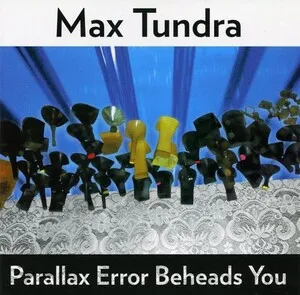
Parallax Error Beheads You
Max Tundra
Tracker Music
Sequencer & Tracker
Bit Music
1999
1
/5
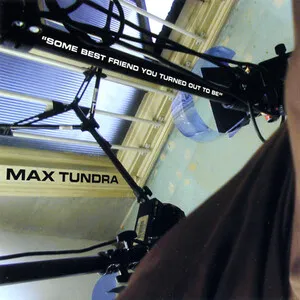
Some Best Friend You Turned Out to Be
Max Tundra
Tracker Music
Sequencer & Tracker
Electronic
Similar artists
2
/5
Ilkae
Idm
Tracker Music
Sequencer & Tracker
1
/5
Bogdan Raczynski
Drill And Bass
Breakcore
Electronic
1
/5
Lackluster
Idm
Glitch
Post-Dubstep
2
/5
Fearofdark
Digital Fusion
Bit Music
Chiptune
3
/5
Green-House
Fourth World
Ambient
Spectra
2
/5
Dubmood
Demoscene
Electronic
Demostyle
1
/5
Lost Cascades
Digital Fusion
Idm
Vaporwave
2
/5
Venetian Snares
Breakcore
Drill And Bass
Electronic
1
/5
on4word
Sequencer & Tracker
Idm
Bit Music
Nasenbluten
Amigacore
Terrorcore
Tracker Music
Download our mobile app
Get the Melodigging app and start digging for new genres on the go
Download on the App Store
Get it on Google Play
© 2026 Melodigging
Give feedback
Legal
Melodding was created as a tribute to
Every Noise at Once
, which inspired us to help curious minds keep digging into music's ever-evolving genres.