Genres
Artists
Albums
Make Music
Sign in
Sign in
Artists
Digital Fusion
Artists
Digital Fusion
Lost Cascades
2020
·
1 album
Listen
1
/5
Genres
Digital Fusion
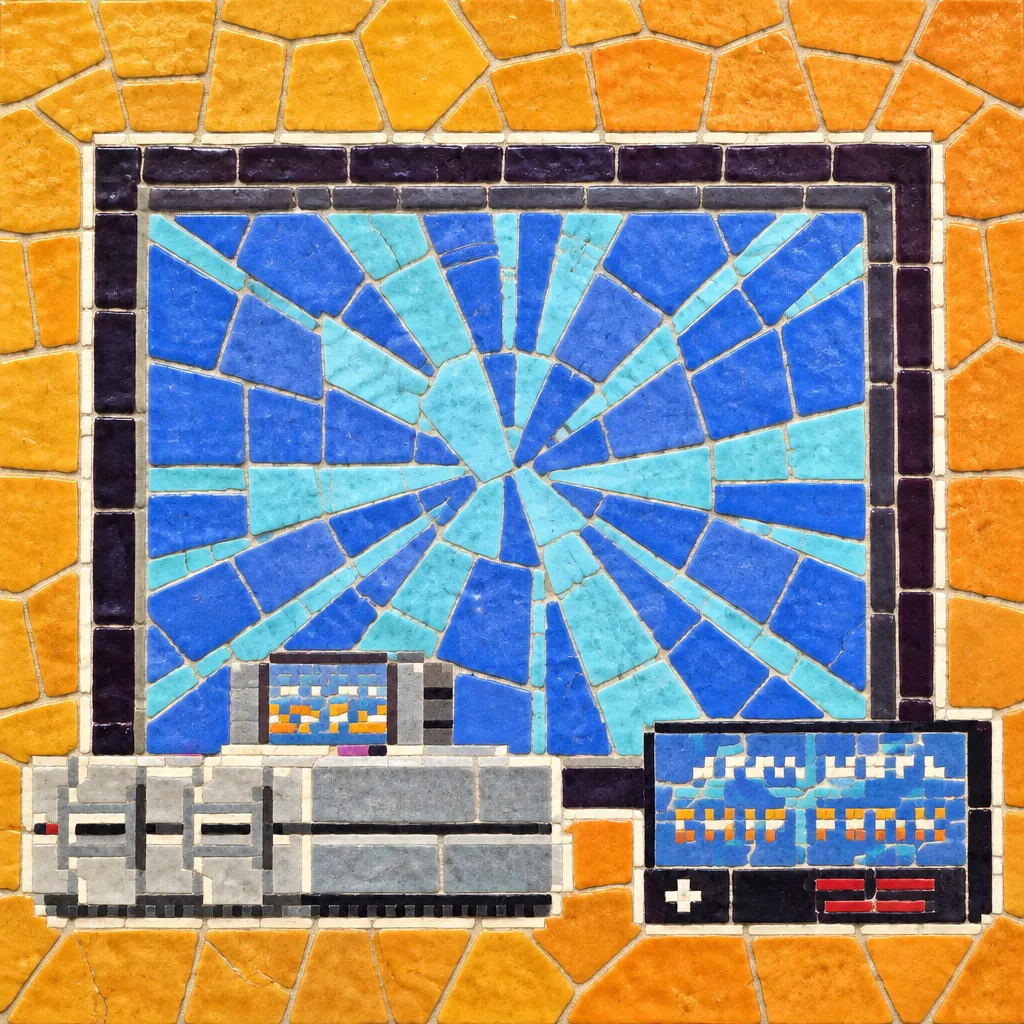
Digital fusion blends the hardware‑limited timbres of Chiptune and Bit Music with the harmonic language and arranging scope of jazz fusion, cinematic/classical writing, progressive music, and contemporary electronic production. Producers often start with authentic chip palettes (NES, Game Boy, YM2612/Genesis, or tracker/sample-based 8/16‑bit sets), then write harmonically rich progressions, orchestrate with layered synths and sample libraries, and sometimes add live performers (saxophone, guitar, bass, drums, strings). The result feels both retro and forward‑looking: agile, rhythmically intricate, melodically ear‑catchy, and frequently “filmic” in scope. Compared with straight Chiptune, digital fusion leans harder into jazz harmony, odd meters, and cinematic development; compared with jazztronica, it keeps a stronger attachment to console/arcade sound design and tracker‑style articulation.
Discover
Listen
Vaporwave
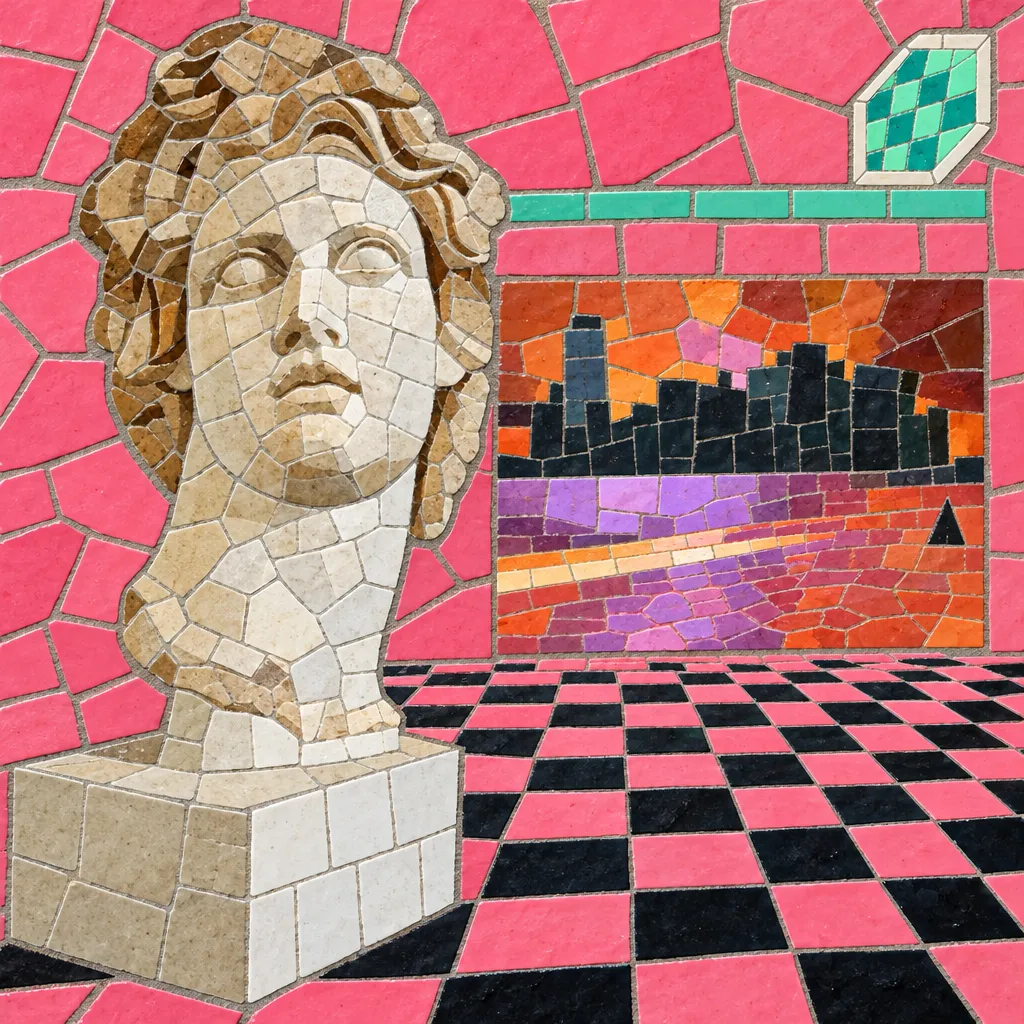
Vaporwave is an internet-born microgenre and visual aesthetic that repurposes late‑20th‑century commercial sound—mu zak, smooth jazz, soft rock, synth‑pop, city pop, and corporate training tapes—into hazy, slowed, and looped collages. Its sound foregrounds pitched‑down samples, heavy reverb, tape hiss, vinyl crackle, and dreamy pads to evoke a mood between satire and sincere nostalgia. Beyond music, vaporwave is inseparable from its graphic language: Greco‑Roman busts, Japanese text, retro operating systems, chrome logos, palm trees, neon gradients, and “mall culture” architecture. The result feels like a haunted shopping mall: part critique of consumer capitalism, part wistful memory of media and retail spaces from the 1980s–2000s. Tempos are typically slow (roughly 60–90 BPM), harmonies tend toward lush seventh and extended chords, and rhythms range from barely perceptible loops to minimal, gated drum programming. Many tracks are short, vignette‑like studies in texture and mood.
Discover
Listen
Idm
IDM (often expanded as "Intelligent Dance Music") is a strand of experimental electronic music that applies the sound palette and production methods of club genres to listening-focused, often home-oriented works. It favors intricate rhythm programming, unusual time signatures, and richly textured sound design, blending ambient atmospheres with techno’s pulse, electro’s syncopation, and breakbeat’s fragmentation. The music often de-emphasizes the dancefloor in favor of headphone detail, algorithmic structure, and timbral exploration. The term itself is contentious—many artists rejected the "intelligent" label—yet it became a convenient tag for the early- to mid‑1990s cluster of Warp, Rephlex, and related scenes that foregrounded complexity, abstraction, and emotional ambiguity.
Discover
Listen
Bit Music
Bit music is a broad term for music built around the sound and constraints of low bit‑depth digital audio, early sound chips, and primitive computer/console hardware. It foregrounds square and pulse waves, noise channels, simple PCM, and the characteristic artifacts of bit‑crushing and low sample rates. While closely related to chiptune, bit music emphasizes the sonic signature of "the bit" itself: 1‑bit beeper techniques, 4/8/16‑bit sample playback, and tracker-based sequencing that exploits extremely limited polyphony and memory. The result is a bright, pixelated timbre that celebrates computational austerity through clever composition tricks, rapid arpeggios, duty‑cycle modulation, and noise percussion.
Discover
Listen
Sequencer & Tracker
Sequencer & tracker is a computer-music meta-genre centered on pattern-based composition using step sequencers and sample-based trackers (e.g., Ultimate Soundtracker, ProTracker, FastTracker II, Scream Tracker, Impulse Tracker, Renoise). It emphasizes vertical, grid-driven writing with short samples, limited channels, and hexadecimal effect commands. Compositions are stored as modules (.MOD, .S3M, .XM, .IT) that bundle patterns and samples, enabling small file sizes and platform portability. The aesthetic spans from 8/16‑bit microcomputer timbres to more modern, high‑fidelity sample and VST workflows. Historically tied to the demoscene and game audio, the style covers diverse substyles—electro, techno, jungle/breakbeat, ambient, chip—and is characterized by tight quantization, looped sample instruments, and clever tricks (e.g., arpeggio commands) to simulate harmony and motion under technical constraints.
Discover
Listen
Ambient
Ambient is a form of electronic and electroacoustic music that prioritizes tone, atmosphere, and texture over conventional song structures and rhythmic drive. It typically features slow-moving harmonies, sustained drones, gentle timbral shifts, and extensive use of space and silence. Rather than drawing attention to itself through hooks or beats, ambient is designed to be as ignorable as it is interesting, rewarding both background listening and focused immersion. Artists often employ synthesizers, samplers, tape loops, field recordings, and subtle acoustic instruments, with reverb and delay creating a sense of place. Substyles range from luminous, consonant soundscapes to darker, more dissonant atmospheres.
Discover
Listen
Experimental
Experimental music is an umbrella term for practices that prioritize exploration, process, and discovery over adherence to established genre norms. It embraces new sound sources, nonstandard tuning systems, indeterminacy and chance operations, graphic and open-form scores, extended techniques, and technology-led sound design (tape, electronics, computers, and live processing). Rather than a single style, it is a methodology and ethos: testing hypotheses about sound, structure, and performance, often blurring boundaries between composition, improvisation, sound art, and performance art. Listeners can expect unfamiliar timbres, unusual forms, and an emphasis on how music is made as much as the resulting sound.
Discover
Listen
Electronic
Electronic is a broad umbrella genre defined by the primary use of electronically generated or electronically processed sound. It encompasses music made with synthesizers, drum machines, samplers, computers, and studio/tape techniques, as well as electroacoustic manipulation of recorded or synthetic sources. The genre ranges from academic and experimental traditions to popular and dance-oriented forms. While its sonic palette is rooted in electricity and circuitry, its aesthetics span minimal and textural explorations, structured song forms, and beat-driven club permutations. Electronic emphasizes sound design, timbre, and studio-as-instrument practices as much as melody and harmony.
Discover
Listen
Show all 8 genres
Albums
2020
1
/5
Crystal Sun
Lost Cascades
Sequencer & Tracker
Digital Fusion
Bit Music
Similar artists
4
/5
Aphex Twin
Braindance
Idm
Ambient
3
/5
Oneohtrix Point Never
Hauntology
Plunderphonics
Ambient
3
/5
Lone
Downtempo
Electronic
Idm
2
/5
Tineidae
Abstract Idm
Ambient
Dark Ambient
1
/5
Various Artists
Afro-Funk
Alternative Rock
Ambient
3
/5
Xploshi
Utopian Virtual
Digital Fusion
Vapor
3
/5
Green-House
Fourth World
Ambient
Spectra
2
/5
Ilkae
Idm
Tracker Music
Sequencer & Tracker
3
/5
Windows 96
Chillsynth
Utopian Virtual
Chillwave
1
/5
Watchman
Idm
Digital Fusion
Glitch
Download our mobile app
Get the Melodigging app and start digging for new genres on the go
Download on the App Store
Get it on Google Play
© 2026 Melodigging
Give feedback
Legal
Melodding was created as a tribute to
Every Noise at Once
, which inspired us to help curious minds keep digging into music's ever-evolving genres.