Your digging level
Description
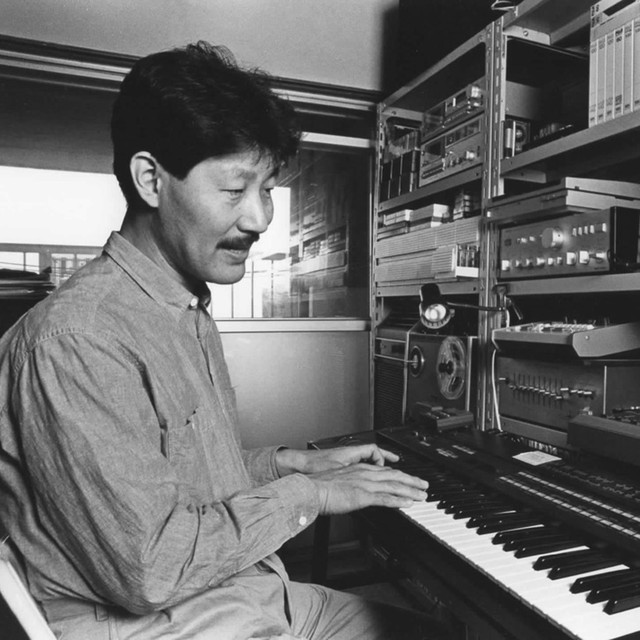
Fourth World is a term coined by trumpeter-composer Jon Hassell to describe a "unified primitive/futuristic sound" that blends ambient minimalism, non-Western traditional musics, and studio electronics into an imagined global music.
The style is characterized by modal drones, cyclical hand percussion, and timbral experimentation (often through harmonizers, delays, and pitch-shifting) applied to acoustic instruments—famously Hassell’s processed trumpet—alongside sampled or evoked elements of African, Indian, Southeast Asian, and other traditions. Rather than ethnographic authenticity, Fourth World proposes an imaginative, post-geographic sound world where the studio acts as a cultural crossroads.
Musically it favors slow to mid tempos, layered polyrhythms, pentatonic or raga-like modality, microtonal color, spacious reverbs, and textural foregrounding. The result is meditative and sensuous, at once ancient-sounding and hyper-modern.
History
Jon Hassell articulated the Fourth World concept in the late 1970s after studies with Karlheinz Stockhausen and deep immersion in Hindustani vocal tradition via Pandit Pran Nath. He sought a music that sounded simultaneously ancient and futuristic, outside of fixed cultural geographies.
The aesthetic crystallized on Hassell & Brian Eno’s "Fourth World, Vol. 1: Possible Musics" (1980) and Hassell’s "Dream Theory in Malaya" (1981). These albums fused ambient space, minimal process thinking, hand percussion, and processed trumpet with a collage-like approach to global timbres. In the same era, Eno & Byrne’s "My Life in the Bush of Ghosts" (1981) popularized related ideas about global voices and studio assemblage.
Across the 1980s and 1990s, Fourth World methods informed ambient, downtempo, and world-fusion scenes. ECM-associated and Nordic jazz artists explored Hassell’s timbral trumpet lineage and spacious production, while US producers in "tribal" ambient and experimental electronics adopted cyclical percussion, drones, and field recordings.
With digital sampling and global distribution, Fourth World thinking surfaced in nu jazz, jazztronica, and ambient house, influencing artists who merge non-Western scales and hand percussion with contemporary sound design. The concept has also prompted discussion around cultural borrowing—Hassell emphasized its status as intentional, imaginative synthesis rather than documentary folklore.