Your digging level
Description
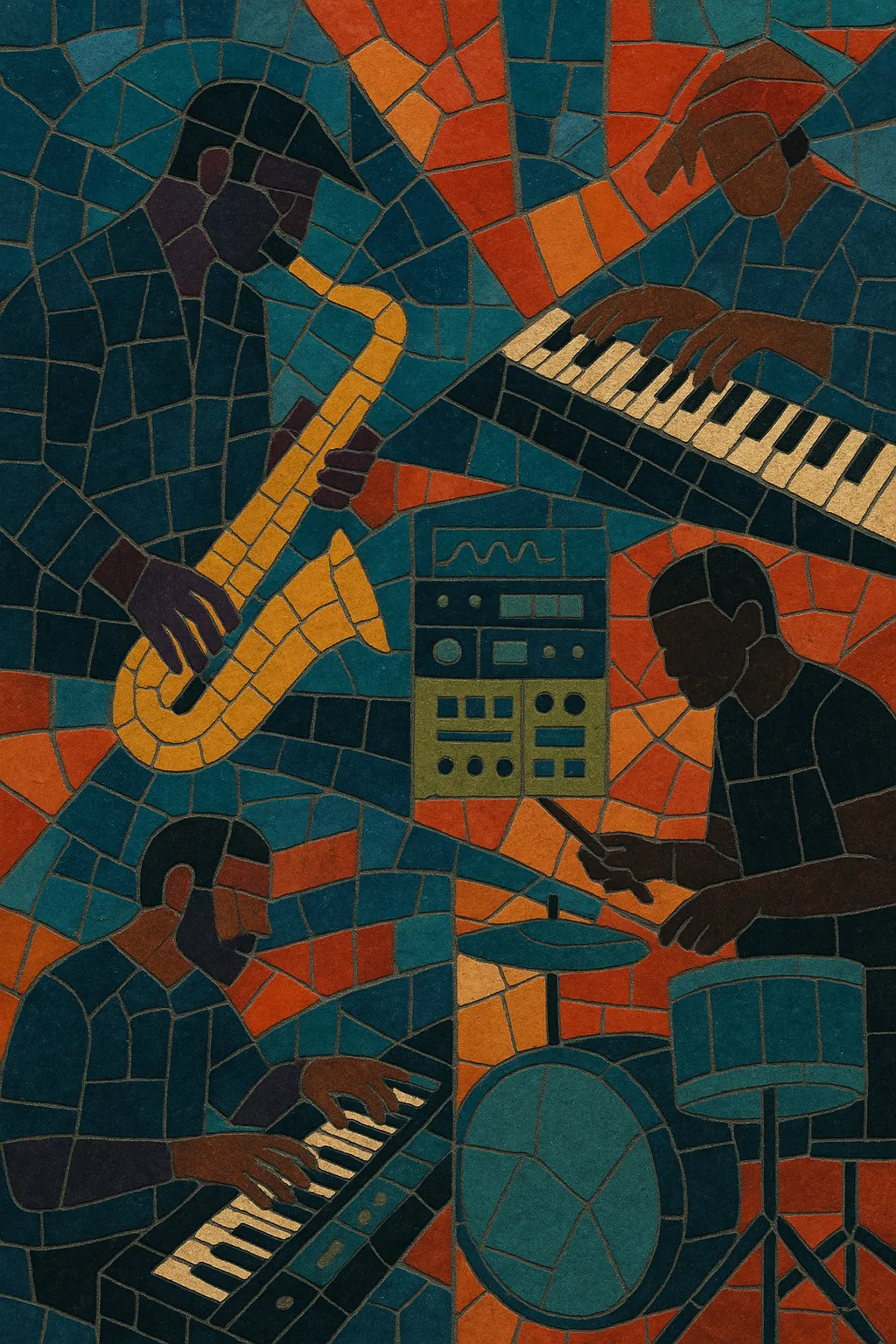
Jazztronica is a hybrid style that fuses the improvisational language, harmony, and timbres of jazz with contemporary electronic music production and rhythms. It often balances live instrumentation—such as saxophone, keys, bass, and drums—with programmed beats, sampling, and synthesis.
Producers and bands in this genre draw from jazz-funk, acid jazz, and fusion, then layer in elements of downtempo, house, hip hop, broken beat, and IDM. The result ranges from head‑nod, beat‑driven tracks to club‑leaning grooves and cinematic, atmospheric pieces. Hallmarks include extended jazz chords, swung or syncopated drum programming, elastic basslines (both electric and synthesized), and textural sound design that supports improvisation and groove.
History
Jazztronica emerged in the 1990s as jazz musicians and forward‑thinking producers began applying electronic production tools to jazz vocabulary. The UK’s acid jazz and broken beat movements, alongside German nu‑jazz circles, provided a fertile ecosystem of labels, clubs, and radio shows (e.g., Gilles Peterson’s programs) that normalized jazz harmony over programmed beats.
In the early 2000s, labels and collectives across London, Berlin, Munich, Paris, and Tokyo nurtured artists who blended live jazz with downtempo, house, and trip hop aesthetics. Acts paired real-time improvisation with samplers and laptops on stage, popularizing a band‑plus‑producer format and a studio approach that treated acoustic instruments like modular layers in a beat.
The Los Angeles beat scene and the new wave of London jazz catalyzed a fresh wave of jazztronica. Cross‑pollination between beatmakers and trained jazz players yielded records that sat comfortably between jazz clubs, festivals, and electronic venues. Streaming and global scenes further connected listeners to both headphone‑centric jazz beats and dance‑floor‑ready, synth‑forward fusions.
Today, jazztronica encompasses a spectrum—from chilled, sample‑rich instrumentals to high‑energy, club‑oriented sets with live keys, bass, and drum machines. It continues to evolve through collaborations across jazz, hip hop, house, and experimental electronica, and it has influenced the sound palette of lo‑fi hip hop, chillhop, and contemporary jazz‑adjacent beat music.