Your digging level
Description
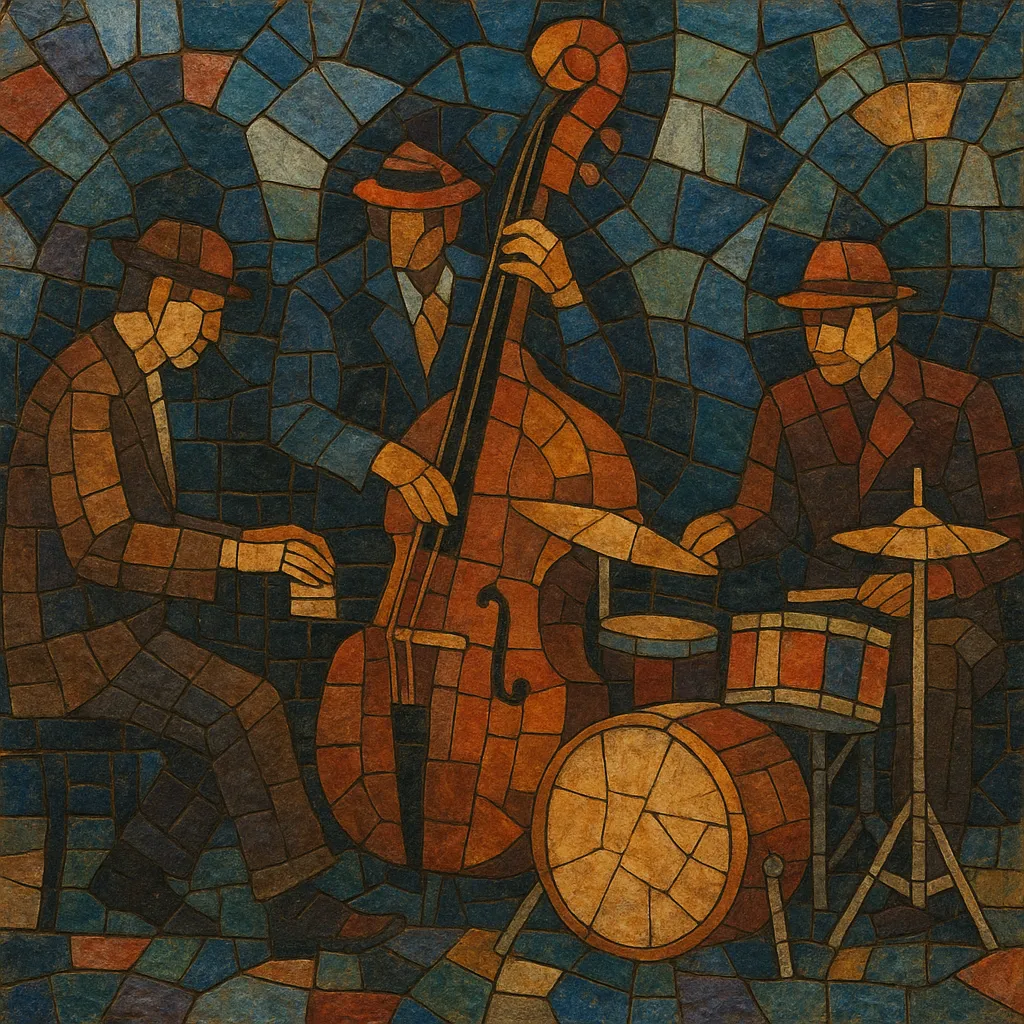
Jazz trio refers to small‑ensemble jazz built around three musicians whose conversational interplay and improvisation are the focus. The most common configuration is the piano trio (piano, double bass, and drums), but the organ trio (Hammond organ, guitar or sax, and drums) and guitar trio (guitar, bass, and drums) are also canonical.
Repertoire ranges from blues and Great American Songbook standards to bebop, hard bop, modal, and original compositions. The format emphasizes timbral economy, interactive time feel, and spontaneous arrangement—often following a head–solos–head structure with trading fours or eights and flexible codas. Feels include swing, straight‑eighth ECM‑style textures, bossa/samba, jazz waltz, and odd meters, with dynamic nuance and space being as important as virtuosity.
History
The jazz trio coalesced in the 1930s out of swing-era small groups. The Nat King Cole Trio (piano–guitar–bass, notably without drums) modeled an intimate, tight‑knit approach that highlighted counterpoint and rhythmic clarity. Early piano trios around Art Tatum and others showed how three players could imply a full band while keeping maximal room for improvisation.
With bebop, the piano–bass–drums trio became standard. Bud Powell’s trios set a virtuoso language of linear right‑hand lines over walking bass and ride‑cymbal swing. Oscar Peterson popularized the high‑energy, hard‑swinging trio, codifying roles for comping, bass timekeeping, and drum coloration within a head–solos–head framework.
The Bill Evans Trio with Scott LaFaro and Paul Motian reframed the trio as a fully conversational unit. Bass and drums moved from pure accompaniment to interactive counter‑melody and rhythmic dialogue, influencing generations of small‑group interplay across modern jazz.
Ahmad Jamal refined space, dynamics, and form; organ trios led by Jimmy Smith bridged jazz, blues, and soul, fueling club culture. Guitar‑led trios (e.g., Wes Montgomery in trio contexts) and free/avant trios pushed harmonic and rhythmic boundaries, expanding textures and meters while keeping the trio’s conversational core.
Keith Jarrett’s Standards Trio sustained the repertoire-driven, spontaneously arranged ideal; Brad Mehldau integrated classical voice‑leading and contemporary songbook. Scandinavian and European groups such as Esbjörn Svensson Trio advanced ambient/ECM aesthetics, grooves, and electronics, while bands like The Bad Plus blended indie‑rock energy with jazz harmony. Today the trio remains a laboratory for jazz—equally at home in clubs, concert halls, and studios—informing nu jazz, jazztronica, and jazz‑inflected popular styles.
Choose a canonical setup: piano trio (piano, double bass, drums), organ trio (Hammond B‑3, guitar/sax, drums), or guitar trio (guitar, bass, drums). Define roles but keep them fluid: the chordal instrument shapes harmony and texture; the bass anchors time and voice‑leading; the drums articulate time feel, dynamics, and form cues.
Build sets from standards, blues, bebop heads, modal tunes, and originals. Common forms include 12‑bar blues and 32‑bar AABA/ABAC. Use head–solos–head, add shout choruses, interludes, rubato intros, tags, pedal points, and dynamic codas. Plan but leave room for spontaneous reharmonization, modulations, metric shifts, or stop‑time.
Exploit ii–V–I cycles, tritone substitutions, and modal harmony. Pianists/guitarists: mix shell voicings, drop‑2/drop‑3, quartal stacks, and upper‑structure triads. Bassists: balance walking, two‑feel, pedal tones, and melodic counter‑lines. Soloists connect chord‑scale relationships (bebop scales, altered, diminished, lydian dominant, dorian/aeolian for modal) with strong voice‑leading and guide‑tone lines.
Master medium/up‑tempo swing with a steady ride‑cymbal pulse, feathered bass drum, and comping interplay. Add straight‑eighth textures (ECM/modern), jazz waltz, bossa/samba, funk, and odd meters. Practice trading 8s/4s/2s, call‑and‑response, and rhythmic displacement; use dynamics and space to shape solos and transitions.
Cultivate eye contact, cueing, and listening. Let each player lead at times—melodic bass pickups, drum set‑ups into figures, left‑hand piano hits shaping form. Orchestrate register and density so the trio breathes: leave space, vary textures (rubato, vamp, pedal), and balance continuity with surprise.
Aim for blend and clarity: piano (or organ/guitar) clear but not masking bass; bass full yet articulate; drums present with controlled cymbal wash. In the studio, combine room mics for cohesion with spot mics for definition; live, manage stage volume to preserve dynamics and interaction.