Your digging level
Description
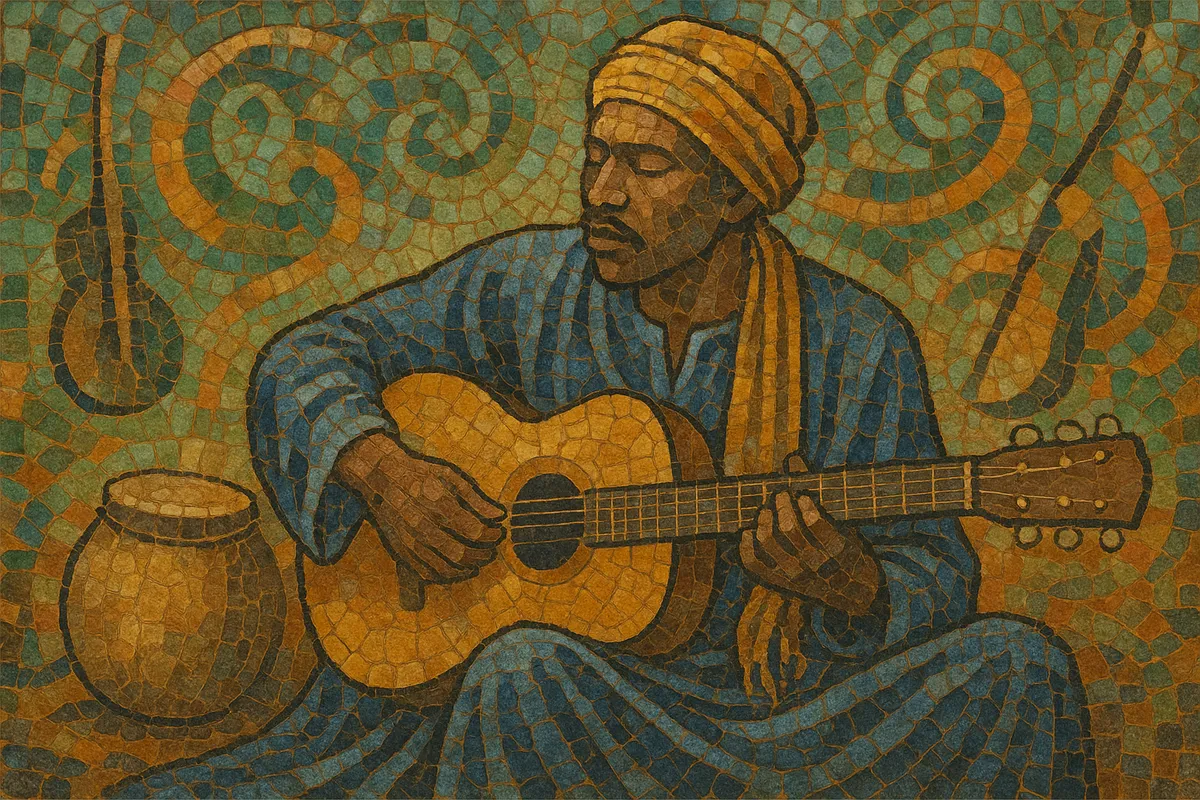
Malian blues is a West African guitar tradition that blends the pentatonic modalities, call-and-response singing, and cyclical grooves of Mali’s Songhai and Mandé cultures with the phrasing and melancholy timbre of American Delta blues.
Typically performed with plucked ngoni and kora patterns adapted to acoustic or lightly overdriven electric guitar, it features trance-like ostinatos, gently rocking Sahel/Sahara rhythms (often calabash, hand percussion, or light drum kit), and lyrics in Bambara, Songhai, Tamasheq, or French that speak to love, migration, memory, and daily life in the Niger River and Sahara regions.
The style is intimate and spacious: riffs repeat and evolve subtly; vocals float in a conversational, griot-informed delivery; and the overall feel is reflective yet grooving—equally suited to quiet listening and unhurried dancing.
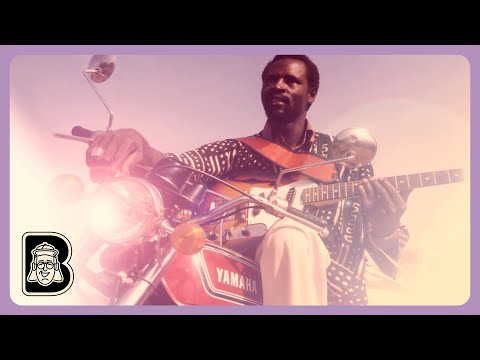


History
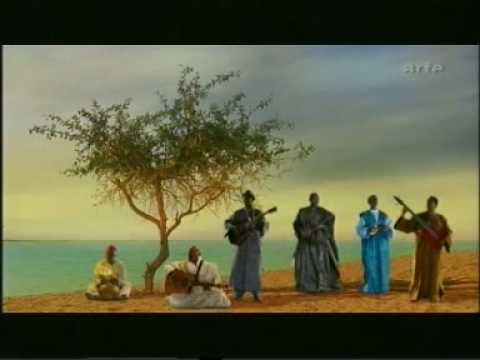
Malian blues coalesced when Malian guitarists began explicitly linking local pentatonic song forms to the sound and spirit of American Delta blues. Artists such as Ali Farka Touré articulated a musical kinship: the cyclical griot-based structures and Sahel grooves of Songhai and Mandé traditions resonated with the modal, pentatonic basis of early blues. In rural northern Mali (Niafunké, Gao, Timbuktu), guitarists translated ngoni and njarka lines to six-string guitar, establishing the idiom’s signature ostinatos and relaxed swing.
Through international releases and collaborations, Malian blues reached global audiences. Albums by Ali Farka Touré (solo and with Ry Cooder), Boubacar Traoré, Habib Koité, and Afel Bocoum showcased the music’s spacious textures and conversational vocals. The rise of festival circuits and world-music labels amplified the sound, while evolving recording practices preserved its intimacy—often with dry, close-miked guitars and minimal accompaniment.
A new generation—including Vieux Farka Touré, Samba Touré, Lobi Traoré (legacy releases), and Songhoy Blues—updated the palette with fuller bands, occasional rock backbeats, and brighter production. Parallel currents such as Tuareg guitar and broader "desert blues" interacted with Malian blues, exchanging techniques and audiences. Despite political upheavals in the region, the style remains a vital, resilient form—rooted in local storytelling and open-string guitar minimalism—continually bridging Mali’s traditions with global blues lineages.





Best playlists