Your digging level
Description
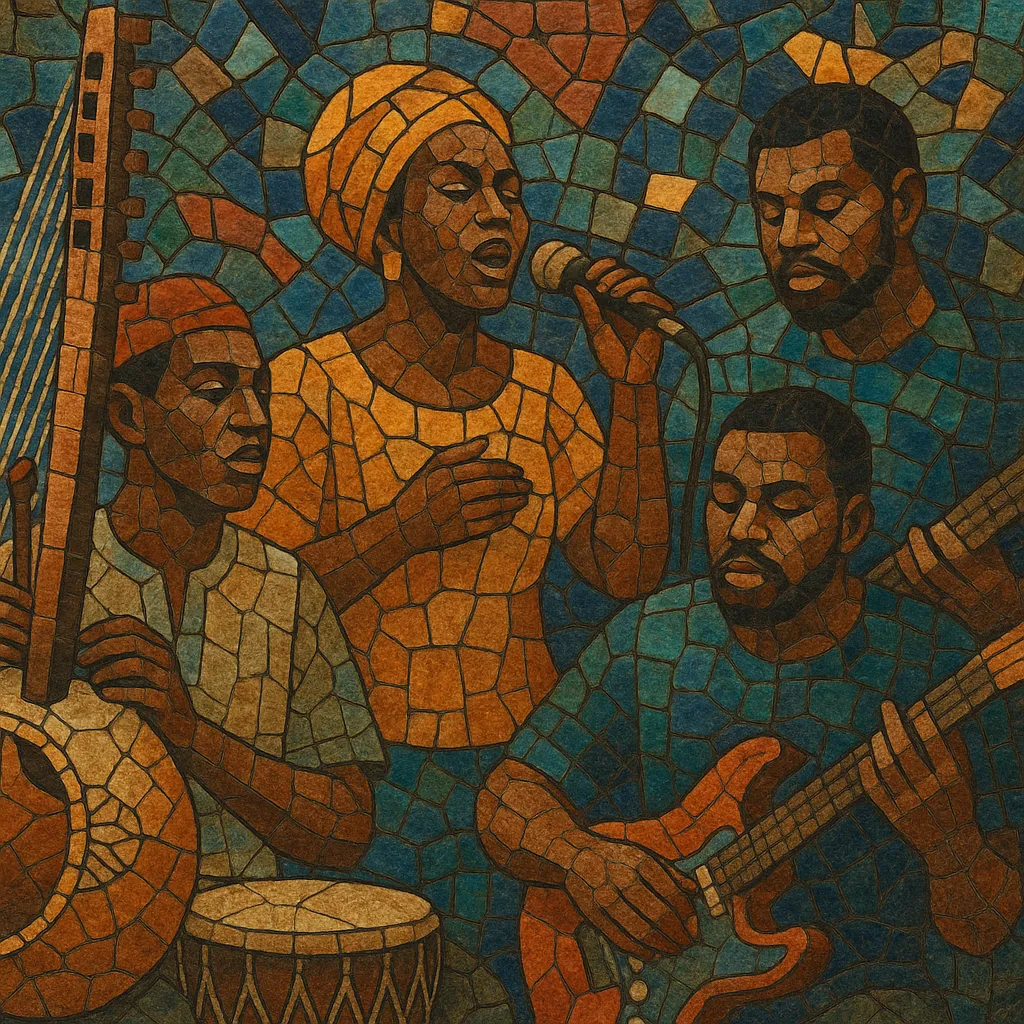
Mandé pop is a modern West African popular music rooted in the Mandé cultural sphere, especially Mali and Guinea. It blends griot vocal traditions, kora and balafon ostinatos, and pentatonic modal melodies with electric guitars, bass, drum kit, and keyboards.
Emerging from urban dance bands and state-sponsored orchestras, the style adopted Afro-Cuban/Latin rhythms, highlife and Congolese rumba grooves, and later global pop production. Lyrics—often in Bambara, Malinké/Mandinka, and other Mandé languages—carry praise-singing, social commentary, and poetic storytelling, delivered in call-and-response and melismatic lines.
The result is music that is simultaneously danceable and intricate, where cyclical riffs, interlocking polyrhythms, and shimmering guitar or kora patterns support powerful lead vocals and choruses.
History
After independence in countries like Mali and Guinea, national orchestras and urban dance bands fused Mandé court and griot music with popular styles circulating through West Africa, notably Afro‑Cuban son and Congolese rumba. In Bamako and Conakry, amplified guitar bands such as the Super Rail Band and Les Ambassadeurs modernized Mandé repertoire, adding drum kits, electric bass, brass, and Latin-tinged rhythms while keeping griot vocal aesthetics and kora/balafon-inspired guitar lines.
Key artists carried Mandé pop onto the global stage. Salif Keita’s solo work showcased lush, cosmopolitan production and soaring griot vocals, while Mory Kanté’s “Yéké Yéké” became a pan-African and European hit, cementing Mandé pop’s place in the emerging “world music” marketplace. Recording technology and international touring further refined the sound, balancing traditional timbres with synths and studio polish.
The world music circuit, independent labels, and festivals helped Mandé pop flourish. Singers like Oumou Sangaré and Rokia Traoré introduced feminist themes and acoustic-electric hybrids; virtuosi such as Toumani Diabaté connected kora idioms to jazz and global pop. Production quality rose, arrangements diversified (from acoustic roots to full band settings), and collaborations with rock, jazz, and electronic artists broadened the palette.
Digital production, Afropop/Afrobeats rhythms, and cross-border collaborations have refreshed the style. Artists like Fatoumata Diawara and new-generation Diabaté family members blend Mandé songwriting with pop hooks, modern grooves, and international co-writes. Despite modernization, the music maintains its core: griot lineage, cyclical melodic patterns, interlocking percussion, and a strong link to community narratives and praise-singing.