Your digging level
Description
Soninke music (musique soninké) is the traditional and contemporary musical practice of the Soninke (Sarakolé/Maraka) people of the western Sahel, centered today in western Mali and the Senegal River valley (Senegal and Mauritania), with communities across The Gambia and Guinea.
It is deeply rooted in the Mandé jeli (griot) hereditary arts of praise-singing, genealogy, and oral history. Core sonorities come from plucked lutes (xalam/hoddu), balafon (wooden xylophone), calabash and frame/percussion drums, and metal scrapers (karinyan), with call‑and‑response vocals that ride cyclical, polyrhythmic grooves. Melodic language typically favors Sahelian pentatonic/hexatonic modes and steady ostinati, supporting poetic praise, epic narration, and social dance.
While primarily an acoustic, community-centered tradition, modern Soninke musicians also incorporate kora, electric guitar/bass, and drum kit, carrying the aesthetic into diaspora contexts and popular Mandé/Sahelian genres.
History
The musical practice associated with the Soninke reaches back to the era of the Ghana (Wagadu) Empire, whose heartland lay across what is now southern Mauritania and western Mali. Within Mandé society, hereditary jeli (griot) families—singers, instrumentalists, orators—maintained genealogies, praised patrons, and mediated social events through performance. Soninke repertories preserve epic cycles (including Wagadu narratives), clan/patronymic praise songs, and ceremonial pieces for weddings, naming rituals, and agricultural calendars.
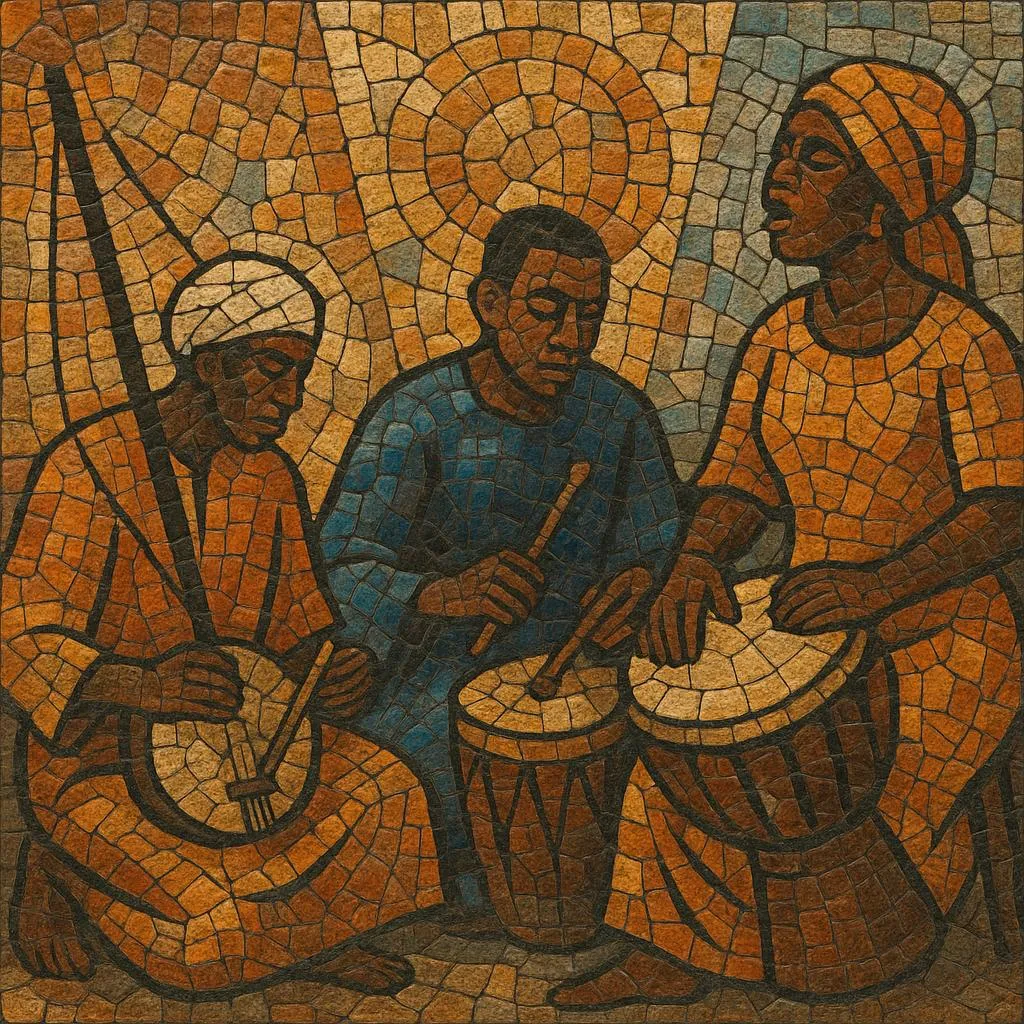
Historically, the idiom coalesced around the xalam/hoddu (a skin‑topped lute with 2–5 strings), balafon with gourd resonators, calabash percussion, talking drum (tamani), dundun bass drum, and the metallic karinyan scraper. Lead singers deliver melismatic lines over repeating instrumental ostinati, answered by a chorus; timelines and interlocking drum parts create a gently propulsive 12/8 or 4/4 feel suited to dance and processional use.
Centuries of Islamic scholarship and trade along the Senegal River valley introduced devotional poetics and melodic turns shared with wider Maghrebi/Sahelian practice, while leaving core Soninke forms intact. Labor migration in the colonial and post‑colonial periods spread Soninke musicians to Dakar, Bamako, Nouakchott, Paris, and beyond, where they adapted praise‑song craft to amplified settings.
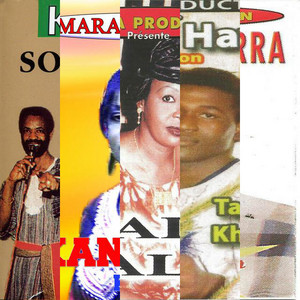
Today, Soninke music thrives in village ceremonies and urban/diasporic associations. Professional jeli families record cassettes and digital releases for community audiences; some ensembles integrate kora and guitar textures common to Mandé pop, while retaining the language, prosody, and ceremonial functions that define the tradition.