Genres
Artists
Albums
Make Music
Sign in
Sign in
Artists
Japanese Hardcore
Artists
Japanese Hardcore
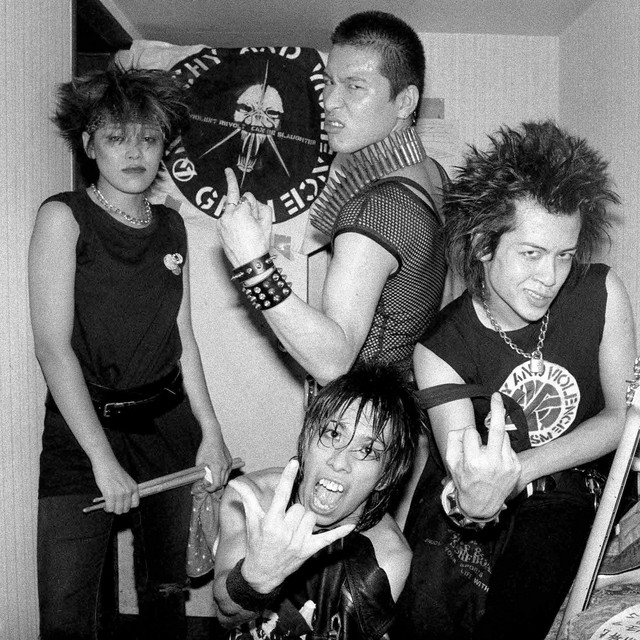
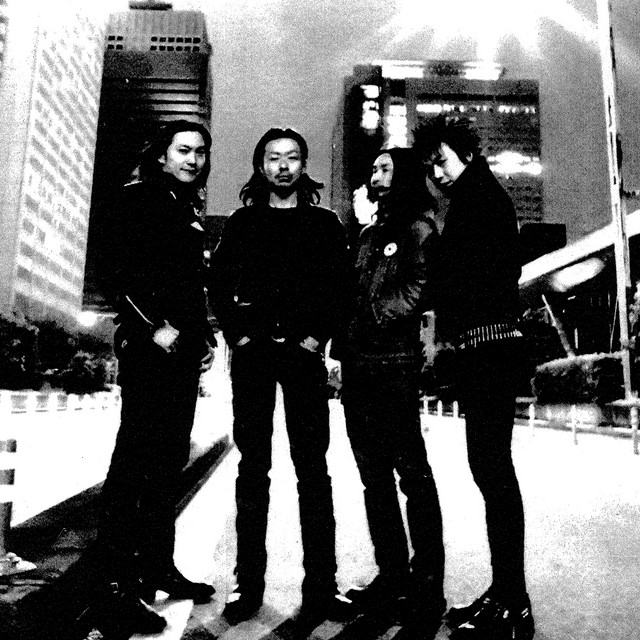
G.I.S.M.
2020–2022
·
5 albums
Listen
2
/5
Genres
Egg Punk
Egg punk is a lo‑fi, synth‑laced, jittery offshoot of punk that embraces awkwardness, absurdist humor, and devolved futurism. It tends to favor short, tightly wound songs driven by springy bass, trebly guitars, cheap drum machines, and buzzing monosynths, with nasal or deadpan vocals. The sound references first‑wave new wave and Devo‑style art punk as much as it does budget garage punk, swapping macho toughness for geeky, rubbery energy. Releases are typically DIY—4‑track or cassette‑recorded—and circulate through small labels, Bandcamp, and tape trades.
Discover
Listen
Japanese Hardcore
Japanese hardcore (often nicknamed "Japcore") is a blisteringly fast, highly disciplined strain of hardcore punk that emerged in Japan in the early 1980s. It blends the velocity and political bite of UK82 and D‑beat with an aggressive, razor‑edged guitar sound, ferocious drumming, and shouted Japanese vocals. Within the umbrella are distinct currents: a chaotic, noise‑soaked approach (exemplified by Kyushu acts like Confuse) and the melodic, triumphant lead‑guitar style often called the "Burning Spirits" sound (Death Side, Forward, Paintbox). DIY ethics, underground live houses, flexi‑disc culture, stark collage artwork, and a relentless live intensity define the scene. Lyrically, it ranges from anti‑authoritarian and anti‑war themes (often referencing nuclear anxiety) to personal struggle and communal resilience. The result is hardcore that is simultaneously raw, disciplined, and emotionally cathartic.
Discover
Listen
Crust Punk
Crust punk is a dark, heavy, and politically charged offshoot of punk that fuses the speed and rawness of hardcore with the weight and bleak atmospheres of metal. It is characterized by abrasive, overdriven guitar tones, pounding D‑beat and double‑time rhythms, and harsh, shouted vocals. Lyrically, crust punk confronts themes such as anti-militarism, anti-fascism, environmental collapse, social decay, and everyday survival under capitalism, often presented through apocalyptic or dystopian imagery. Its sound and message are inseparable from the DIY ethic, squatter culture, and grassroots activism that nurtured the scene.
Discover
Listen
Speed Metal
Speed metal is a fast, precision-driven branch of heavy metal that crystallized at the turn of the 1980s. It emphasizes aggressive tempos, tightly synchronized riffing, and virtuosic lead guitar work, while generally retaining melodic, often clean or strident vocals. Compared with thrash metal, speed metal tends to be less percussive and more melodic, favoring galloping rhythms, twin-guitar harmonies, and classic verse–chorus structures. Drums often employ rapid double-time feels and double-bass patterns, while bass frequently mirrors the rhythm guitar to reinforce propulsion. Lyrical themes range from rebellion and street realism to fantasy, warfare, and sci‑fi.
Discover
Listen
Grindcore
Grindcore is an extremely fast, abrasive fusion of hardcore punk and extreme metal characterized by blast-beat drumming, highly distorted down-tuned guitars, and a mix of guttural growls and high-pitched screams. Songs are typically very short—often under two minutes and sometimes just seconds—favoring intensity over traditional verse–chorus structures. Lyrically, grindcore spans politically charged and socially conscious themes (war, capitalism, animal rights) as well as gore and body horror (particularly in goregrind). Production ranges from raw, live-in-the-room ferocity to tight, modern clarity. The style is defined by relentless speed, dissonant or chromatic riffing, and sudden start–stop shifts that create a feeling of controlled chaos.
Discover
Listen
Stenchcore
Stenchcore is a dark, metallic strain of crust punk that emerged in the mid-1980s United Kingdom. It blends the d-beat drive and political urgency of anarcho/crust punk with the weight, riffing vocabulary, and atmosphere of early extreme metal. The style is characterized by downtuned, overdriven guitars; mid-to-fast d-beat and double-time passages interspersed with slower, doomy sections; and a bleak, apocalyptic mood cemented by cavernous, murky production. Lyrics typically address war, environmental collapse, authoritarianism, and existential dread, delivered through harsh, barked vocals. The name “stenchcore” nods both to the grimy, reverb-heavy sound and to the macabre, death-tinged imagery common in artwork and themes.
Discover
Listen
Hardcore Punk
Hardcore punk is a faster, louder, and more abrasive offshoot of late-1970s punk rock. Songs are typically short (often under two minutes), propelled by rapid tempos, aggressive down‑stroked guitar riffs, and shouted or barked vocals. The style prioritizes raw energy over technical ornamentation: power‑chord harmony, minimal guitar solos, and tightly locked rhythm sections dominate. Lyrically, hardcore punk is intensely direct—often political, anti‑authoritarian, and socially critical—reflecting a DIY ethic that values independent labels, self‑organized shows, and community‑run spaces. The genre coalesced in U.S. scenes such as Los Angeles, Washington, D.C., New York, and Boston, and soon spread internationally. Its velocity, attitude, and grassroots infrastructure profoundly shaped underground music and paved the way for numerous metal, punk, and alternative subgenres.
Discover
Listen
Punk
Punk is a fast, abrasive, and minimalist form of rock music built around short songs, stripped-down instrumentation, and confrontational, anti-establishment lyrics. It emphasizes DIY ethics, raw energy, and immediacy over virtuosity, often featuring distorted guitars, shouted or sneered vocals, and simple, catchy melodies. Typical songs run 1–3 minutes, sit around 140–200 BPM, use power chords and basic progressions (often I–IV–V), and favor live, unpolished production. Beyond sound, punk is a cultural movement encompassing zines, independent labels, political activism, and a fashion vocabulary of ripped clothes, leather, and safety pins.
Discover
Listen
Heavy Metal
Heavy metal is a loud, guitar-driven style of rock defined by heavily distorted riffs, thunderous drums, and powerful vocals. Its musical language emphasizes minor modes, modal (Aeolian, Phrygian) riffing, and energy over groove, often featuring virtuosic guitar solos and dramatic dynamic contrasts. Emerging from late-1960s blues rock and psychedelic experimentation, heavy metal codified a darker, heavier sound with bands like Black Sabbath, Deep Purple, and Led Zeppelin. The genre values weight, intensity, and grandeur—whether through plodding, doom-laden tempos or galloping, high-energy rhythms—paired with themes that range from personal struggle and social critique to fantasy, mythology, and the occult.
Discover
Listen
Anarcho-Punk
Anarcho-punk is a politically charged strand of punk that explicitly promotes anarchist and anti-authoritarian ideas. Emerging in the late 1970s United Kingdom, it fused the speed and abrasion of punk with an uncompromising DIY ethic, collective organization, and a culture of zines, benefit gigs, and independent labels. Musically, anarcho-punk leans on raw guitars, driving 4/4 rhythms, shouted or chant-like vocals, and concise song forms, but it often incorporates spoken-word, noise, sound collage, and experimental interludes to underscore its messages. Lyrically, it addresses anti-war and anti-nuclear activism, animal liberation, environmentalism, anti-capitalism, feminism, and social justice. Its stark black-and-white stencil aesthetic—iconic in sleeves, patches, and posters—became as recognizable as its sound.
Discover
Listen
Metal
Metal (often used to mean heavy metal in its broad, umbrella sense) is a loud, guitar-driven style of rock defined by high-gain distortion, emphatic and often martial rhythms, and a dense, powerful low end. It foregrounds riff-based songwriting, dramatic dynamics, virtuosic guitar solos, and commanding vocals that range from melodic wails to aggressive snarls and growls. Harmonically, metal favors minor modes, modal color (Aeolian, Phrygian), chromaticism, and tritone-inflected tension, while thematically it explores power, mythology, the occult, social critique, fantasy, and existential subjects. While adjacent to hard rock, metal typically pushes amplification, distortion, precision, and thematic intensity further, forming a foundation for many specialized subgenres.
Discover
Listen
Industrial
Industrial is an experimental electronic music tradition that uses abrasive timbres, mechanical rhythms, and transgressive aesthetics. Its sound palette often includes distorted drum machines, tape loops, metallic percussion, feedback, and found-object recordings alongside synthesizers and samplers. Emerging from late-1970s UK underground art and performance scenes, industrial foregrounds themes of dehumanization, technology, surveillance, and power. Releases frequently embrace anti-commercial presentation, stark graphic design, and confrontational performance art, treating the studio as a laboratory for sonic manipulation rather than a vehicle for conventional songcraft. While early industrial emphasized noise, tape processing, and avant-garde collage, later waves fused the style with dancefloor precision (EBM), rock and metal heft, and club-oriented production, giving rise to a broad post-industrial family that remains influential in experimental, electronic, and popular music.
Discover
Listen
Noise
Noise is an experimental music genre that uses non-traditional sound sources, distortion, feedback, and extreme dynamics as primary musical materials. Instead of emphasizing melody, harmony, or conventional rhythm, it focuses on texture, density, timbre, and the physical presence of sound. Practitioners sculpt saturated walls of sound, piercing feedback, metallic clatter, contact-mic scrapes, tape hiss, and electronic interference into works that can be confrontational or meditative. Performances often highlight process and immediacy—improvisation, body movement, and site-specific acoustics—while recordings can range from lo-fi cassette overload to meticulously layered studio constructions. Though rooted in early avant-garde ideas, the genre coalesced as a distinct practice in the late 1970s and 1980s, especially through Japan’s ‘Japanoise’ scene, and subsequently influenced numerous styles across industrial, punk-adjacent, and experimental electronic music.
Discover
Listen
Show all 13 genres
Albums
2022
2
/5
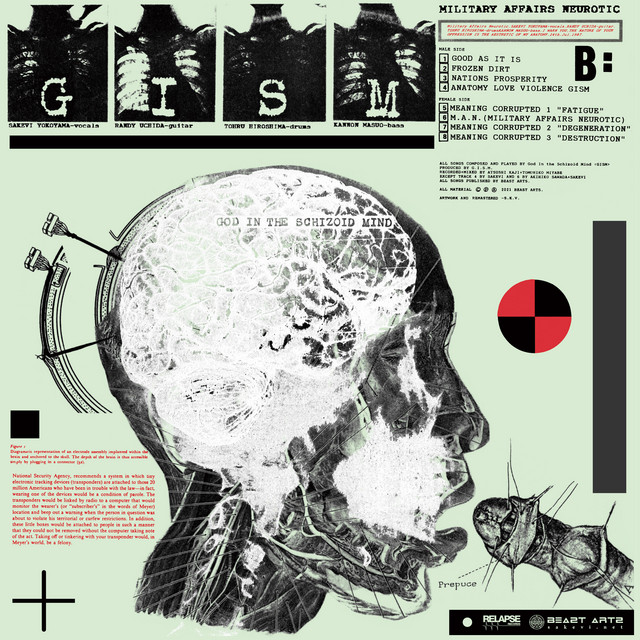
Militaly Affairs Neurotic
G.I.S.M.
Japanese Hardcore
Speed Metal
Heavy Metal
2020
2
/5
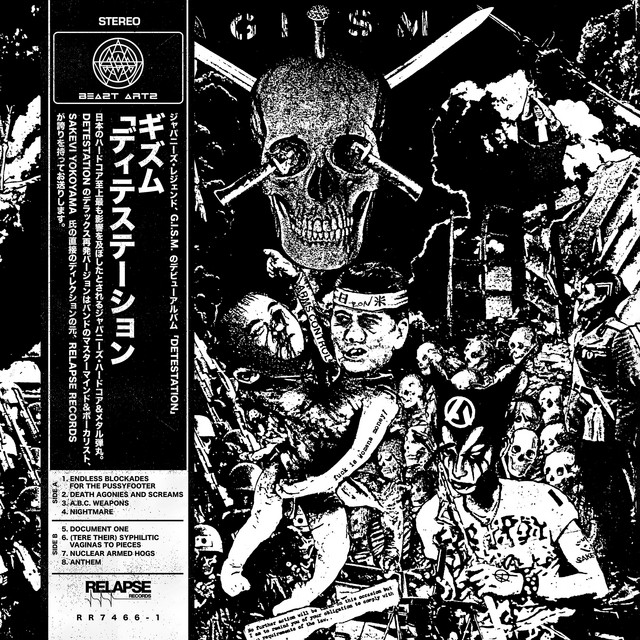
Detestation
G.I.S.M.
Japanese Hardcore
Crust Punk
Anarcho-Punk
SoniCRIME TheRapy
G.I.S.M.
Crust Punk
SoniCRIME TheRapy
G.I.S.M.
Japanese Hardcore
SoniCRIME TheRapy
G.I.S.M.
Stenchcore
Similar artists
2
/5
Sacrilege
Stenchcore
Thrash Metal
Hardcore Punk
3
/5
Suicidal Tendencies
Crossover Thrash
Thrash Metal
Hardcore Punk
3
/5
Leftöver Crack
Crack Rock Steady
Punk
Ska Punk
3
/5
Crass
Anarcho-Punk
Crust Punk
Punk
2
/5
Rudimentary Peni
Anarcho-Punk
Crust Punk
Deathrock
2
/5
THE STALIN
Japanese Hardcore
Hardcore Punk
J-Rock
1
/5
Kriegshög
Japanese Hardcore
Grindcore
Hardcore Punk
3
/5
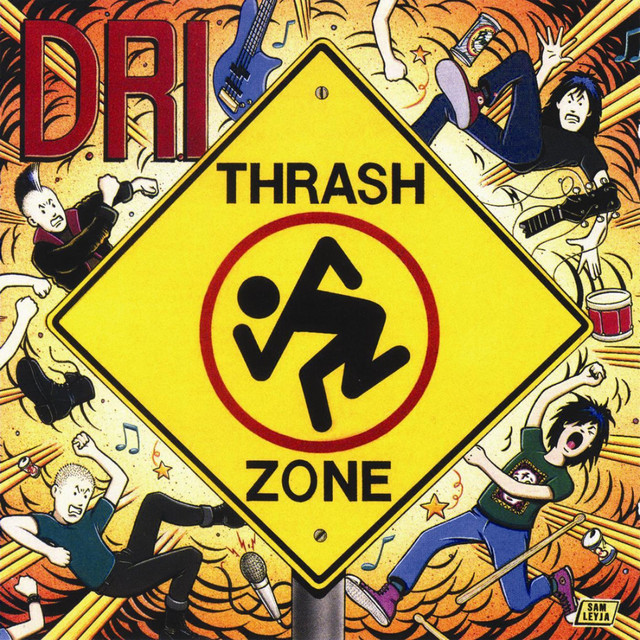
D.R.I.
Hardcore
Hardcore Punk
Bay Area Thrash Metal
2
/5
Wolfbrigade
D-Beat
Crust Punk
Punk
2
/5
Conflict
Anarcho-Punk
Punk
Uk82
Download our mobile app
Get the Melodigging app and start digging for new genres on the go
Download on the App Store
Get it on Google Play
© 2026 Melodigging
Give feedback
Legal
Melodding was created as a tribute to
Every Noise at Once
, which inspired us to help curious minds keep digging into music's ever-evolving genres.