Your digging level

For this genre
0/8
🏆
Sign in, then listen to this genre to level up

Description

Thrash metal is an extreme subgenre of heavy metal defined by blistering tempos, tightly palm‑muted low‑register riffs, and sharp, aggressive execution. Songs commonly drive at 180–240 BPM, pairing chugging, down‑picked rhythms with shredding leads and rapid alternate‑picked lines.

Drumming emphasizes double‑kick work, skank/D‑beat patterns, and abrupt, syncopated accents that lock tightly with the guitars. Vocals range from rough, shouted delivery to snarling barks and occasionally cleaner, declamatory phrasing. Lyrically, thrash favors social critique, anti‑authoritarian themes, war and dystopia, and street‑level realism, matching the music’s urgency.

The overall aesthetic is lean, fast, and technical—channeling the speed and directness of hardcore punk through the tonal weight and precision of heavy metal.


Sources: Spotify, Wikipedia, Discogs, RYM, MB, user feedback and other online sources

History

Roots (late 1970s–early 1980s)

Thrash metal crystallized when the speed and rebellion of punk/hardcore collided with the power, riff craft, and virtuosity of traditional heavy metal and the New Wave of British Heavy Metal (NWOBHM). Early U.S. scenes—especially around the San Francisco Bay Area and Los Angeles—began pushing tempos higher, tightening palm‑muted rhythms, and adopting more antagonistic vocals and lyrical themes.

Breakthrough and Codification (mid‑1980s)

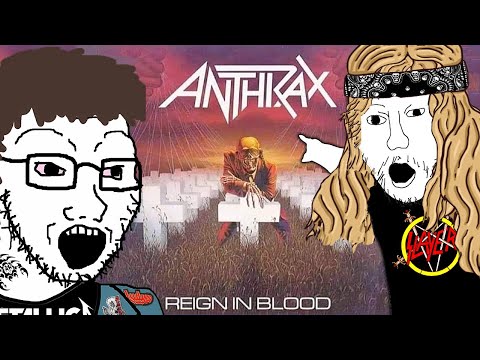
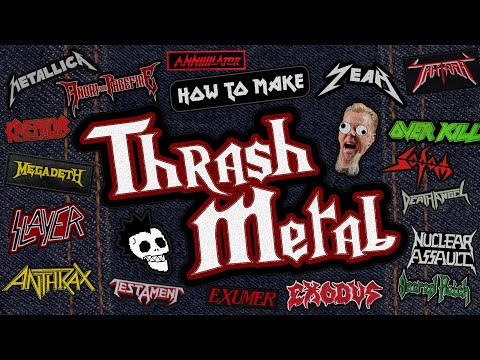
By the mid‑1980s, thrash had solidified its musical vocabulary: down‑picked, percussive guitar riffing; double‑bass drumming with skank beats; and lead guitar work that was both melodic and technically advanced. The so‑called “Big Four” popularized the style globally while a parallel “Teutonic” wave in Germany emphasized even rawer aggression and speed. Independent labels, tape trading, and relentless touring created a worldwide network of bands and fans.

Expansion and Branching (late 1980s–early 1990s)

As musicians pushed technique and extremity, thrash directly seeded more abrasive offshoots. Its riff density, speed, and harsh vocal approach fed the rise of death metal and grindcore, while its rhythmic heft and mid‑tempo crush informed groove metal. Some bands pursued more progressive arrangements and technicality, while others fused thrash with hardcore intensity, forging crossover thrash.

Shifts, Lulls, and Revivals (1990s–present)

The early 1990s saw stylistic diversification and a partial mainstream pivot by some acts, coinciding with the ascent of alternative styles. Even so, thrash’s DNA persisted across extreme metal and punk‑metal hybrids. From the 2000s onward, renewed interest sparked a vigorous revival: classic bands re‑energized their sound, and new generations embraced the style’s precision, speed, and social bite—reaffirming thrash as a foundational pillar of extreme metal.
How to make a track in this genre

Core Instrumentation and Tone
•   Two electric guitars (rhythm + lead), electric bass, drums; optional additional rhythm guitar for live thickness. •   Guitars: high‑gain amps with tight low end; articulate midrange (avoid overly scooped tones). Common tunings: E standard or D/C for extra bite. •   Bass: pick‑driven, slightly overdriven to cut through fast riffs; lock tightly with kick drum.
Riffing, Harmony, and Structure
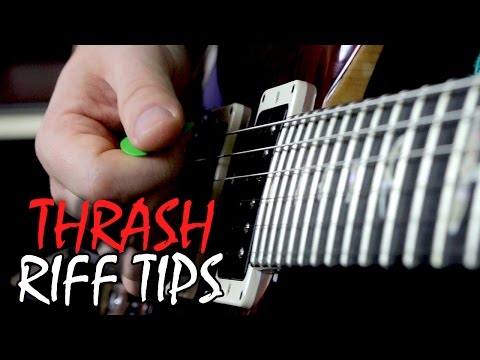
•   Emphasize down‑picked, palm‑muted power‑chord riffs; interleave with chromatic runs, tritone movement, and pedal‑point figures. •   Favor natural minor (Aeolian) and Phrygian colors; occasional Locrian inflections for extra tension. Use rapid alternate picking, gallops, and syncopated accents. •   Song architectures typically blend verse/chorus speed with instrumental bridges and a “thrash break” (a pit‑inducing, syncopated mid‑section), followed by a lead break and a final, accelerated coda.
Drums and Rhythm Language
•   Double‑kick patterns underpin the main riffs; deploy skank/D‑beats for propulsion and punk‑derived urgency. •   Use abrupt half‑time punches, metric modulation (e.g., alternating bars of 4/4 and 2/4), and cymbal chokes to articulate transitions.
Leads, Vocals, and Lyrics
•   Leads: fast alternate picking, legato runs, modal sequences, whammy‑bar dives, and harmonized lines—melodic but aggressive. •   Vocals: from shouted and gritty to cuttingly clean; articulate syllables rhythmically to match riff accents. •   Lyrics: social/political critique, anti‑authoritarian themes, warfare, dystopian or apocalyptic imagery; keep language vivid and direct.
Arrangement and Production Tips
•   Tighten performance with precise editing, but preserve natural attack; keep reverb modest for clarity at speed. •   Pan rhythm guitars hard L/R; center bass, kick, snare, and vocals; carve frequency space so riffs remain percussive and intelligible. •   Tempos commonly 180–220+ BPM; prioritize stamina and right‑hand discipline in rehearsal.

Main artists

Top tracks

Locked
Share your favorite track to unlock other users’ top tracks

Upcoming concerts

in this genre
Influenced by
Has influenced

Download our mobile app

Get the Melodigging app and start digging for new genres on the go
© 2026 Melodigging
Melodding was created as a tribute to Every Noise at Once, which inspired us to help curious minds keep digging into music's ever-evolving genres.
Buy me a coffee for Melodigging