Your digging level
Description
Christian death metal (sometimes nicknamed "life metal") is a lyrical stance within death metal that retains the genre’s sonic extremity—drop‑tuned guitars, tremolo picking, blast beats, double‑kick drumming, and cavernous guttural or high‑rasp vocals—while centering lyrics on Christian theology and spiritual themes.
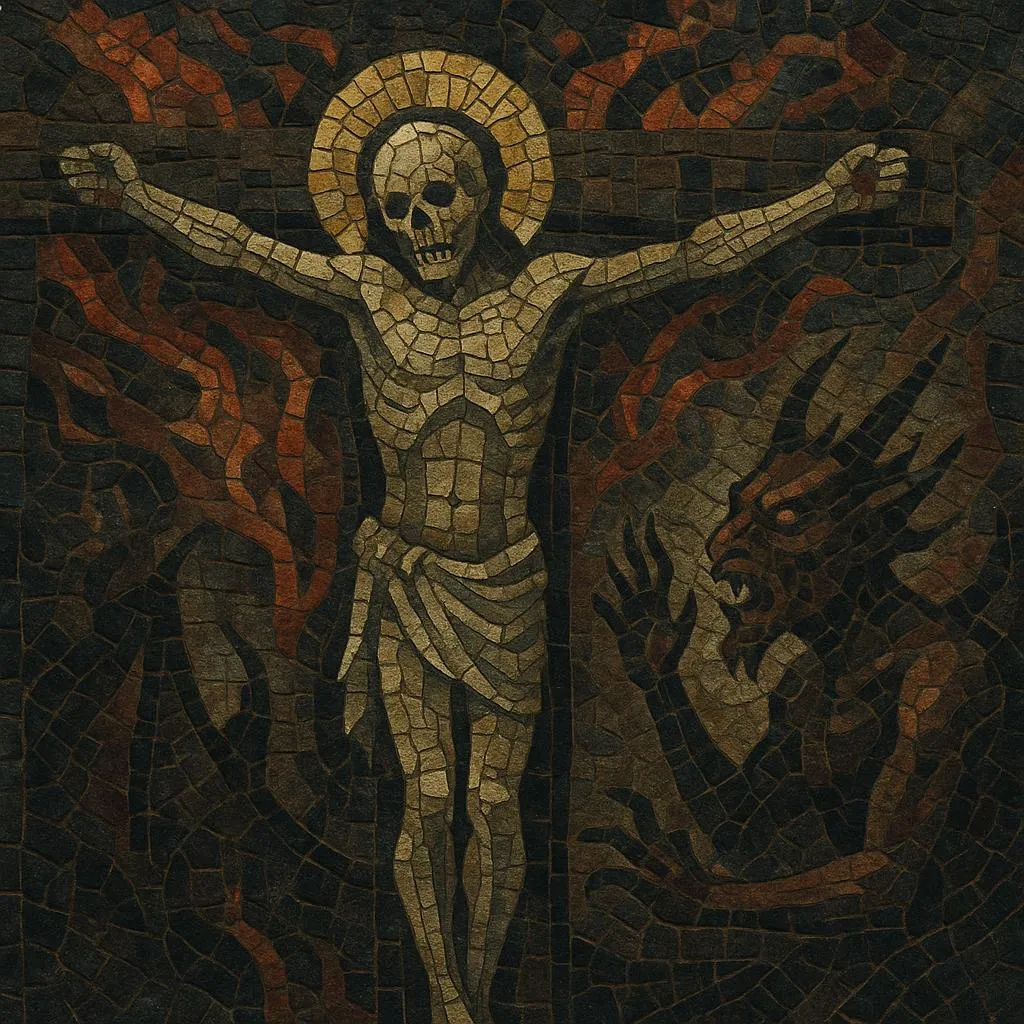
Musically, it is typically indistinguishable from secular death metal: songs employ chromatic and modal riffing (often Phrygian/Phrygian dominant and harmonic minor), sudden tempo shifts between blasts and half‑time lurches, and dense, high‑gain production. What sets it apart is the text and imagery, which explore biblical narratives, sin and redemption, eschatology, spiritual warfare, and ethical self‑examination, sometimes mirroring death metal’s dark iconography as a foil to articulate hope, judgment, or transcendence.


History
Christian death metal emerged as Christian musicians adopted the rapidly evolving death metal vocabulary that had coalesced from 1980s thrash and extreme metal. Early forerunners in North America and the broader Christian metal underground began to apply blast‑beat drumming, downtuned riffs, and growled vocals to explicitly Christian texts—establishing a clear lyrical distinction while retaining death metal’s sound.
By the early–mid 1990s, a first wave of bands in the United States and abroad released full‑lengths on niche Christian and independent extreme‑metal labels. These recordings demonstrated that death metal’s rhythmic ferocity and bleak atmospheres could serve as a vehicle for theological debate, testimony, and apocalyptic narrative. The scene developed around fanzines, college radio, and festival circuits that welcomed both Christian and secular extreme acts, normalizing stylistic parity despite divergent messages.
The 2000s saw better production values, tighter musicianship, and cross‑pollination with adjacent subgenres (technical and melodic death, death‑doom, and later deathcore). Labels known for heavy Christian music broadened their rosters to include acts with overt death‑metal roots. Touring networks and online communities allowed the subgenre to reach listeners outside church‑affiliated spaces, while bands shared bills with secular peers at extreme‑music festivals.
Because the style juxtaposes Christian doctrine with the extreme aesthetics of death metal, it has faced skepticism from both sides: some secular death‑metal fans question its intent, while certain Christian audiences object to the extremity of the sound and imagery. Nonetheless, the scene has persisted by emphasizing authenticity—treating death metal’s musical language seriously and using it to engage themes of suffering, moral conflict, and eschatological hope.
Contemporary Christian death metal ranges from old‑school brutality to hyper‑technical and symphonic variants, often sharing musicians and producers with secular counterparts. The internet era further decentralized the scene, enabling regional movements in the Americas and Europe and facilitating collaborations that keep the subgenre aligned with death metal’s ongoing innovations.