

Your digging level
Description
California hardcore is a regional strain of hardcore punk that erupted across Los Angeles, Orange County, and the San Francisco Bay Area at the turn of the 1980s.
It is defined by breakneck tempos, shouted or barked vocals, tightly down‑picked power‑chord riffs, and short, explosive songs that often end as abruptly as they begin. Compared with other U.S. scenes, California bands frequently folded in surf/garage attack, gang‑vocal chants, and a raw, dry, live-in-the-room production aesthetic.
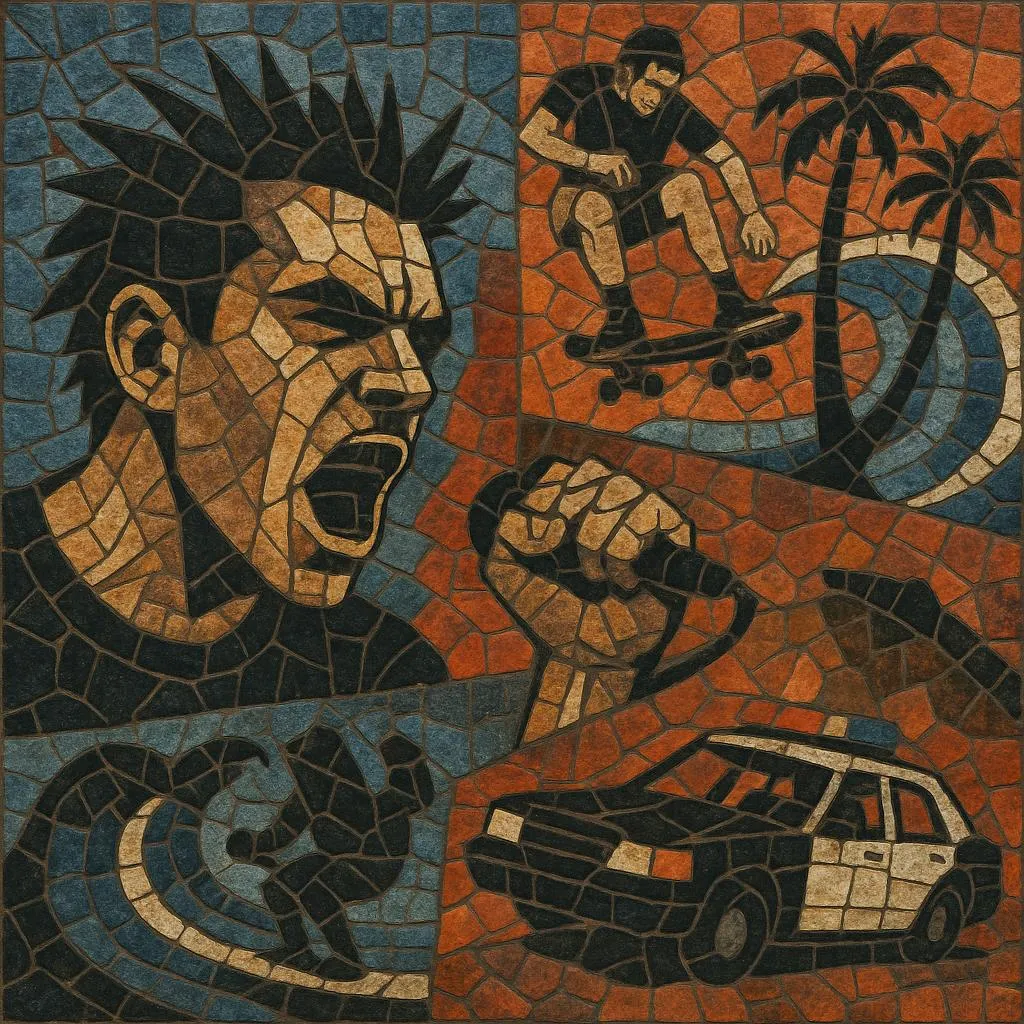
Lyrically it skews anti-authoritarian and socially critical, reflecting suburban alienation, police repression, skate/surf subculture, and DIY community. Venues like The Masque (LA), the Cuckoo’s Nest (OC), and the Mabuhay Gardens (SF), plus zines and indie labels (SST, Frontier, Alternative Tentacles), helped forge a self-sufficient network that made the sound globally influential.
History
California hardcore crystallized out of the late-’70s LA and OC punk milieu. Proto-hardcore bands and chaotic shows around The Masque seeded a faster, meaner approach. Local zines (Slash, Flipside) and early indie labels documented and accelerated the shift from first-wave punk to hardcore.
Black Flag, Germs, Fear, Circle Jerks, Adolescents, T.S.O.L., and Dead Kennedys set the template: ultra-fast tempos, terse songs, ranted vocals, and blunt social critique. The OC’s Cuckoo’s Nest and LA’s church-hall gigs became infamous for intensity and police clashes. In the Bay Area, Dead Kennedys and the Mabuhay Gardens fostered a parallel current with a satirical edge. SST Records (Hermen Hermosa Beach), Frontier, and Alternative Tentacles enabled relentless touring and nationwide scene connectivity.
As the scene matured, regional flavors appeared: surf-tinged aggression (Agent Orange), melodic turns (Descendents, Bad Religion) that would foreshadow skate punk, and heavier crossover with metal (Suicidal Tendencies, D.R.I. after relocating to the Bay). DIY ethics remained central: all-ages venues, volunteer-run fests, and self-released records.
California hardcore fed directly into skate punk (Epitaph/Fat Wreck era), post-hardcore, powerviolence, and crossover thrash, while Nardcore (the Oxnard scene) became a distinct microcosm. New generations continue the high-velocity, community-first ethos, with Gilman St. and a network of independent venues still functioning as incubators for bands and ideas born from the original California spark.
-
•
Start with a one‑riff chorus hook and title.
•Write a verse that rhythmically contrasts the chorus but keeps harmonic material simple.
•Add a short intro tag (two bars) and a half‑bar stop before the final chorus.
•Rehearse at tempo until downstrokes and gang shouts lock perfectly.



