Your digging level
Description
South Asian metal is the umbrella for heavy metal scenes across India, Pakistan, Bangladesh, Sri Lanka, Nepal, the Maldives and neighboring countries. It encompasses the full global spectrum of metal substyles (thrash, death, black, progressive, metalcore, nu metal, djent) while blending South Asian modal melody, tala-based rhythm, folk instruments, and multilingual lyrics (Hindi, Bengali, Urdu, Tamil, Sinhala, Nepali, Punjabi, Malayalam, etc.).
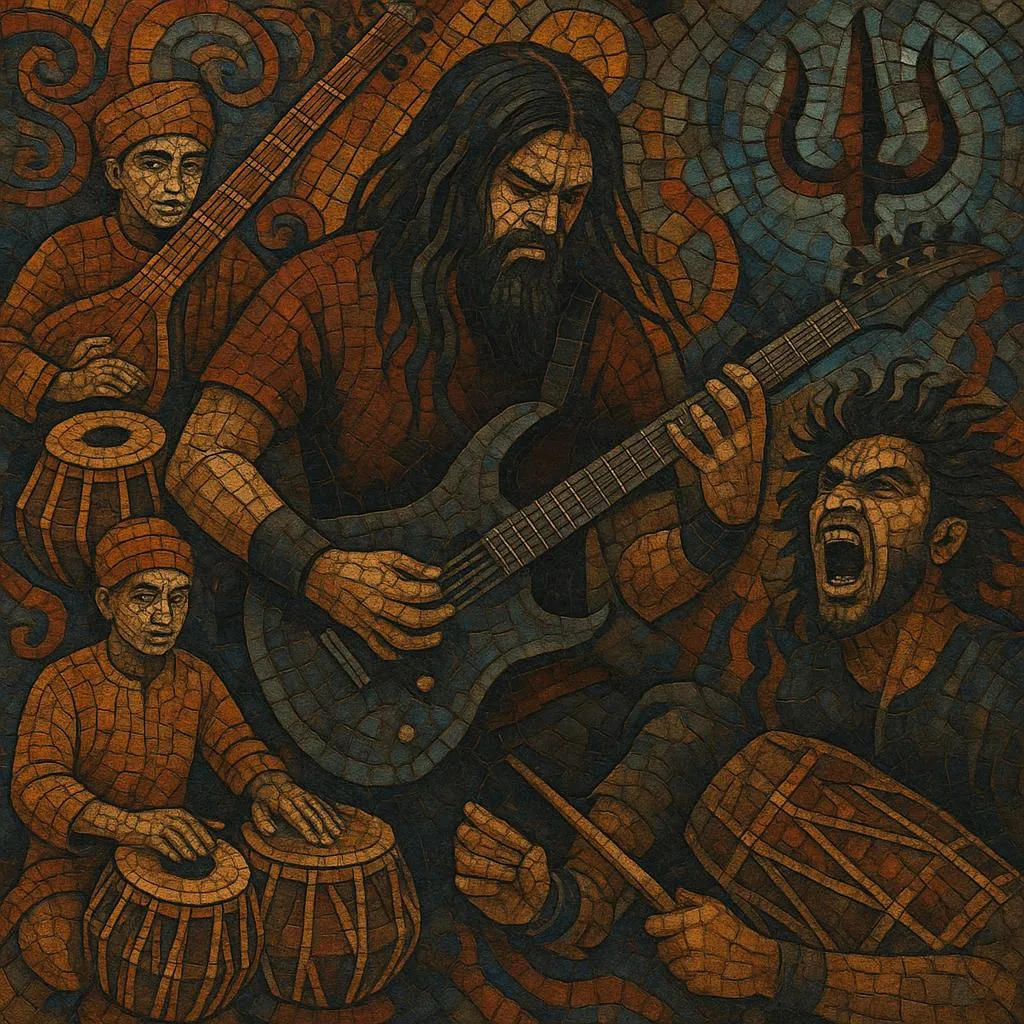
Characteristic traits include down-tuned guitars, double‑kick drumming, and harsh/clean vocal contrasts set against raga-inflected leads, Phrygian-dominant and Bhairav-like scalar colors, and polyrhythms inspired by classical tala cycles such as Teental (16), Rupak (7), and Jhaptal (10). Many bands incorporate tabla, dhol, mridangam, sitar, sarangi, and bansuri, or voice percussion (konnakol) to articulate complex grooves. Lyrical themes range from mythology, social issues, and spirituality to urban alienation and political critique, reflecting the region’s linguistic and cultural diversity.

History
Early metal activity in South Asia emerged in the 1980s, with pioneers in India (e.g., Bangalore’s heavy/speed circles) and Bangladesh (early heavy/progressive outfits) laying the groundwork while Western metal spread via cassettes, college festivals, and rock competitions. Through the 1990s, fledgling thrash and death metal acts formed in major urban centers—Mumbai, Bangalore, Dhaka, Lahore, and Colombo—nurtured by campus circuits, fan zines, and small clubs.
The 2000s saw a distinct underground take shape. India produced modern and extreme metal scenes (thrash, death, black, metalcore), while Bangladesh’s progressive/heavy metal surged, and Pakistan and Sri Lanka spawned both technical and melodic projects. DIY promoters, cross-border gigging, and community forums connected scenes across the region. Key labels, blogs, and magazines amplified discovery; regional compilations and split releases helped bands reach audiences despite limited mainstream media.
Social media, Bandcamp, and YouTube catalyzed growth and visibility. Prominent labels (notably Mumbai’s Transcending Obscurity Records) professionalized production and global distribution for South Asian acts. Festivals and battles of the bands (e.g., Bangalore Open Air/Wacken Metal Battle India, Kathmandu’s independent metal events, Dhaka rock/metal gatherings) created international bridges, putting South Asian metal on global bills. The 2010s also normalized hybrid approaches—folk/classical integrations, djent/prog craft, socio‑political lyricism—and brought viral breakthroughs that showcased the region’s linguistic and cultural signatures to the wider metal world.
Today, South Asian metal is recognized both for technical heft and for its unique synthesis: raga‑tinged leads over modern rhythm sections; tala‑aware grooves inside thrash/death frameworks; and multilingual storytelling. Its cross-pollination with classical, folk and film-music traditions has produced a distinct regional identity while remaining conversant with global metal aesthetics.