Your digging level for this genre

0/8
🏆
Sign in, then listen to this genre to level up

Description

Ska punk is a high-energy fusion of Jamaican ska and British/US punk rock. It pairs the off‑beat, upstroke "skank" guitar, walking or bouncy bass lines, and bright horn stabs of ska with punk’s faster tempos, distorted power chords, and shout‑along hooks.

Typical songs pivot between laid‑back, syncopated ska grooves and explosive double‑time punk choruses, often featuring gang vocals, call‑and‑response refrains, and mosh‑friendly breakdowns. Lyrically it ranges from wry humor and everyday storytelling to sharp social commentary, all delivered with an upbeat, dance‑floor focus.

History

Origins (1980s)

Ska punk emerged in the late 1980s as bands in the United States—drawing on first‑wave Jamaican ska and the UK’s 2 Tone revival—blended off‑beat rhythms with punk’s speed and attitude. Groups like Fishbone in Los Angeles and The Mighty Mighty Bosstones in Boston hard‑wired horns into a punk context, while Berkeley’s Operation Ivy gave the style its blueprint: tight upstroke verses, surging punk choruses, and socially aware, shout‑along vocals.

Third Wave Boom (1990s)

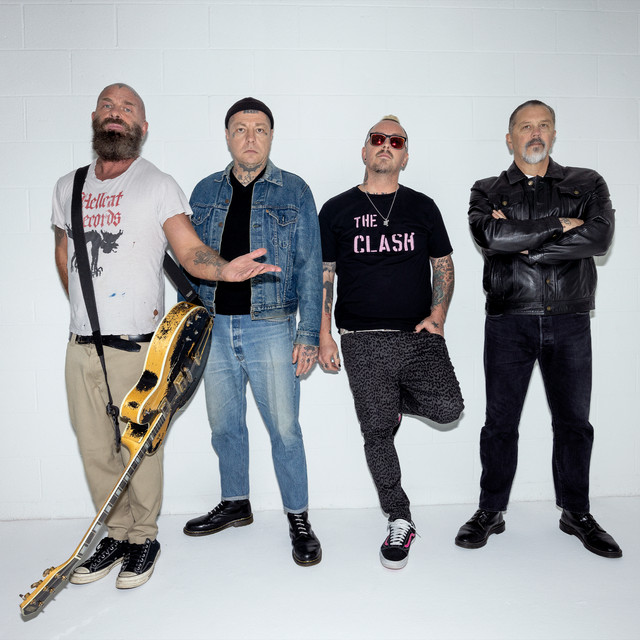
The 1990s "third wave" ska explosion brought ska punk to mainstream visibility. Bands such as Sublime, No Doubt, Rancid, Reel Big Fish, Less Than Jake, Goldfinger, and The Suicide Machines scored radio and MTV play. Warped Tour stages and all‑ages clubs helped spread a highly danceable, horn‑driven sound that could jump from tongue‑in‑cheek anthems to pointed social critique within the same set.

Diversification and Aftermath (2000s–present)

As mainstream attention cooled in the 2000s, ska punk consolidated with tighter musicianship and sophisticated horn arranging. Acts like Streetlight Manifesto emphasized complex charts and rapid‑fire lyricism, while regional scenes (Latin America, Japan, and Europe) kept crowds skanking. Periodic revivals and a strong DIY circuit, bolstered by festivals and online communities, have sustained the genre into the 2010s and 2020s.

Legacy

Ska punk’s legacy is twofold: it revitalized ska for a new generation and permanently installed horns and off‑beat guitar inside the punk toolkit. It also seeded substyles like skacore and informed reggae‑rock crossovers, leaving an enduring imprint on global punk and alternative scenes.


How to make a track in this genre

Core Rhythm
•   Guitar: Play short, clean upstrokes on the off‑beats (the "skank") to lock with the snare on 2 and 4. Switch to distorted power‑chord downstrokes for punk choruses and breakdowns. •   Drums: Alternate between a ska groove (tight backbeat, light kick, rimshots/cross‑stick on 2 and 4) and driving punk beats (fast 8th‑note hats, strong 2/4 snare, occasional double‑time blasts). Tempos commonly range from ~140–200 BPM. •   Bass: Use walking or bouncing lines in ska sections; shift to straight, punchy root–5th patterns for punk parts. Emphasize the downbeat to anchor syncopation.
Harmony and Form
•   Favor bright major keys and diatonic progressions (I–IV–V, I–vi–IV–V), with occasional bVII or ii–V moves. Keep harmonic rhythm brisk to match the groove. •   Structure songs to contrast feels: ska verse → punk chorus → ska bridge/breakdown. Use quick stops, horn hits, and gang‑vocal turnarounds to energize transitions.
Instrumentation & Arranging
•   Core: vocals, electric guitar, bass, drums, and a horn section (typically trumpet, trombone, and saxophone). •   Horns: Write tight unison or simple three‑part voicings for riffs and stabs; reserve countermelodies for intros, turnarounds, and bridges. Keep lines rhythmic and hook‑oriented. •   Extras: Add organ/keys for classic skanking comp; use percussion (tambourine, timbales) sparingly to accent off‑beats.
Lyrics & Delivery
•   Themes: mix humor, personal stories, and social commentary. Keep choruses concise and chantable. •   Vocals: energetic belt with occasional gang vocals/call‑and‑response. Articulate clearly over dense horn/guitar textures.
Production Tips
•   Track guitars both clean (ska parts) and distorted (punk parts); keep clean tones bright and percussive. •   Close‑mic horns and layer doubles for impact; avoid excessive reverb to maintain punch. •   Leave headroom for transients—ska punk is about feel and immediacy more than heavy compression.

Top tracks

Locked
Share your favorite track to unlock other users’ top tracks
Influenced by
Has influenced
Challenges
Digger Battle
Let's see who can find the best track in this genre
© 2025 Melodigging
Melodding was created as a tribute to Every Noise at Once, which inspired us to help curious minds keep digging into music's ever-evolving genres.
Buy me a coffee for Melodigging