Your digging level
Description
Rock en asturiano is rock music performed primarily in the Asturian (Bable) language by bands from Asturias, Spain. It spans classic rock, punk rock, ska‑punk, folk‑rock and harder offshoots, but is unified by the use of Asturian lyrics and a strong regional identity.
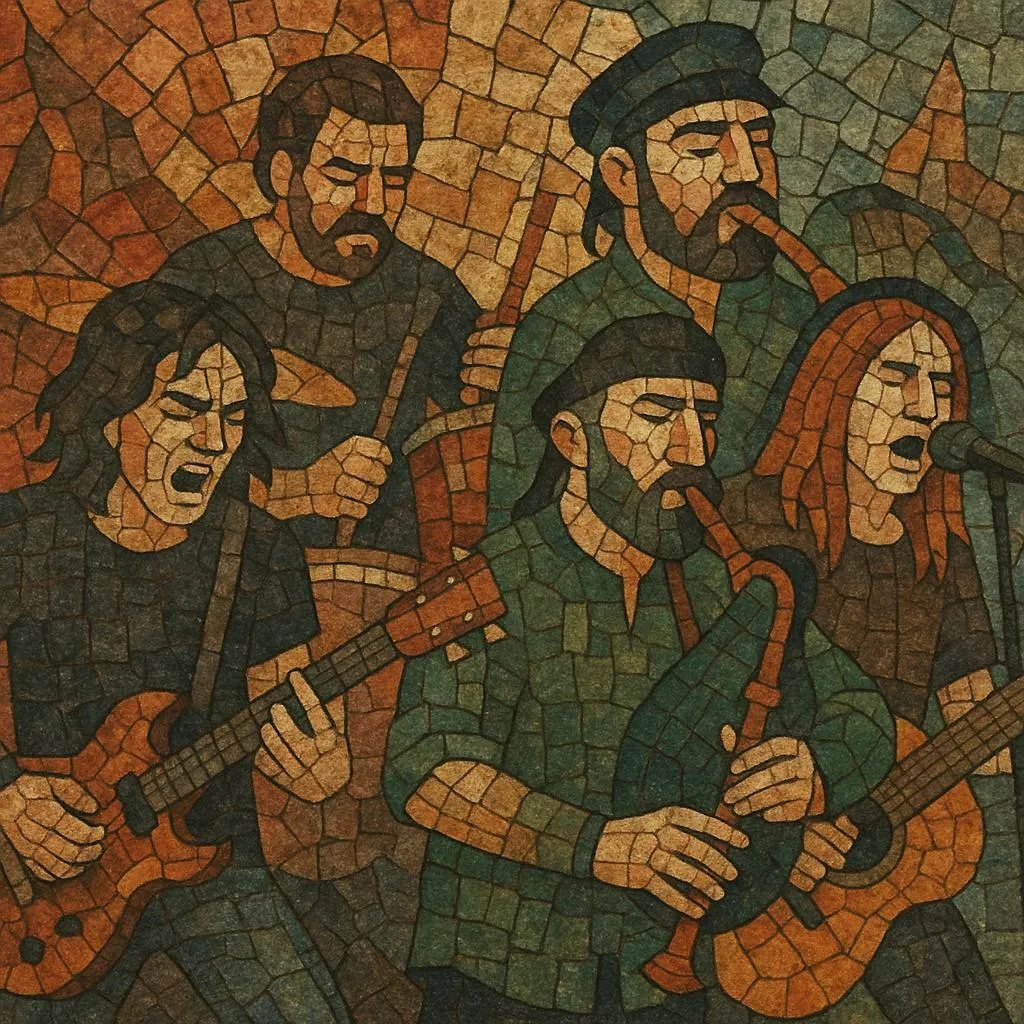
Many groups fuse standard rock instrumentation (electric guitars, bass, drums, vocals) with local folk timbres such as the gaita asturiana (bagpipe), panderu, tambor, and acoustic strings, creating a Celtic‑tinged edge that reflects Asturias’ cultural links to Atlantic folk traditions. Lyrical themes often address working‑class life, mining heritage and struggles, language rights, rural customs, and contemporary social issues, balancing festive, communal songs with politically charged or reflective material.

History
Rock en asturiano emerged as Asturias’ rock scenes coalesced around local venues and youth movements, with pioneering folk‑rock and rock groups beginning to compose and sing in Asturian. This period paralleled broader “rock en español” currents across Spain after the end of the Franco era, as regional languages re‑entered public culture. Early bands established the template: rock structures, local storytelling, and pride in the Asturian tongue.
Through the 1990s, the style consolidated as more acts chose Asturian as their primary lyrical medium. Bands expanded beyond classic rock into punk rock, ska‑punk, and harder variants, and the addition of gaita and percussion connected the music to folk traditions and the Celtic arc of the Iberian northwest. Independent labels, local festivals, and community radio boosted circulation, while lyrics increasingly addressed mining crises, labor struggles, and cultural rights amid economic change in Asturias.
In the 2000s, the scene diversified stylistically and professionally. Some bands leaned into high‑energy punk and ska‑punk for dance‑friendly live shows; others hybridized rock with folk arrangements or heavier guitar tones. DIY labels, regional media, and word‑of‑mouth networks helped recordings circulate beyond Asturias, and internet distribution enabled access to diaspora and pan‑Iberian audiences interested in minoritized‑language rock.
Streaming, social media, and grassroots video production increased the visibility of Asturian‑language rock in the 2010s. Artists continue to balance cultural advocacy with genre evolution, alternating between party atmospheres and explicitly political material. Today, rock en asturiano functions both as a living rock ecosystem and as a cultural vehicle that normalizes Asturian in contemporary popular music, inspiring younger indie and alternative artists from the region to keep composing in their own language.